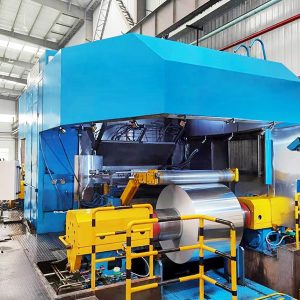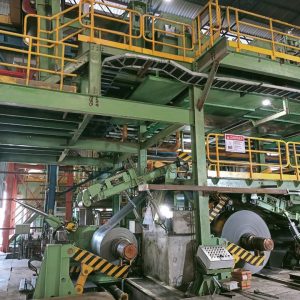

Copper strip rolling mill
Brand name: HANI
Packing Details : Wooden box with fumigation or Wooden Fram or Steel Frame
Delivery Details: 30~60days or Based on the quantity
Shipping: Sea freight、Land freight、Air freight
HANI focuses on cold rolling mill equipment technology, safeguarding your production.
Product Details
Advanced Engineering for Superior Copper Processing
A modern Copper strip rolling mill is engineered to handle the unique metallurgical properties of copper and its alloys. Copper’s excellent electrical and thermal conductivity, combined with its ductility and corrosion resistance, makes it an essential material across numerous industries. However, these same properties present specific challenges during the rolling process that require specialized equipment solutions.
The comprehensive Copper strip rolling mill system integrates multiple processing stages into a cohesive production line. This approach ensures optimal material flow while maintaining precise dimensional control throughout the reduction process. Each component within the mill is designed to address specific aspects of copper processing, from initial breakdown of cast billets to the final finishing passes that determine surface quality and mechanical properties.
Technical Configuration and System Components
The complete Copper strip rolling mill installation comprises several critical subsystems working in harmony:
- Hot Rolling Mill Section: Features robust construction with precisely aligned rolls capable of withstanding high thermal loads during copper processing.
- Roller Table System: Ensures smooth material transfer between stands while maintaining proper strip alignment and temperature distribution.
- Hydraulic Positioning Systems: Both front and rear hydraulic guides provide accurate strip centering before and after each rolling pass.
- Hydraulic Baffle Mechanism: Controls material flow and prevents edge defects during the rolling process.
- Integrated Control System: Combines hydraulic and electrical controls for precise parameter management throughout the production cycle.
Production Capabilities and Technical Specifications
The versatility of this Copper strip rolling mill is demonstrated by its ability to process various copper alloys including H58, H62, and H68 brass compositions as well as pure copper strips. The mill’s multi-stage configuration allows for efficient processing from thick starting materials to final thin gauge products with exceptional dimensional accuracy.
| Mill Section | Roll Dimensions (mm) | Width Range (mm) | Finished Thickness Range (mm) |
|---|---|---|---|
| Rough/Medium Rolling Mill | φ330/φ760 | 550-700 | 1.5-4.0 |
| Medium Rolling Mill | φ230/φ600 | 550-700 | 0.5-1.0 |
| Finish Rolling Mill | φ125/φ450 | 550-700 | 0.08-0.15 |
Metallurgical Considerations in Copper Rolling
The successful operation of a Copper strip rolling mill requires deep understanding of copper metallurgy. During hot rolling processes, copper and brass materials undergo significant microstructural transformations that directly impact final product properties. The recrystallization behavior of copper alloys is particularly sensitive to temperature profiles and reduction rates during processing.
Modern Copper strip rolling mill designs incorporate precise temperature monitoring systems that maintain optimal processing conditions throughout the production line. This temperature control is critical because copper’s flow stress characteristics change dramatically with temperature variations. At typical hot rolling temperatures (650-850°C), copper exhibits significantly reduced yield strength, allowing for greater reductions per pass while minimizing the risk of surface cracking or internal defects.
HANI metallurgical research has demonstrated that proper roll gap settings and speed synchronization between stands are essential for preventing edge wave and center buckle defects in copper strips. Their studies show that maintaining consistent reduction ratios across successive stands minimizes residual stresses that could lead to shape defects in the final product.
Reciprocating Rolling Technology
One of the distinctive features of this Copper strip rolling mill is its reciprocating rolling capability. Unlike continuous mills that process material in a single direction, reciprocating mills allow the strip to be processed back and forth through the same rolling stand. This approach offers several significant advantages for copper processing:
- Reduced capital investment requirements compared to multi-stand continuous mills
- Enhanced flexibility for processing various copper alloys and thickness requirements
- Improved temperature control during processing through controlled reversing cycles
- Higher material yield through optimized cropping and reduced scrap generation
- Exceptional surface quality through controlled reduction sequences
Applications Across Industries
The copper strips produced by this advanced Copper strip rolling mill serve critical functions in numerous industrial sectors:
Electrical Components
Transformer windings, busbars, and electrical connectors requiring high conductivity copper strips with precise dimensional tolerances.
Automotive Industry
Radiator components, electrical systems, and decorative trim elements manufactured from brass and copper alloys.
Construction Sector
Architectural elements, roofing materials, and plumbing fixtures requiring corrosion-resistant copper alloys.
Quality Control and Surface Finish Characteristics
The performance of a Copper strip rolling mill is ultimately judged by the quality characteristics of the finished product. Modern mills incorporate sophisticated monitoring systems that track critical parameters throughout the production process:
- Laser-based thickness measurement systems providing real-time feedback control
- Surface inspection cameras detecting micro-cracks, scratches, and other imperfections
- Temperature monitoring arrays ensuring uniform thermal profiles during processing
- Tension control systems maintaining consistent strip flatness throughout the mill
For applications requiring exceptional surface quality such as electrical contacts and decorative elements, the Copper strip rolling mill can be configured with specialized roll polishing systems and protective atmosphere capabilities to prevent oxidation during processing.
Frequently Asked Questions
What copper alloys can be processed in this Copper strip rolling mill?
This Copper strip rolling mill is designed to process a wide range of copper alloys including H58, H62, and H68 brass compositions as well as pure copper (C11000, C10200). With appropriate roll configurations and temperature settings, it can also handle bronze alloys and specialty copper materials for specific applications.
What is the typical production capacity of this Copper strip rolling mill?
Production capacity varies based on material specifications and final thickness requirements. For standard brass strips (H62) with final thickness of 0.5mm, the mill can achieve throughput rates of approximately 3-5 tons per hour. Thinner gauges or harder tempers may reduce this rate, while thicker sections can be processed more quickly.
How does the reciprocating design benefit copper processing compared to continuous mills?
The reciprocating design offers significant advantages for copper processing, particularly for medium-volume production facilities. It provides greater flexibility for processing different alloys and thicknesses without requiring extensive reconfiguration. Additionally, the back-and-forth processing allows for better temperature control during rolling, which is critical for maintaining optimal microstructure in copper alloys.
What maintenance requirements should operators expect with this Copper strip rolling mill?
Regular maintenance is essential for optimal performance of any Copper strip rolling mill. Critical maintenance areas include roll bearing lubrication systems, hydraulic fluid quality monitoring, roll surface condition assessment, and alignment verification. With proper maintenance protocols, the mill’s main structural components can provide 15-20 years of reliable service, while wear components such as roll neck bearings typically require replacement every 2-3 years depending on operating intensity.
Operational Efficiency and Energy Considerations
Modern Copper strip rolling mill installations incorporate numerous energy-saving features that reduce operational costs while maintaining high production quality. The hydraulic systems feature variable displacement pumps that adjust power consumption based on actual load requirements. Regenerative braking systems capture energy during deceleration phases and feed it back into the mill’s power system.
The thermal efficiency of the mill is enhanced through intelligent heating zone management and insulation of critical components. For facilities operating multiple shifts, the mill’s thermal mass helps maintain consistent operating temperatures, reducing energy consumption during continuous production cycles.
Conclusion: Investment Value and Technical Excellence
A properly configured Copper strip rolling mill represents a significant strategic investment for manufacturers serving the copper processing industry. The equipment’s versatility, production efficiency, and product quality capabilities provide compelling return on investment through reduced scrap rates, lower energy consumption per ton of processed material, and ability to command premium pricing for high-quality copper strip products.
By integrating advanced metallurgical understanding with precision mechanical engineering, today’s Copper strip rolling mill systems deliver exceptional processing capabilities for copper and brass alloys. The reciprocating design combined with sophisticated control systems creates a production platform that can adapt to changing market demands while maintaining consistent product quality across diverse product specifications.
For manufacturers seeking to optimize their copper processing operations, the comprehensive Copper strip rolling mill solution offers the perfect balance of production flexibility, product quality, and operational efficiency. This equipment stands as a testament to modern metallurgical engineering and represents a strategic asset for companies committed to excellence in copper product manufacturing.
HANI is one of China’s leading professional cold rolling mill manufacturers, providing complete cold rolling systems to steel companies worldwide. HANI focuses on designing and manufacturing integrated cold rolling solutions that meet the industry’s highest standards of precision, efficiency, and durability. Our engineering expertise lies in providing turnkey cold rolling production lines to optimize the performance of modern steel manufacturing plants.