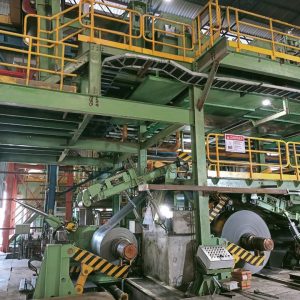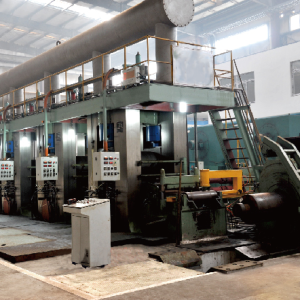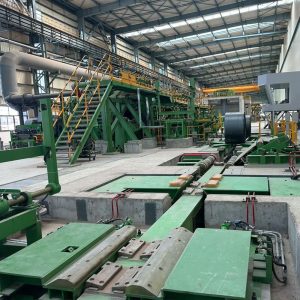

Φ650×800 hot rolling mill
Brand name: HANI
Packing Details : Wooden box with fumigation or Wooden Fram or Steel Frame
Delivery Details: 30~60days or Based on the quantity
Shipping: Sea freight、Land freight、Air freight
HANI focuses on cold rolling mill equipment technology, safeguarding your production.
Product Details
The Φ650×800 hot rolling mill represents the pinnacle of metallurgical engineering excellence, delivering exceptional performance for medium to large-scale metal processing operations. This robust industrial solution combines advanced mechanical design with intelligent control systems to achieve superior rolling precision, exceptional throughput rates, and remarkable energy efficiency. Our hot rolling mill systems have been rigorously tested in demanding industrial environments worldwide, consistently delivering outstanding results for producers of steel, copper, aluminum, and specialty alloys. As a leading provider of metal forming equipment, HANI ensures that every hot rolling mill meets the highest standards of quality and reliability.
Technical Overview and Engineering Excellence
Hot rolling is a fundamental metalworking process that transforms cast or preformed metal stock into finished products through plastic deformation above the recrystallization temperature. The Φ650×800 hot rolling mill exemplifies engineering excellence in this critical industrial domain, featuring a precisely engineered two-high configuration that delivers exceptional force distribution and material flow characteristics during the rolling process.
At the heart of this hot rolling mill system lies its massive 650mm diameter work rolls constructed from premium-grade forged alloy steel with specialized heat treatment for maximum wear resistance and dimensional stability under extreme thermal loading conditions. These critical components are supported by massive cast steel housings engineered to withstand the tremendous forces generated during high-pressure rolling operations while maintaining precise roll gap control essential for product quality.
The drive system of this hot rolling mill incorporates high-torque AC motors with vector control capabilities, delivering smooth power transmission through heavy-duty gear reducers to ensure consistent rolling speeds even under variable load conditions. Advanced torque monitoring systems provide real-time data to operators, enabling precise control of the rolling process while protecting equipment from potentially damaging overload conditions.
Roll Configuration
Two-high reversible mill with hydraulic screw-down system
Roll Dimensions
Φ650mm diameter × 800mm barrel length
Maximum Rolling Force
300 metric tons
Rolling Speed Range
0-60 m/min with electronic speed regulation
Comprehensive Technical Specifications
The Φ650×800 hot rolling mill represents a perfect balance of capacity, precision, and reliability. Below is a detailed specification table comparing this model with other machines in our product range:
| Parameter | Φ(350-400)×(350-600) | Φ(400-500)×(400-900) | Φ(500-600)×(500-1300) | Φ650×800 (Featured Model) |
|---|---|---|---|---|
| Rolling Materials | Carbon steel, tool steel, copper, aluminum, alloys | Carbon steel, tool steel, copper, aluminum, alloys | Carbon steel, tool steel, copper, aluminum, alloys | Carbon steel, tool steel, copper, aluminum, specialty alloys |
| Input Material Thickness | 30-60mm | 40-80mm | 60-140mm | 60-120mm |
| Finished Product Thickness | 5-8mm | 8-12mm | 10-20mm | 8-25mm |
| Maximum Rolling Force | 180T | 200T | 300T | 300T |
| Maximum Rolling Speed | 35m/min | 50m/min | 60m/min | 60m/min |
| Main Motor Power | 160KW | 280KW | 430-480KW | 450KW |
| Special Features | Hydraulic roller changing system | Hydraulic roller changing system | Hydraulic roller changing system | Advanced hydraulic roll changing, automatic gap control, thermal compensation system |
Advanced Engineering Features
Precision Roll Gap Control System
Our hot rolling mill incorporates a state-of-the-art hydraulic roll gap adjustment mechanism with closed-loop position feedback, enabling precise thickness control down to ±0.05mm even under varying thermal conditions. This advanced control system continuously monitors roll separation force and automatically compensates for thermal expansion of the rolls during operation, maintaining consistent product dimensions throughout extended production runs. The hydraulic actuators feature specialized damping circuits to absorb shock loads during bite-in, protecting both the mechanical components and ensuring smooth material flow through the roll pass.
Integrated Thermal Management
Operating at temperatures exceeding 1000°C requires sophisticated thermal management solutions. The Φ650×800 hot rolling mill features strategically placed cooling channels within the roll necks and housing assemblies to prevent heat migration to critical bearing surfaces. Additionally, a high-volume roll surface cooling system with adjustable nozzle patterns provides precise control over roll thermal crown, essential for producing flat, uniform material with minimal crown or edge wave. Advanced infrared temperature monitoring arrays continuously map roll surface temperatures, feeding real-time data to the central control system for automatic cooling adjustments.
Intelligent Drive Technology
The main drive system of this hot rolling mill incorporates the latest in power electronics technology with regenerative braking capabilities that recapture energy during deceleration phases, resulting in significant power savings during reversing operations. The vector-controlled AC drive system delivers exceptional low-speed torque characteristics essential for initial bite-in of large cross-section materials while maintaining smooth acceleration to maximum rolling speeds. Sophisticated load-sharing algorithms coordinate multiple drive motors when configured for auxiliary stands, ensuring perfect speed matching between mill stands to prevent material bunching or stretching in continuous rolling applications.
For over two decades, HANI has been at the forefront of hot rolling mill technology, delivering engineered solutions that combine proven mechanical principles with cutting-edge automation. The Φ650×800 hot rolling mill embodies our commitment to metallurgical excellence, featuring design elements refined through thousands of hours of operation in demanding steel mills worldwide. Unlike conventional hot rolling mill designs that struggle with thermal stability under continuous operation, our proprietary housing pre-stress system maintains precise roll alignment despite temperature fluctuations exceeding 300°C, delivering consistent product quality throughout extended production campaigns.
Material Processing Capabilities
The versatility of this hot rolling mill extends across numerous metal processing applications. For carbon steel processing, the mill efficiently reduces 100mm thick slabs to finished plate as thin as 8mm in a single pass sequence, maintaining tight dimensional tolerances even with challenging high-carbon grades. When configured for copper alloys, specialized roll surface treatments prevent material pickup while maintaining the thermal profile necessary for optimal grain structure development in oxygen-free copper and high-conductivity alloys.
For aluminum processing, the Φ650×800 hot rolling mill incorporates specially designed roll cooling protocols to prevent surface oxidation and control recrystallization behavior. Temperature-controlled entry and exit tables maintain precise thermal gradients through the material cross-section, essential for producing high-quality aluminum plate free from internal stresses that could lead to distortion during subsequent heat treatment operations. Tool steel processing benefits from our variable-speed rolling protocols that maintain optimal strain rates throughout the temperature range critical for developing desired microstructures in high-alloy grades.
Each hot rolling mill installation includes comprehensive material-specific rolling schedules developed through extensive metallurgical research. These proprietary processing protocols specify optimal entry temperatures, reduction sequences, inter-pass times, and cooling rates for over 200 material grades, ensuring maximum productivity while maintaining strict quality standards. Our engineering team works closely with clients to develop custom rolling schedules for specialized alloys and unique product requirements.
Installation and Operational Considerations
Proper installation of a hot rolling mill requires careful planning and execution to ensure long-term performance and operational safety. The foundation design must accommodate not only the static weight of the mill stand (approximately 45 metric tons for the Φ650×800 model) but also dynamic loads generated during rolling operations which can exceed 2.5 times the static weight during heavy reduction passes. We recommend reinforced concrete foundations with minimum dimensions of 4m × 3m × 2m depth, incorporating isolation mounts to prevent vibration transmission to adjacent equipment.
Utility requirements for this hot rolling mill include:
- Electrical service: 630kVA at 400V, 3-phase, 50Hz with harmonic filtering
- Hydraulic power unit: 350L/min flow at 250 bar pressure, requiring 45kW motor
- Cooling water system: 25m³/hour capacity with temperature control (25-35°C)
- Compressed air: 1.5m³/min at 6 bar for control systems and cleaning
- Roll changing area: Minimum 12m × 8m clearance with 15-ton overhead crane capacity
Operator training is critical for maximizing the performance and longevity of any hot rolling mill installation. Our comprehensive training program includes mechanical systems familiarization, control system operation, maintenance procedures, troubleshooting protocols, and safety practices specific to high-temperature metal processing environments. We recommend a minimum of 5 days of on-site training involving both classroom instruction and hands-on operational experience with actual production materials.
Frequently Asked Questions
Roll life in a hot rolling mill depends significantly on the materials being processed and rolling practices employed. For typical carbon steel operations running 20 hours per day, high-chromium cast iron work rolls typically achieve 8,000-12,000 tons of production before requiring regrinding. Advanced composite roll materials can extend this to 15,000-20,000 tons. Our hot rolling mill incorporates roll cooling systems that can extend roll life by up to 30% compared to conventional designs by maintaining optimal thermal gradients across the roll barrel. We recommend a comprehensive roll management program including regular surface inspections, precise regrinding protocols, and rotation schedules to maximize roll utilization.
The Φ650×800 hot rolling mill is designed to accommodate material widths from 400mm to 750mm through a combination of mechanical and control system adaptations. Removable roll neck collars allow quick adjustment of roll end pressure application points to match material width. The hydraulic roll bending system automatically adjusts profile control based on material width inputs to maintain optimal flatness. For frequent width changes, we recommend our optional quick-change roll collar system that reduces setup time from 45 minutes to under 8 minutes. The drive system includes width compensation algorithms that adjust torque limits and speed profiles based on material width to prevent edge damage during initial bite-in.
Energy consumption for the Φ650×800 hot rolling mill varies significantly based on material type, reduction ratio, and production rates. Under typical operating conditions (carbon steel, 100mm to 15mm reduction), the mill consumes approximately 110-130 kWh per ton of processed material. Our latest generation of hot rolling mill installations incorporates energy recovery systems that capture braking energy during deceleration and reversing operations, reducing net energy consumption by 15-18%. The main drive system operates at 96% efficiency under full load conditions, while our optimized hydraulic circuit design reduces auxiliary power requirements by 22% compared to conventional systems. For clients focused on energy efficiency, we offer comprehensive energy audits and custom optimization programs for existing hot rolling mill operations.
Absolutely. Our Φ650×800 hot rolling mill is designed with modular integration capabilities to connect with both upstream and downstream equipment. The control system features standard industrial communication protocols (Profibus, Modbus TCP, and Ethernet/IP) to interface with existing plant control systems. We provide comprehensive integration engineering services including material flow analysis, synchronization protocols, buffer management systems, and safety interlock design. For existing facilities with space constraints, our engineering team can develop customized layout solutions including angled entry/exit configurations, elevated discharge systems, or specialized roll handling arrangements. HANI has successfully integrated hot rolling mill systems into over 200 existing production facilities worldwide, with installation schedules typically 30% faster than industry averages due to our pre-engineered interface packages.
Maintenance for the Φ650×800 hot rolling mill follows a tiered approach with daily, weekly, monthly, and annual procedures. Critical daily checks include roll surface inspection, bearing temperature monitoring, hydraulic fluid levels, and cooling water quality testing. Weekly maintenance involves detailed inspection of drive couplings, gear reducer oil sampling, and calibration verification of position sensors. Monthly procedures include comprehensive lubrication of all moving components, structural bolt torque verification, and electrical contact cleaning. Annual shutdown maintenance should include complete disassembly of roll balancing systems, ultrasonic testing of critical structural components, and full recalibration of the control system. Our hot rolling mill installations include predictive maintenance sensors that monitor vibration patterns, oil contamination levels, and thermal anomalies to alert operators to potential issues before they develop into production-affecting failures. Following these maintenance protocols, clients typically achieve 92-95% operational availability from their hot rolling mill systems.
Performance Optimization Strategies
Maximizing the productivity of a hot rolling mill requires attention to numerous operational factors beyond basic mechanical functionality. Temperature control represents perhaps the most critical parameter affecting both product quality and mill performance. For carbon steel processing, maintaining entry temperature within ±15°C of the optimal range (typically 1100-1250°C depending on grade) can improve dimensional accuracy by up to 40% while reducing roll wear rates by 25%. Our advanced thermal imaging systems continuously monitor material temperature profiles throughout the rolling sequence, feeding real-time adjustments to roll gap settings and rolling speeds.
Reduction strategy significantly impacts productivity in hot rolling mill operations. While maximum reduction per pass is technically possible at approximately 40% of input thickness, optimal productivity is typically achieved with a graduated reduction schedule starting with heavier reductions (30-35%) during initial passes when material temperature is highest, followed by progressively lighter reductions (15-20%) as temperature decreases. This approach maintains material ductility while minimizing roll separating forces that can accelerate component wear. For the Φ650×800 hot rolling mill processing 100mm thick carbon steel slabs to 12mm finished product, this optimized reduction strategy typically reduces total rolling time by 18% compared to uniform reduction approaches.
Lubrication practices in a hot rolling mill environment require specialized knowledge and materials. Conventional greases rapidly degrade at rolling interface temperatures exceeding 300°C. Our proprietary water-based lubrication system delivers a precisely metered mixture of high-temperature lubricants and cooling agents directly to the roll bite area, reducing friction coefficients by up to 60% while simultaneously controlling thermal gradients through the work roll surface. This dual-action approach extends roll life while improving surface finish quality – a significant advantage for applications requiring minimal post-rolling processing.
Conclusion: Engineering Excellence in Hot Rolling Technology
The Φ650×800 hot rolling mill represents more than just a piece of industrial equipment—it embodies decades of metallurgical research, mechanical innovation, and practical manufacturing experience. As metal producers worldwide face increasing pressure to improve quality while reducing costs, investing in advanced hot rolling mill technology delivers measurable competitive advantages through higher yields, reduced energy consumption, extended component life, and superior product quality. Each hot rolling mill we produce undergoes rigorous factory acceptance testing under simulated production conditions, ensuring seamless integration into your manufacturing operations from day one.
With proper installation and operation, this hot rolling mill will deliver decades of reliable service, forming the backbone of your metal processing capabilities. Our commitment to engineering excellence extends beyond equipment delivery to comprehensive support throughout the equipment lifecycle, ensuring your hot rolling mill continues to deliver maximum value throughout its operational life.
Φ650×800 hot rolling mill – Engineered for excellence in metal forming. Contact HANI for customized solutions and technical support.
HANI is one of China’s leading professional cold rolling mill manufacturers, providing complete cold rolling systems to steel companies worldwide. HANI focuses on designing and manufacturing integrated cold rolling solutions that meet the industry’s highest standards of precision, efficiency, and durability. Our engineering expertise lies in providing turnkey cold rolling production lines to optimize the performance of modern steel manufacturing plants.