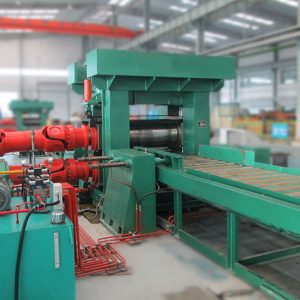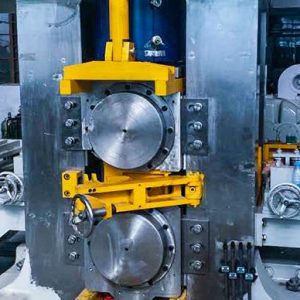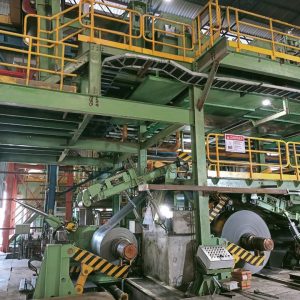

Twelve-roll rolling mill speed reducer
Brand name: HANI
Packing Details : Wooden box with fumigation or Wooden Fram or Steel Frame
Delivery Details: 30~60days or Based on the quantity
Shipping: Sea freight、Land freight、Air freight
HANI focuses on cold rolling mill equipment technology, safeguarding your production.
Product Details
The Twelve-roll rolling mill speed reducer is a critical component in modern cold and hot rolling mill systems, engineered to deliver exceptional torque transmission, precise speed control, and long-term operational reliability. As a specialized type of speed reducer, it plays an indispensable role in enabling high-precision metal forming processes—particularly in applications involving stainless steel, aluminum, copper, and other advanced alloys where surface finish, dimensional accuracy, and mechanical consistency are paramount.
Manufactured by industry leaders such as HANI, this speed reducer is designed for integration into 12-high (or twelve-roll) reversible cold rolling mills—a configuration renowned for its ability to produce ultra-thin, high-quality strip with minimal edge wave and excellent flatness. Unlike conventional 4-high or 6-high mills, the 12-high architecture uses multiple backup rolls to support smaller work rolls, significantly reducing roll deflection and enabling tighter gauge control. The speed reducer must therefore meet stringent demands for compactness, load capacity, thermal stability, and dynamic response.
Technical Overview and Design Features
The Twelve-roll rolling mill speed reducer developed by HANI incorporates advanced gear engineering principles, including case-hardened helical or herringbone gears, precision-ground profiles, and optimized bearing arrangements. These features ensure:
- High power density with minimal space requirements
- Low vibration and noise levels (<85 dB under full load)
- Thermal efficiency through integrated oil cooling circuits
- Modular design for easy maintenance and spare part replacement
All critical components undergo rigorous finite element analysis (FEA) and fatigue life simulation during the design phase. Gear materials typically conform to ISO 6336 or AGMA 2001 standards, with core hardness ranging from 30–38 HRC and case depth of 1.8–2.5 mm, depending on application load.
Moreover, the speed reducer is sealed against contaminants using labyrinth seals and lip-type shaft seals, ensuring reliable operation even in harsh mill environments laden with coolant mist, metal fines, and temperature fluctuations.
Performance Specifications (Typical Range)
| Parameter | Value Range |
|---|---|
| Input Power | 300 – 2,500 kW |
| Reduction Ratio | 3:1 to 12:1 (customizable) |
| Output Torque | Up to 1,200,000 N·m |
| Input Speed | 500 – 1,800 rpm |
| Output Speed | 50 – 600 rpm |
| Efficiency | ≥97% (per stage) |
| Lubrication System | Forced circulation with cooler |
| Mounting Configuration | Horizontal split-case or vertical inline |
| Protection Class | IP55 or higher |
| Certification | ISO 9001, CE, TÜV (optional) |
These specifications can be tailored to match specific mill layouts, coil weights, and production throughput targets. For instance, in a high-speed aluminum foil tandem line, the speed reducer may be optimized for rapid acceleration/deceleration cycles, whereas in stainless steel finishing stands, emphasis is placed on torsional rigidity to prevent chatter marks.
Why Choose This Speed Reducer for 12-Roll Mills?
- Precision Alignment: Integrated torque arm and flange mounting ensure perfect coaxial alignment with the mill spindle, minimizing misalignment-induced wear.
- Thermal Management: Oil-jet lubrication combined with external heat exchangers maintains optimal oil temperature (<65°C), preventing viscosity breakdown and extending oil life.
- Dynamic Load Handling: Designed to withstand shock loads during threading, strip breakage, or emergency stops—common in reversible mill operations.
- Compatibility: Fully compatible with AC vector drives and digital control systems (e.g., Siemens, ABB, Rockwell), allowing seamless integration into Industry 4.0-ready rolling lines.
HANI’s engineering team collaborates closely with end-users to simulate real-world operating conditions, ensuring that each speed reducer unit is not just a mechanical component but a performance enabler in the entire rolling process chain.
Applications Across Industries
The Twelve-roll rolling mill speed reducer finds extensive use in:
- Stainless Steel Processing: Producing BA (Bright Annealed) and 2B finish coils for appliances and automotive trim.
- Aluminum Foil Production: Rolling down to 0.006 mm thickness for battery foils and packaging.
- Copper & Brass Strips: Used in electrical connectors, heat exchangers, and decorative applications.
- Special Alloys: Including Inconel, titanium, and nickel-based superalloys for aerospace and medical devices.
In each case, the speed reducer’s ability to maintain constant torque at low speeds—and respond instantly to speed changes—is crucial for achieving consistent strip quality and minimizing scrap rates.
Maintenance and Service Life
With proper maintenance, a well-designed speed reducer can operate reliably for 15–20 years. Key maintenance practices include:
- Quarterly oil sampling and spectral analysis
- Annual inspection of gear tooth contact patterns
- Vibration monitoring via online sensors (recommended)
- Seal and bearing replacement every 50,000 operating hours
HANI provides comprehensive service manuals, remote diagnostics support, and on-site commissioning assistance to maximize uptime and reduce total cost of ownership.
FAQ: Frequently Asked Questions
Q1: What distinguishes a 12-roll mill speed reducer from standard industrial gearboxes?
A: It is specifically engineered for the asymmetric, high-cycle loading typical of reversible cold rolling. Standard gearboxes lack the torsional stiffness, thermal resilience, and sealing required for continuous mill duty.
Q2: Can the speed reducer handle frequent reversals?
A: Yes. HANI’s speed reducer units are validated for up to 300 reversals per hour, with reinforced thrust bearings and backlash control <0.1 mm.
Q3: Is customization available for non-standard mill configurations?
A: Absolutely. HANI offers bespoke solutions—including dual-output shafts, integrated brakes, and explosion-proof variants—for unique customer requirements.
Q4: How does the speed reducer contribute to energy savings?
A: With >97% mechanical efficiency and low churning losses, it reduces motor power demand. Combined with regenerative drives, overall system energy consumption drops by 8–12%.
Q5: What certifications does the speed reducer carry?
A: All units comply with ISO 9001 quality standards. Optional certifications include CE, ATEX (for hazardous areas), and API 686 for critical machinery.
Conclusion
In the demanding world of precision metal rolling, the Twelve-roll rolling mill speed reducer is far more than a torque converter—it is a cornerstone of process stability, product quality, and operational economics. As global manufacturers push toward thinner gauges, higher speeds, and greener production, the role of a high-performance speed reducer becomes increasingly vital.
HANI’s commitment to innovation, material science, and application-specific engineering ensures that every speed reducer delivered meets the highest benchmarks of reliability and efficiency. Whether you’re upgrading an existing line or building a new state-of-the-art cold mill, choosing the right speed reducer isn’t just a mechanical decision—it’s a strategic one.
For technical data sheets, 3D models, or custom quotation requests, contact HANI directly to leverage decades of rolling mill expertise embedded in every speed reducer they produce.
HANI is one of China’s leading professional cold rolling mill manufacturers, providing complete cold rolling systems to steel companies worldwide. HANI focuses on designing and manufacturing integrated cold rolling solutions that meet the industry’s highest standards of precision, efficiency, and durability. Our engineering expertise lies in providing turnkey cold rolling production lines to optimize the performance of modern steel manufacturing plants.