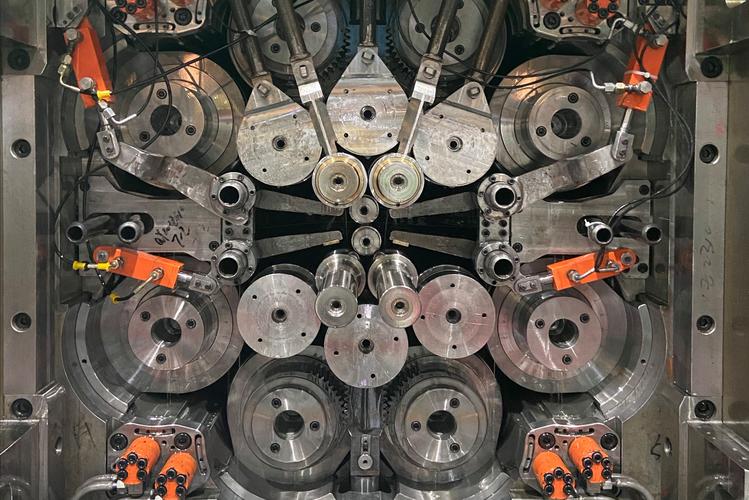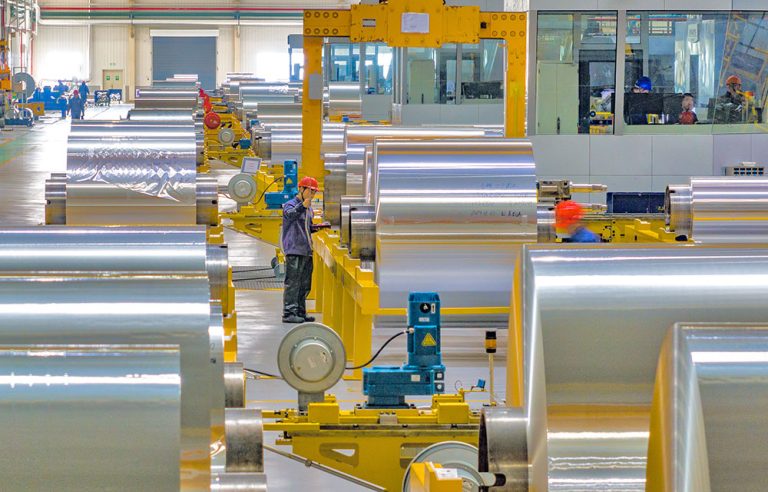
How to select a high-quality cold rolling mill, and is the mill housing (frame) important?
Selecting the right cold rolling mill is one of the most critical decisions for any metal processing facility. A poor choice can lead to production bottlenecks, inconsistent product quality, and costly downtime. This guide walks you through everything you need to know about choosing a high-quality cold rolling mill and explains why the mill housing (frame) plays such a vital role in overall performance.
Understanding Cold Rolling Mills: The Basics
A cold rolling mill is a machine that reduces the thickness of metal sheets or strips at room temperature. Unlike hot rolling, cold rolling produces materials with tighter dimensional tolerances, better surface finish, and improved mechanical properties. These mills are widely used in industries such as automotive, construction, appliance manufacturing, and aerospace.
The cold rolling process work-hardens the metal, increasing its strength and hardness while reducing ductility. This makes cold rolled steel and other metals ideal for applications requiring precise dimensions and smooth surfaces.
Common Types of Cold Rolling Mills
- Two-High Mills: Simple design with two work rolls, suitable for basic rolling operations
- Four-High Mills: Feature two work rolls and two backup rolls for better thickness control
- Six-High Mills: Include intermediate rolls for enhanced flatness control
- Cluster Mills (Sendzimir): Multiple backup rolls for rolling thin, hard materials
- Tandem Mills: Multiple stands in series for continuous high-volume production
Pre-Purchase Preparation: What You Must Know First
Before contacting any cold rolling mill manufacturer, you need to complete thorough preparation work. Skipping this step often leads to purchasing equipment that doesn’t match your actual production requirements.
Step 1: Define Your Production Environment
Consider your facility’s physical constraints, including available floor space, ceiling height, foundation capacity, and utility connections. A cold rolling mill requires substantial infrastructure support, including:
- Adequate electrical supply (typically 380V-690V three-phase power)
- Cooling water systems for roll cooling and lubrication
- Proper ventilation for mist and fume extraction
- Strong concrete foundation to handle vibration and weight
Step 2: Establish Your Technical Requirements
Document these essential parameters before reaching out to suppliers:
| Parameter | What to Specify | Typical Range |
|---|---|---|
| Material Type | Carbon steel, stainless steel, aluminum, copper, etc. | Various grades |
| Entry Thickness | Maximum incoming strip thickness | 0.5mm – 12mm |
| Exit Thickness | Target finished thickness | 0.1mm – 6mm |
| Strip Width | Minimum and maximum width range | 200mm – 2200mm |
| Rolling Speed | Required production speed | 50 – 1500 m/min |
| Annual Capacity | Expected yearly output | 10,000 – 500,000 tons |
Step 3: Research Manufacturers Thoroughly
Gather information about multiple cold rolling mill manufacturers. Look at their production history, technical capabilities, existing client base, and after-sales support network. Reliable manufacturers should provide reference sites where you can see their equipment in actual operation.
Key Factors for Selecting a High-Quality Cold Rolling Mill
Quality in a cold rolling mill isn’t just about the price tag. It’s about matching the right equipment to your specific needs while ensuring long-term reliability and performance. Here are the critical factors to evaluate:
1. Match Your Requirements with Equipment Capabilities
The best cold rolling mill for your operation is one that precisely matches your production needs. Oversized equipment wastes capital and energy, while undersized mills create bottlenecks and quality issues.
Practical Tip: Create a detailed specification sheet listing your minimum, typical, and maximum production scenarios. Share this with potential suppliers to ensure they recommend appropriate equipment.
2. Evaluate Roll Quality and Design
The rolls are the heart of any cold rolling mill. Their quality directly affects product surface finish, dimensional accuracy, and overall mill performance. Key roll specifications include:
| Roll Type | Material | Hardness (HRC) | Surface Finish (Ra) |
|---|---|---|---|
| Work Rolls | Forged steel, tungsten carbide | 60-65 | 0.2-0.8 μm |
| Backup Rolls | Forged alloy steel | 50-58 | 1.0-2.0 μm |
| Intermediate Rolls | High-chrome steel | 58-62 | 0.4-1.2 μm |
3. Assess the Drive System
The drive system determines rolling speed, torque delivery, and energy efficiency. Modern cold rolling mills typically use AC motors with variable frequency drives (VFDs) for precise speed control. Consider these drive system specifications:
- Motor power: Ranges from 50kW for small mills to 5000kW+ for large tandem lines
- Speed regulation ratio: Should be at least 1:100 for good thickness control
- Torque accuracy: ±1% or better for consistent rolling force
- Gearbox quality: Hardened and ground gears with minimum 95% efficiency
4. Review the Control System
Advanced automation and control systems significantly impact product quality and operational efficiency. A quality cold rolling mill should include:
Automatic Gauge Control (AGC)
Maintains thickness tolerance within ±0.5% to ±1% of target thickness through hydraulic or electromechanical adjustment.
Automatic Flatness Control (AFC)
Uses roll bending and shifting to maintain strip flatness within 5-15 I-units.
Tension Control System
Maintains stable strip tension within ±2% for uniform deformation and surface quality.
5. Choose a Reputable Manufacturer
The manufacturer’s expertise and track record are just as important as the equipment specifications. A professional cold rolling mill manufacturer should demonstrate:
- At least 10-15 years of specialized experience in rolling mill design and manufacturing
- In-house engineering and R&D capabilities
- Complete manufacturing facilities including heavy machining, heat treatment, and assembly
- Strong spare parts inventory and technical support team
- Documented successful installations at reference facilities
Custom Cold Rolling Mill: What to Consider
Many operations require customized cold rolling mills to meet specific production needs. When ordering a custom mill, pay attention to these critical aspects:
Custom Mill Specification Checklist
Clearly define all process parameters including reduction ratios, speeds, and tensions
Specify material grades and their mechanical properties (yield strength, tensile strength)
Define quality standards for thickness tolerance, flatness, and surface finish
Include future expansion requirements in the design specifications
Agree on acceptance tests and performance guarantees before signing contracts
The Critical Importance of Mill Housing (Frame)
Now we address the second part of our title question: Is the mill housing important? The answer is absolutely yes. The mill housing, also called the mill frame or stand, is the structural backbone of any cold rolling mill. It directly affects equipment rigidity, rolling precision, and long-term reliability.
Why Mill Housing Matters So Much
The mill housing must withstand enormous rolling forces while maintaining dimensional stability. Even small deflections in the frame can cause significant thickness variations in the rolled product. Consider these facts:
- Rolling forces in cold mills can exceed 20,000 kN (over 2,000 tons)
- Frame deflection of just 0.1mm can cause measurable thickness errors
- Housing stiffness directly impacts gauge control accuracy
- Poor frame design leads to vibration problems and premature bearing failure
Two Main Types of Mill Housing
Cold rolling mills use two primary housing configurations: open type and closed type. Each has distinct characteristics suited to different applications.
| Feature | Open Housing | Closed Housing |
|---|---|---|
| Structure | C-shaped frame, open on one side | Rectangular frame, fully enclosed |
| Stiffness | Lower (prone to deflection) | Higher (excellent rigidity) |
| Rolling Force Capacity | Up to 5,000 kN | Up to 30,000 kN or more |
| Thickness Accuracy | ±1% to ±2% | ±0.3% to ±0.5% |
| Roll Change | Easier access from open side | Requires specialized equipment |
| Cost | Lower initial investment | Higher initial investment |
| Best Applications | Light gauge work, narrow strips | Heavy reduction, precision rolling |
Closed Housing: The Preferred Choice for Precision Cold Rolling
For most cold rolling mill applications requiring tight tolerances and high production volumes, closed housing is the superior choice. The closed frame design offers several technical advantages:
Technical Advantages of Closed Mill Housing
- Integral frame structure provides uniform stress distribution under load
- Higher stiffness-to-weight ratio compared to open frames
- Better resistance to torsional forces and lateral deflection
- Improved bearing alignment and extended bearing life
- Enhanced stability during high-speed rolling operations
Mill Housing Material and Construction
The material selection and manufacturing process for mill housings significantly affect performance. High-quality housings should meet these specifications:
| Specification | Requirement |
|---|---|
| Material Grade | Cast steel (G20Mn5, GS-45) or fabricated steel plate (Q345, S355) |
| Tensile Strength | ≥500 MPa |
| Yield Strength | ≥300 MPa |
| Window Machining Tolerance | ±0.05mm parallelism |
| Stress Relief Treatment | Required after welding and rough machining |
| Non-Destructive Testing | UT, MT inspection per EN 12680 or equivalent |
Typical Cold Rolling Mill Technical Parameters
To give you a practical reference, here are typical specifications for different types of cold rolling mills commonly used in industry:
| Parameter | Small 4-High Mill | Medium 4-High Mill | Large 6-High Mill | 20-High Cluster Mill |
|---|---|---|---|---|
| Work Roll Diameter | 150-200mm | 300-450mm | 350-500mm | 30-80mm |
| Backup Roll Diameter | 400-500mm | 800-1200mm | 1000-1400mm | N/A (cluster design) |
| Roll Face Length | 400-600mm | 1200-1600mm | 1500-2200mm | 1000-1600mm |
| Maximum Rolling Force | 3,000 kN | 15,000 kN | 25,000 kN | 8,000 kN |
| Rolling Speed | 100-300 m/min | 200-800 m/min | 300-1200 m/min | 100-600 m/min |
| Main Motor Power | 200-400 kW | 1000-2500 kW | 2000-5000 kW | 500-1500 kW |
| Minimum Strip Thickness | 0.3mm | 0.2mm | 0.15mm | 0.05mm |
| Housing Type | Open/Closed | Closed | Closed | Closed (monobloc) |
Practical Tips for Mill Selection and Purchase
Based on industry experience, here are practical recommendations to help you select and purchase a cold rolling mill that meets your production needs:
1. Set a Realistic Budget Range
Define your minimum and maximum budget before contacting suppliers. This helps narrow down options and prevents wasting time on equipment outside your financial reach. Remember to include installation, commissioning, training, and spare parts in your budget.
2. Visit Reference Installations
Ask potential suppliers for reference sites where their cold rolling mills are operating. Visit these facilities if possible to see the equipment in production and speak with operators about real-world performance and reliability.
3. Evaluate After-Sales Support
A cold rolling mill is a long-term investment. Ensure the manufacturer offers comprehensive after-sales support including spare parts availability, technical service, remote diagnostics, and operator training programs.
4. Consider Total Cost of Ownership
The purchase price is only part of the equation. Factor in energy consumption, maintenance costs, roll consumption, coolant usage, and expected downtime when comparing different mill options.
5. Plan for Future Growth
Select a mill with some capacity margin for future production increases. It’s often more economical to buy slightly larger equipment now than to upgrade or replace equipment in a few years.
Common Questions About Cold Rolling Mills
Final Thoughts
Selecting the right cold rolling mill requires careful analysis of your production requirements, thorough evaluation of equipment specifications, and thoughtful consideration of the manufacturer’s capabilities and support services. The mill housing is indeed critically important – it forms the structural foundation that determines your mill’s precision, reliability, and longevity.
For most precision cold rolling applications, a closed housing design provides superior stiffness and dimensional stability. While the initial investment may be higher, the improved product quality and reduced maintenance costs typically justify the expense over the equipment’s lifetime.
Take your time during the selection process, consult with experienced engineers, visit reference installations, and choose a manufacturer with proven expertise in cold rolling technology. This approach will help ensure your new cold rolling mill delivers the performance, quality, and reliability your production demands.
Key Takeaways
- Thoroughly document your production requirements before contacting suppliers
- Choose equipment that matches your current needs with room for growth
- The mill housing is essential – closed designs offer superior rigidity for precision work
- Select manufacturers with proven track records and strong after-sales support
- Consider total cost of ownership, not just purchase price