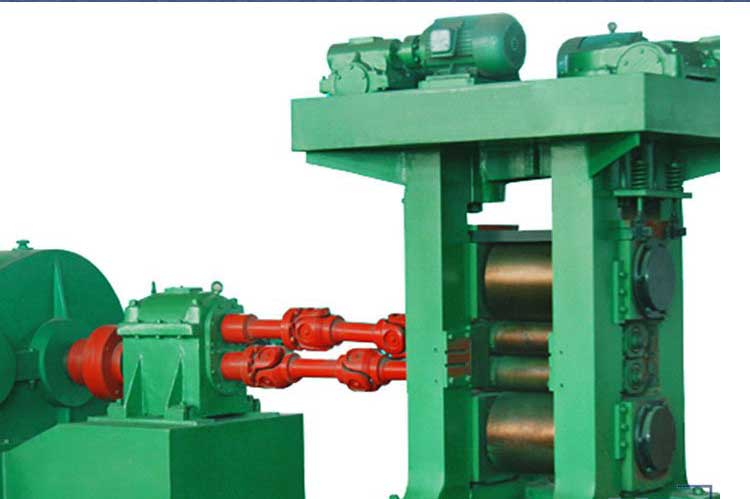
Should preparation for cold rolling mill procurement be taken seriously, and what should be known about rolls?
The Foundation of Success: Why Meticulous Preparation for Cold Rolling Mill Procurement is Non-Negotiable
Investing in a cold rolling mill is a significant capital expenditure that directly shapes your manufacturing capabilities, product quality, and long-term profitability. It’s not a simple off-the-shelf purchase. Therefore, the question isn’t just *if* you should take the preparation seriously, but *how* seriously. The answer, from any seasoned industry professional, is unequivocally: it is one of the most critical stages of the entire project.
A rushed or ill-informed decision can lead to a cascade of problems: equipment that doesn’t meet production targets, poor strip quality, excessive downtime, and costs that spiral far beyond the initial budget. Proper preparation is your insurance against these risks. It ensures the machinery you acquire is not just a piece of equipment, but a tailored solution that integrates seamlessly into your operations.
Key Areas to Address During the Preparation Phase
To ensure you select the right equipment, your preparatory work should be thorough and systematic. It involves looking inward at your own needs and outward at what the market offers.
-
✔
Define Your Technical Requirements: This is the blueprint for your ideal mill. You must have clear, quantifiable answers to these questions:- Material: What type of metal will you be rolling (e.g., carbon steel, stainless steel, aluminum, copper)?
- Dimensions: What are the incoming (hot-rolled) and target outgoing strip thicknesses and widths?
- Tolerance & Quality: What is the required thickness tolerance (e.g., ±0.005mm)? What is the desired surface finish (e.g., Ra value)?
- Production Capacity: What is your target output in tons per year or month? This will influence the rolling speed and coil handling systems.
-
✔
Evaluate Potential Manufacturers: The quality of your mill is directly tied to the expertise of its builder. Look for a professional manufacturer with a proven track record.- Specialization: Do they specialize in the type of mill you need (e.g., 4-Hi, 6-Hi, 20-Hi Sendzimir)?
- Quality Assurance: How do they guarantee quality? Ask about their material sourcing, manufacturing processes (like heat treatment and precision machining), and their final inspection and testing protocols. A reliable manufacturer will be transparent about this.
- After-Sales Support: What level of installation support, training, and long-term technical service do they provide?
The Heart of the Mill: What You Must Know About Rolls
If the mill stand is the body, the rolls are its heart. They perform the physical work of reducing the metal’s thickness. Without high-quality, appropriate rolls, even the most advanced cold rolling mill cannot produce a satisfactory product. Understanding their types, materials, and functions is essential for both procurement and operation.
The primary rolls in a typical 4-High mill are the Work Rolls and the Backup Rolls.
1. Work Rolls: The Point of Contact
These are the smaller diameter rolls that are in direct contact with the metal strip. Their surface quality directly translates to the strip’s surface finish. They must possess extreme hardness, exceptional wear resistance, and a high-quality surface finish.
-
▶
Flat vs. Crowned Rolls: Work rolls are not always perfectly cylindrical. A crowned roll has a very slight convex profile, thicker in the center than at the edges. This is a crucial design feature to counteract the immense rolling forces that cause the rolls to bend. The crown ensures that pressure is applied evenly across the strip’s width, producing a flat product with uniform thickness. The precise crown profile is calculated based on the rolling force and material.
2. Backup Rolls: The Powerhouse Support
Positioned directly behind the work rolls, these are much larger in diameter. Their primary job is to support the slender work rolls and prevent them from deflecting or bending under the massive rolling pressure. They absorb the force and provide the rigidity needed for precision rolling. While they need to be hard, their core toughness and fatigue resistance are more critical than their surface hardness compared to work rolls.
Roll Materials and Key Parameters: A Practical Guide
The choice of material is fundamental to a roll’s performance and lifespan. Different materials are used for work and backup rolls due to their distinct functional requirements. The table below provides a reference for common materials and their typical properties.
| Roll Type | Common Materials | Typical Hardness (Shore D) | Key Properties | Application Notes |
|---|---|---|---|---|
| Work Roll | High-Chromium Forged Steel (e.g., Cr3, Cr5), High-Speed Steel (HSS) | 90 – 100 HSD | Extreme wear resistance, high surface hardness, good thermal crack resistance | Directly contacts the strip. HSS is used for high-performance applications like rolling hard materials. |
| Backup Roll | Alloy Forged Steel (e.g., 70Cr3Mo), Alloy Cast Steel | 60 – 75 HSD | High strength, excellent fatigue resistance, core toughness, spalling resistance | Provides rigid support to work rolls. Must withstand immense bending forces without failure. |
| Intermediate Roll (in 6-Hi Mills) | Alloy Forged Steel, Semi-High-Speed Steel | 80 – 95 HSD | A balance of hardness, wear resistance, and toughness | Transfers force from backup rolls to work rolls, allowing for better shape control. |
The Manufacturing Process Dictates Roll Quality
A reputable manufacturer ensures roll quality through a meticulous production chain:
- Superior Raw Materials: It starts with clean, high-quality steel alloys with precise chemical compositions.
- Advanced Forging & Casting: This process shapes the roll and creates a dense, uniform internal grain structure, which is vital for strength.
- Precision Heat Treatment: Processes like quenching and tempering are expertly controlled to achieve the desired hardness on the surface (the working layer) while maintaining toughness in the core. This dual property is critical for preventing catastrophic failure.
- Rigorous Quality Inspection: Before any roll leaves the factory, it undergoes a battery of tests, including ultrasonic flaw detection to find internal defects, hardness testing across its surface, and dimensional checks to ensure perfect geometry.
Ultimately, a successful cold rolling mill operation is a testament to careful planning. By thoroughly defining your needs, selecting a capable manufacturing partner, and possessing a solid understanding of the mill’s most critical components—the rolls—you lay a robust foundation for efficient, high-quality, and profitable production for years to come.