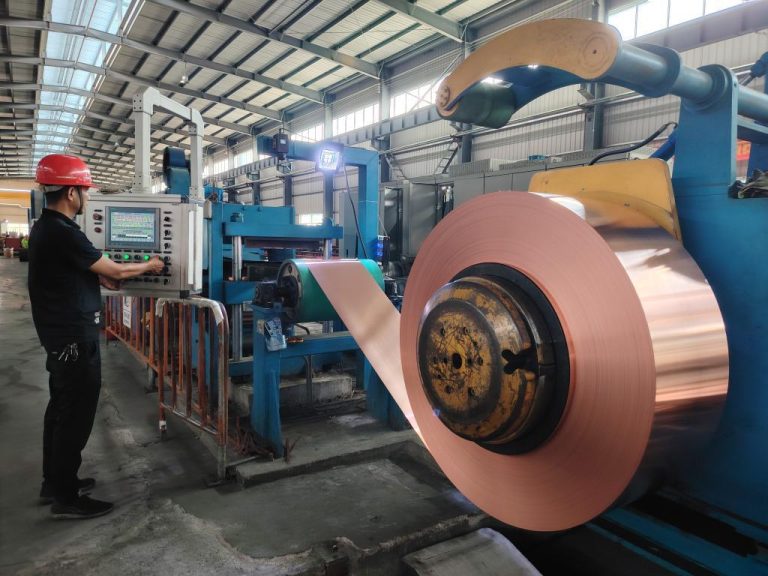
HANI 950 High-Speed Five-Stand Tandem Rolling Mill Deployment
The deployment of high-speed tandem rolling mills represents a pivotal advancement in modern metal processing, particularly for industries requiring precision, efficiency, and high throughput. Among the most sophisticated configurations is the 5 Stand Tandem Rolling Mill, which enables continuous reduction of metal strip thickness across five sequential stands without intermediate coiling or reheating. This article delves into the technical architecture, operational advantages, performance metrics, and industrial applications of the HANI 950 High-Speed Five-Stand Tandem Rolling Mill—a benchmark system that exemplifies cutting-edge metallurgical engineering.
Understanding the 5 Stand Tandem Rolling Mill Architecture
A 5 Stand Tandem Rolling Mill consists of five individual rolling stands arranged in series, each equipped with work rolls and backup rolls (typically four- or six-high configuration). As the metal strip passes through each stand, it undergoes incremental thickness reduction under precisely controlled roll gaps and tension. The entire process occurs at high speed—often exceeding 1,000 meters per minute—making it ideal for mass production of cold-rolled steel, aluminum, or copper strips with tight dimensional tolerances.
Unlike reversible mills that require multiple passes, the tandem configuration achieves final gauge in a single pass, significantly reducing cycle time and energy consumption. The HANI 950 model, designed for a nominal width of 950 mm, integrates advanced automation, real-time monitoring, and adaptive control systems to maintain consistent product quality even under variable input conditions.
Core Technical Specifications of the HANI 950 System
The HANI 950 High-Speed Five-Stand Tandem Rolling Mill is engineered for high productivity and reliability. Below is a detailed specification table outlining its key parameters:
| Parameter | Value / Range |
|---|---|
| Mill Type | 5 Stand Tandem Rolling Mill |
| Nominal Strip Width | 950 mm |
| Input Thickness Range | 1.0 – 4.0 mm |
| Output Thickness Range | 0.15 – 1.2 mm |
| Maximum Rolling Speed | 1,200 m/min |
| Roll Configuration | Four-high or Six-high per stand |
| Drive System | Individual AC vector drives with regenerative braking |
| Automation Level | Fully automated with Level 1 (PLC) and Level 2 (process optimization) |
| Thickness Control Accuracy | ±3 µm (for target thickness ≥ 0.3 mm) |
| Flatness Control | Hydraulic roll bending + automatic flatness actuators |
Operational Advantages of the 5 Stand Tandem Rolling Mill
The adoption of a 5 Stand Tandem Rolling Mill such as the HANI 950 delivers transformative benefits across multiple dimensions of metal strip production:
- Throughput Efficiency: Single-pass operation eliminates intermediate handling, enabling production rates up to 3× higher than reversible mills.
- Energy Savings: Continuous deformation reduces thermal losses and mechanical inefficiencies, lowering specific energy consumption by 15–25%.
- Dimensional Precision: Real-time AGC (Automatic Gauge Control) and interstand tension regulation ensure micron-level thickness consistency.
- Surface Quality: Optimized roll force distribution minimizes edge drop and center buckle, critical for automotive and electronics-grade materials.
- Flexibility: Quick setup systems allow rapid grade changes, supporting mixed-product scheduling without significant downtime.
Moreover, the integration of predictive maintenance algorithms and digital twin technology in modern 5 Stand Tandem Rolling Mill installations further enhances uptime and reduces unplanned outages. Vibration analysis, oil condition monitoring, and roll wear prediction are now standard features in high-end systems like the HANI 950.
Material Compatibility and Industrial Applications
The HANI 950 5 Stand Tandem Rolling Mill is primarily deployed for cold rolling of low-carbon steel, but its modular design accommodates a wide range of alloys:
| Material Type | Typical Final Gauge (mm) | Key End Uses |
|---|---|---|
| Low-Carbon Steel (DC01–DC06) | 0.20 – 1.0 | Automotive body panels, appliances, construction |
| High-Strength Low-Alloy (HSLA) | 0.30 – 1.2 | Structural components, chassis parts |
| Electrical Steel (Non-grain-oriented) | 0.35 – 0.65 | Motor laminations, transformers |
| Aluminum Alloys (1xxx, 3xxx, 5xxx) | 0.15 – 0.80 | Heat exchangers, packaging foil stock |
| Copper & Copper Alloys | 0.20 – 0.70 | Electrical conductors, connectors |
Notably, the mill’s ability to produce ultra-thin gauges (<0.2 mm) with excellent flatness makes it suitable for emerging applications in battery foils (e.g., lithium-ion anode current collectors) and flexible electronics substrates.
Control Systems and Process Integration
Modern 5 Stand Tandem Rolling Mill installations rely on multi-layered control architectures. The HANI 950 employs a three-tier system:
- Level 0 (Field Devices): Encoders, load cells, laser micrometers, and hydraulic servo valves provide real-time feedback.
- Level 1 (Basic Automation): PLCs execute closed-loop control of roll gap, speed, and tension using PID algorithms and feedforward compensation.
- Level 2 (Process Optimization): A supervisory computer calculates optimal setpoints based on material models, historical data, and quality targets. It interfaces with MES/ERP for production scheduling.
Advanced features include:
- Dynamic crown control via roll bending and窜辊 (roll shifting)
- Interstand loopers or tension reels for stable strip threading
- Online surface inspection systems (e.g., CCD cameras with AI-based defect classification)
- Data historian for OEE (Overall Equipment Effectiveness) tracking
Installation, Commissioning, and Performance Validation
Deploying a 5 Stand Tandem Rolling Mill requires meticulous planning. Typical project phases include:
- Foundation Design: Vibration isolation and precise leveling (±0.02 mm/m) are critical for mill stability.
- Mechanical Assembly: Alignment of stands within 0.05 mm tolerance over 30-meter length.
- Electrical Integration: Synchronization of drive systems to prevent strip breakage during acceleration.
- Hot Commissioning: Gradual ramp-up from 200 m/min to full speed over 2–3 weeks, with continuous quality audits.
Industry benchmarks indicate that a well-commissioned HANI 950 system achieves:
- Yield > 98.5%
- Gauge variation < ±1.5% of target
- Flatness < 10 I-Units (for automotive grades)
- Availability > 92% in first year of operation
Future Trends and Sustainability Considerations
The evolution of the 5 Stand Tandem Rolling Mill is closely tied to Industry 4.0 and decarbonization goals. Emerging innovations include:
- Digital Twins: Virtual replicas simulate process changes before physical implementation, reducing trial costs.
- AI-Based Quality Prediction: Machine learning models forecast flatness and surface defects from upstream data.
- Regenerative Energy Recovery: Braking energy from decelerating stands is fed back to the grid, cutting electricity use by 8–12%.
- Hydrogen-Compatible Lubrication: Development of eco-friendly rolling oils for future green steel production.
As global demand for high-strength, lightweight materials grows—especially in electric vehicles and renewable energy sectors—the role of the 5 Stand Tandem Rolling Mill will only expand. Systems like the HANI 950 represent not just a production asset, but a strategic enabler of next-generation manufacturing.
Conclusion
The HANI 950 High-Speed Five-Stand Tandem Rolling Mill sets a new standard for efficiency, precision, and adaptability in cold strip rolling. By leveraging the inherent advantages of the 5 Stand Tandem Rolling Mill configuration—continuous processing, minimal energy loss, and superior gauge control—producers can meet stringent market demands while optimizing operational costs. With ongoing advancements in automation and sustainability, this technology remains at the forefront of metallurgical innovation, offering long-term value for forward-looking manufacturers worldwide.
Whether producing automotive-grade steel or ultra-thin battery foils, the 5 Stand Tandem Rolling Mill continues to prove its indispensability in modern metalworking. Its deployment marks a significant step toward smarter, greener, and more competitive industrial operations.