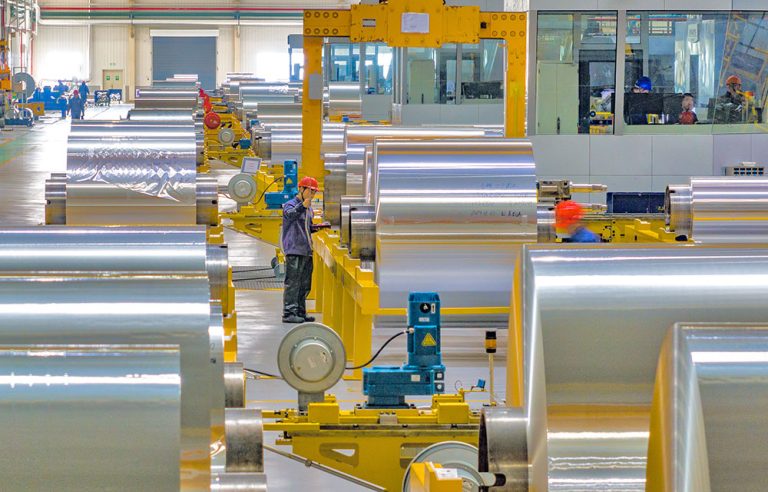
Main Technologies and Applications of Cold Rolling Mills
Cold rolling mills represent a cornerstone of modern metal processing technology, enabling the production of high-precision, high-quality metal strips and sheets with exceptional surface finish and mechanical properties. Unlike hot rolling, which occurs above the recrystallization temperature of the metal, cold rolling is performed at or near ambient temperature. This process induces significant work hardening, enhances strength, and allows for tighter dimensional tolerances—making Cold Rolling Mills indispensable across industries ranging from automotive and aerospace to electronics and packaging.
Core Technologies Behind Modern Cold Rolling Mills
The performance and efficiency of Cold Rolling Mills hinge on several interdependent technological systems. These include advanced roll configurations, precision automation, hydraulic actuation, lubrication strategies, and real-time monitoring. Each component must be meticulously engineered to ensure consistent output quality and operational reliability.
1. Roll Stand Configurations
The architecture of the roll stand defines the mill’s capability in terms of reduction ratio, flatness control, and material versatility. Common configurations include:
| Type | Roll Count | Key Features | Typical Applications |
|---|---|---|---|
| Four-High Mill | 4 | Work rolls supported by backup rolls; good stiffness for medium reductions | Carbon steel, stainless steel strips (0.3–3.0 mm) |
| Six-High Mill (e.g., HC Mill) | 6 | Intermediate rolls enable bending and shifting for superior flatness control | High-strength steels, silicon steel, thin aluminum (0.1–2.0 mm) |
| Twenty-High Mill (Sendzimir-type) | 20 | Cluster design with multiple backup rolls; extreme rigidity for ultra-thin gauges | Stainless steel foil, specialty alloys (<0.1 mm) |
| Tandem Cold Mill | Multiple stands (4–6 typical) | Continuous high-speed rolling with interstand tension control | Mass production of automotive-grade steel coils |
Among these, six-high Cold Rolling Mills, particularly the HC (High Crown) variant, have gained prominence due to their ability to dynamically adjust roll crown and edge drop—critical for producing flat, uniform strips required in demanding applications like electric motor laminations.
2. Automation and Control Systems
Modern Cold Rolling Mills integrate multi-layered control architectures that manage everything from entry thickness to exit flatness. Key subsystems include:
- Automatic Gauge Control (AGC): Uses hydraulic cylinders and X-ray gauges to maintain precise strip thickness within ±2 µm.
- Flatness Control: Employs segmented cooling sprays, roll bending, and roll shifting to correct shape defects such as edge wave or center buckle.
- Tension Control: Maintains optimal interstand tension in tandem mills to prevent slippage and ensure uniform elongation.
- Data Analytics & AI: Advanced mills now use machine learning models to predict roll wear, optimize pass schedules, and reduce setup time.
These systems collectively reduce human intervention, minimize scrap rates, and enable “lights-out” operation in fully automated facilities.
3. Hydraulic and Lubrication Systems
High-pressure hydraulic systems (typically 250–350 bar) provide rapid response for AGC actuators and roll gap adjustments. Simultaneously, the lubrication system—often using oil-in-water emulsions—serves dual purposes:
- Cooling the roll-strip interface to manage thermal crown and prevent annealing during deformation.
- Reducing friction to lower rolling forces and extend roll life.
Poor lubrication can lead to surface defects like scratches or pick-up, directly impacting product quality. Hence, filtration, concentration control, and pH monitoring are standard in industrial Cold Rolling Mills.
Material-Specific Applications of Cold Rolling Mills
The versatility of Cold Rolling Mills stems from their adaptability to diverse metallic substrates. Below is a detailed breakdown by material class:
Steel Processing
In the steel industry, cold rolling transforms hot-rolled coils into finished products with enhanced mechanical properties and surface aesthetics. Key outputs include:
- Automotive Sheets: Dual-phase (DP) and transformation-induced plasticity (TRIP) steels rolled to 0.6–1.8 mm for body-in-white structures.
- Electrical Steel: Grain-oriented silicon steel cold-rolled to 0.23–0.35 mm, then annealed for transformer cores.
- Stainless Steel Strips: Used in appliances, cutlery, and medical devices; often processed on twenty-high mills for gauge accuracy.
Notably, tandem Cold Rolling Mills can achieve total reductions exceeding 90% in a single pass sequence, drastically improving throughput compared to reversible mills.
Aluminum and Copper Alloys
Non-ferrous metals demand specialized mill designs due to their lower yield strength and higher ductility:
- Aluminum Foil: Produced via double cold rolling (two layers rolled simultaneously) down to 0.006 mm for packaging. Dedicated aluminum Cold Rolling Mills feature inert atmosphere chambers to prevent oxidation.
- Copper Strips: Rolled to 0.05–0.5 mm for electrical connectors and printed circuit boards. Surface cleanliness is paramount—hence integrated cleaning lines often follow the mill.
For both materials, residual stress management through controlled tension leveling is critical to avoid coil set or camber.
Integration with Downstream Processes
Standalone Cold Rolling Mills are increasingly rare. Modern plants favor integrated lines that combine rolling with ancillary processes to enhance efficiency and reduce handling:
| Integrated Process | Function | Benefit |
|---|---|---|
| Acid Pickling + Cold Rolling (APL/TCM) | Removes oxide scale before rolling | Eliminates separate pickling line; reduces capital cost |
| Skin Pass / Temper Mill | Applies 0.5–2% elongation post-rolling | Improves surface texture and eliminates yield point elongation |
| Slitting & Recoiling | Cuts master coil into narrower widths | Enables just-in-time delivery to end users |
| Electrolytic Cleaning | Removes rolling oil residues | Essential for subsequent coating or plating |
Such integration not only streamlines logistics but also ensures consistent surface chemistry—vital for galvanizing or painting operations downstream.
Emerging Trends and Future Outlook
The evolution of Cold Rolling Mills is driven by three macro-trends:
- Digitalization: IoT-enabled sensors monitor roll eccentricity, bearing temperature, and vibration in real time, enabling predictive maintenance.
- Sustainability: Closed-loop emulsion systems and energy recovery from braking resistors reduce environmental impact.
- Material Innovation: As new alloys (e.g., high-Mn steels, Al-Li composites) enter the market, mills must adapt with enhanced force capacity and corrosion-resistant components.
Furthermore, the push toward Industry 4.0 has led to the development of “digital twins”—virtual replicas of physical Cold Rolling Mills that simulate process parameters before actual production, minimizing trial-and-error waste.
Conclusion
Cold Rolling Mills remain at the heart of precision metal forming, combining mechanical ingenuity with digital intelligence to meet ever-tightening industrial specifications. From four-high reversible units for niche alloys to high-speed tandem lines producing millions of tons annually, the technology continues to evolve in response to market demands for thinner, stronger, and cleaner metal products. As global manufacturing embraces automation and sustainability, the role of advanced Cold Rolling Mills will only grow more pivotal—ensuring that this century-old process remains at the forefront of materials engineering innovation.
Note: The technical data and configurations described herein reflect current industry standards as of 2024 and are based on established metallurgical principles and equipment design practices. Actual mill performance may vary depending on specific operational parameters and material characteristics.