
Copper Foil Production
Brand name: HANI
Packing Details : Wooden box with fumigation or Wooden Fram or Steel Frame
Delivery Details: 30~60days or Based on the quantity
Shipping: Sea freight、Land freight、Air freight
HANI focuses on cold rolling mill equipment technology, safeguarding your production.
Product Details
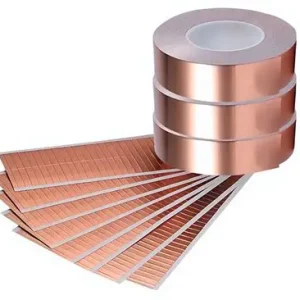
Copper foil represents one of the most critical materials in modern electronics manufacturing. The advanced Copper Foil Production process involves sophisticated cold rolling technology that transforms copper ingots into ultra-thin conductive sheets with exceptional electrical and thermal properties. This comprehensive guide explores the intricate details of copper foil manufacturing, with particular emphasis on cold rolling techniques that have revolutionized the industry.
The Science Behind Copper Foil Production
Modern Copper Foil Production begins with high-purity copper (typically 99.99% pure) that undergoes a meticulous transformation process. The cold rolling technique is fundamental to achieving the required thickness, surface finish, and mechanical properties essential for electronic applications. During cold rolling, copper slabs pass through precision-engineered rollers that gradually reduce thickness while maintaining structural integrity. This mechanical deformation increases tensile strength through work hardening while preserving electrical conductivity.
The metallurgical science behind successful Copper Foil Production involves careful control of crystal structure orientation. Cold rolling creates a preferred crystal orientation that enhances electrical conductivity while providing the mechanical strength needed for handling during circuit board manufacturing. Temperature regulation during rolling is critical—typically maintained between 20-40°C—to prevent annealing effects that would compromise the work-hardened structure.
Advanced Cold Rolling Technology in Copper Foil Manufacturing
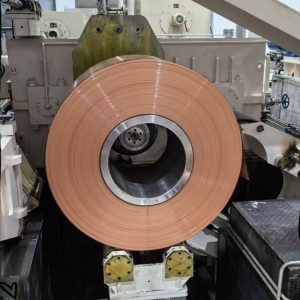
Contemporary cold rolling mills designed specifically for Copper Foil Production incorporate hydraulic automatic gauge control (AGC) systems that maintain thickness tolerances within ±0.5μm. These sophisticated four-high reversible mills feature work rolls with precisely engineered surface finishes that impart the required surface characteristics to the copper foil. The backing rolls provide necessary support to prevent work roll deflection under the immense pressures required for ultra-thin foil production.
Roll gap control in modern Copper Foil Production equipment utilizes laser measurement systems that continuously monitor strip thickness and automatically adjust roll positioning through servo-hydraulic actuators. This closed-loop control system ensures consistent thickness across the entire width of the foil, critical for uniform electrical performance in printed circuit boards. Leading manufacturers like HANI have pioneered innovations in roll surface texturing that create micro-roughness patterns optimized for resin adhesion in PCB laminates.
Technical Parameters in Copper Foil Production
| Parameter | Standard Range | High-Performance Range | Measurement Method |
|---|---|---|---|
| Thickness | 3-105μm | 1.5-18μm | X-ray gauge |
| Tensile Strength | 250-350 MPa | 400-600 MPa | ASTM E8 |
| Elongation | 2-5% | 0.5-2% | ASTM E8 |
| Surface Roughness (Ra) | 0.2-0.4μm | 0.05-0.15μm | Profilometer |
| Electrical Conductivity | ≥95% IACS | ≥100% IACS | ASTM B193 |
The Complete Copper Foil Production Workflow
The sophisticated Copper Foil Production process begins with casting high-purity copper into thick slabs. These slabs undergo hot rolling to reduce thickness to approximately 10-15mm before entering the cold rolling section. The initial cold rolling passes reduce thickness to 2-3mm with intermediate annealing cycles to restore ductility. The final cold rolling stages achieve the target thickness with exceptional precision, followed by slitting to customer-specified widths.
Roll surface maintenance is critical in high-volume Copper Foil Production. Work rolls undergo regular grinding to maintain precise crown profiles and surface finishes. Advanced rolling mills incorporate automatic roll changing systems that reduce downtime between production runs. Lubrication systems precisely meter oil-water emulsions to the roll-strip interface, controlling friction while preventing contamination of the copper surface.
Quality Control in Modern Copper Foil Production
Rigorous quality control protocols ensure consistent performance in Copper Foil Production. Online monitoring systems track thickness variations across the strip width with micron-level precision. Surface inspection cameras detect microscopic imperfections that could compromise PCB reliability. Tensile testing samples are taken at regular intervals to verify mechanical properties remain within specification.
Environmental controls in Copper Foil Production facilities maintain temperature and humidity within tight tolerances. Particulate filtration systems prevent contamination that could create defects in ultra-thin foil. Trace element analysis ensures copper purity meets or exceeds industry standards. The integration of these quality systems creates a comprehensive framework for producing copper foil that meets the demanding requirements of advanced electronics manufacturing.
Technical Challenges in Copper Foil Production
The relentless drive toward thinner copper foils presents significant challenges for Copper Foil Production. Foils below 5μm thickness require specialized handling systems to prevent tearing and wrinkling. Edge wave and center buckle defects become increasingly problematic as thickness decreases, demanding advanced roll contour control systems. Surface roughness must be meticulously controlled to prevent current crowding in high-frequency applications.
Roll wear accelerates dramatically in ultra-thin Copper Foil Production, requiring frequent roll changes and precise scheduling of maintenance activities. Tension control becomes critical at reduced thicknesses, with modern systems employing load cells and dancer rolls to maintain consistent strip tension throughout the rolling process. These challenges drive continuous innovation in rolling mill design and process control strategies.
Frequently Asked Questions
Q: What thickness ranges are achievable in modern Copper Foil Production?
A: Standard production capabilities range from 3μm to 105μm, with specialized equipment capable of producing foils as thin as 1.5μm for advanced semiconductor packaging applications. Thickness control accuracy typically maintains ±0.5μm tolerance for standard products and ±0.2μm for high-precision applications.
Q: How does cold rolling affect the electrical properties of copper foil?
A: Properly controlled cold rolling actually enhances electrical conductivity by aligning copper crystal structures. However, excessive work hardening without proper annealing can reduce conductivity. Advanced Copper Foil Production facilities carefully balance mechanical properties and electrical performance through precise control of reduction ratios and thermal processing.
Q: What surface treatments are applied in Copper Foil Production?
A: Most copper foils receive various surface treatments including: oxide or oxide-free bond enhancement coatings, anti-tarnish treatments, and carrier foil lamination for ultra-thin products. These treatments improve adhesion to substrate materials while protecting the copper surface during storage and handling.
Q: How does rolling direction affect copper foil performance?
A: The rolling direction creates grain orientation that affects both mechanical and electrical properties. Foil exhibits higher tensile strength in the rolling direction but better etching characteristics perpendicular to it. Advanced Copper Foil Production facilities can control grain structure through precise reduction schedules to optimize performance for specific applications.
Future Trends in Copper Foil Production
The evolution of Copper Foil Production continues to accelerate with the demands of next-generation electronics. Artificial intelligence is increasingly deployed to optimize rolling parameters in real-time, predicting and compensating for variations before they affect product quality. Digital twin technology allows engineers to simulate entire production scenarios before implementing changes on actual equipment, reducing downtime and improving yield rates.
Sustainability initiatives are transforming Copper Foil Production facilities worldwide. Closed-loop cooling systems drastically reduce water consumption while advanced filtration captures copper particles from lubricants for recycling. Energy recovery systems capture heat from rolling operations to pre-heat water or facility spaces. These innovations align with global sustainability goals while reducing operational costs.
The future of Copper Foil Production will increasingly focus on functionalized surfaces engineered at the nanoscale. Research into graphene-coated copper foils shows promise for dramatically improved current capacity and thermal management. Similarly, patterned copper foils with integrated microstructures enable novel circuit designs impossible with conventional materials. These advancements position copper foil as an enabling technology for next-generation electronics far beyond its traditional applications.
Leading manufacturers continue to push the boundaries of what’s possible in Copper Foil Production. Companies investing in cutting-edge rolling technology and metallurgical research remain at the forefront of this critical industry. The integration of advanced materials science with precision engineering creates copper foils capable of meeting the extraordinary demands of modern electronics—from flexible displays to high-power electric vehicle systems.
In conclusion, the sophisticated science and engineering behind modern Copper Foil Production represents a remarkable achievement in materials manufacturing. As electronic devices continue to shrink while increasing in power and complexity, the importance of advanced copper foil technologies will only grow more significant in the global technology landscape.
HANI is one of China’s leading professional cold rolling mill manufacturers, providing complete cold rolling systems to steel companies worldwide. HANI focuses on designing and manufacturing integrated cold rolling solutions that meet the industry’s highest standards of precision, efficiency, and durability. Our engineering expertise lies in providing turnkey cold rolling production lines to optimize the performance of modern steel manufacturing plants.