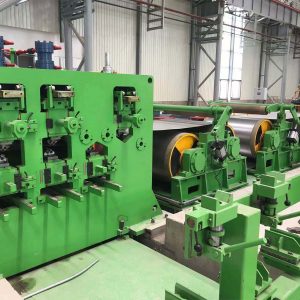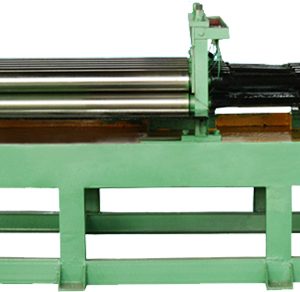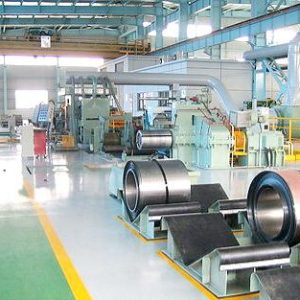

Tension levelling unit
Brand name: HANI
Packing Details : Wooden box with fumigation or Wooden Fram or Steel Frame
Delivery Details: 30~60days or Based on the quantity
Shipping: Sea freight、Land freight、Air freight
HANI focuses on cold rolling mill equipment technology, safeguarding your production.
Product Details
In the demanding world of metal processing industries, achieving perfect strip flatness is not just a preference but a necessity. The tension levelling unit represents the pinnacle of precision engineering designed to eliminate undesirable shape defects in metal strips. This comprehensive guide explores the technical intricacies, operational advantages, and practical applications of modern tension levelling systems that have revolutionized quality control in metal fabrication facilities worldwide.
Technical Principles of Tension Levelling
Unlike conventional roller levellers that rely solely on bending stresses, the advanced tension levelling process combines controlled elongation with repeated bending to achieve superior flatness results. This dual-action approach works on the fundamental metallurgical principle that when a material is stretched beyond its yield point while simultaneously being bent, internal residual stresses are effectively neutralized. The science behind effective tension levelling involves precise calculation of elongation rates, typically between 0.5-3%, sufficient to overcome yield strength variations across the strip width without compromising material integrity.
Modern tension levelling units employ sophisticated servo-hydraulic systems that maintain constant tension throughout the process, automatically compensating for material inconsistencies. The integration of closed-loop tension control with precisely calculated roller deflection ensures that even the most challenging materials—such as high-strength stainless steels, spring temper alloys, and thin gauge specialty metals—emerge with exceptional flatness tolerances unattainable through conventional methods.
Engineering Configuration and Workflow Integration
A complete tension levelling production line follows a meticulously engineered sequence: uncoiling → two-roll feed → hydraulic shearing → welding → entry bridle rollers → tension levelling unit → exit bridle rollers → optional oiling system → final shearing → tension-assisted recoiling. Each component is precisely synchronized to maintain optimal strip tension throughout the entire process, eliminating the risk of material distortion during transition between processing stages.
The heart of the system—the tension levelling section itself—typically features either a 2-bend-1-level or 2-bend-2-level configuration depending on material requirements. The first bending station introduces controlled deformation, while subsequent levelling stations progressively refine flatness characteristics. Advanced units incorporate automatic roll gap adjustment systems with precision tolerances of ±0.01mm, ensuring consistent results regardless of strip width or material grade variations.
Technical Specifications and Capability Range
| Roll Length (mm) | 350-600 | 600-800 | 800-1000 | 1000-1200 | 1200-1450 |
|---|---|---|---|---|---|
| Strip Width Range (mm) | 350-500 | 550-700 | 750-900 | 950-1100 | 1100-1300 |
| Material Thickness Range (mm) | 0.2-1.2 | 0.2-1.2 | 0.2-1.2 | 0.2-1.2 | 0.2-1.2 |
| Elongation Control Range (%) | 0.5-3.0 | 0.5-3.0 | 0.5-3.0 | 0.5-3.0 | 0.5-3.0 |
| Maximum Line Speed (m/min) | 120 | 110 | 100 | 90 | 80 |
| Tension Capacity (kN) | 85 | 125 | 180 | 240 | 320 |
Material Science Applications
The versatility of tension levelling technology extends across diverse material categories. For austenitic stainless steels (grades 301, 304, 316), the process eliminates coil set and crossbow distortions while preserving corrosion resistance properties. In carbon steel processing, precise tension control prevents yield point elongation phenomena that cause stretcher strains in subsequent forming operations. When applied to copper alloys and aluminum strips, specialized roll materials and surface treatments prevent marking while achieving the stringent flatness requirements demanded by electronics and electrical component manufacturers.
HANI’s engineering team has perfected the material-specific parameter sets through extensive metallurgical research, ensuring optimal elongation rates that maximize flatness improvement while maintaining critical material properties. Their proprietary tension control algorithms dynamically adjust to material yield strength variations across the strip width—a common challenge in wide-width processing that conventional levelling systems cannot overcome.
Quality Enhancement and ROI Considerations
Implementing an advanced tension levelling unit delivers measurable improvements across multiple quality metrics. Surface waviness (I-unit measurements) typically improves by 60-80%, while cross-sectional flatness deviation is reduced to less than 0.1% of strip width. These improvements translate directly to downstream processing benefits: stamping operations experience fewer misfeeds and jamming incidents, laser cutting operations achieve more consistent edge quality, and coating processes demonstrate improved adhesion characteristics and reduced material waste.
The economic justification for investing in modern tension levelling technology becomes compelling when considering the complete value chain impact. Processing facilities report yield improvements of 3-7% through elimination of shape-related scrap, while throughput increases of 15-25% are achieved through reduced downtime for quality interventions. Energy consumption per ton of processed material decreases by approximately 18% compared to conventional levelling approaches due to optimized power transmission design and regenerative braking systems on modern tension levelling installations.
Maintenance and Operational Excellence
Sustainable performance of tension levelling equipment depends on systematic maintenance protocols and operator expertise. Critical wear components—including work rolls, backup bearings, and tension measurement systems—require scheduled inspection and replacement based on accumulated operating hours rather than reactive failure replacement. Contemporary tension levelling units incorporate comprehensive condition monitoring systems that track vibration signatures, temperature profiles, and power consumption patterns to predict component failures before they impact production quality.
Operator training represents another crucial element in realizing the full potential of tension levelling technology. Personnel must understand the metallurgical principles behind the process to make informed adjustments when processing new materials or addressing quality deviations. Leading manufacturers like HANI provide comprehensive training programs covering material behavior fundamentals, equipment operation protocols, and troubleshooting methodologies to ensure consistent performance across varying production conditions.
Frequently Asked Questions
Q: What is the fundamental difference between roller levelling and tension levelling?
A: Roller levelling relies solely on alternating bending stresses to correct shape defects, while tension levelling combines controlled elongation (stretching beyond yield point) with bending action. This dual-action approach of tension levelling produces superior flatness results, especially for materials with yield point phenomena or severe shape defects.
Q: How does material thickness affect tension levelling parameters?
A: Thinner materials require more precise tension control to prevent necking or breakage. For materials below 0.5mm thickness, elongation rates are typically maintained at the lower end of the spectrum (0.5-1.0%), while thicker materials (above 0.8mm) can tolerate higher elongation rates (1.5-3.0%). Modern tension levelling systems incorporate automatic parameter adjustment based on real-time thickness measurement.
Q: Can tension levelling improve material mechanical properties?
A: While primarily designed for shape correction, the controlled elongation process in tension levelling does produce beneficial effects on material properties. Yield strength typically increases by 5-12% through strain hardening effects, while elongation capacity may decrease slightly. For applications requiring specific mechanical properties after levelling, process parameters can be optimized to achieve the desired balance between flatness improvement and property retention.
Q: What maintenance schedule is recommended for critical tension levelling components?
A: Work rolls should be inspected after every 2,000 operating hours and reconditioned or replaced based on surface wear measurements. Tension measurement systems require calibration every 500 operating hours. Hydraulic systems should undergo fluid analysis quarterly with full fluid replacement annually. Modern tension levelling units with condition monitoring capabilities can extend these intervals based on actual component condition rather than fixed schedules.
Future Developments in Tension Levelling Technology
The evolution of tension levelling technology continues to accelerate with digitalization and Industry 4.0 integration. Next-generation systems incorporate artificial intelligence algorithms that learn optimal parameter settings based on material certification data and historical processing results. Digital twin technology enables virtual process simulation before actual production runs, minimizing material waste during setup procedures and accelerating time-to-quality for new products.
Sustainability considerations are driving innovations in energy recovery systems, where the braking energy during deceleration phases is captured and reused within the production facility. Additionally, advanced roll coating technologies utilizing nanocomposite materials are extending component life while reducing maintenance requirements, further enhancing the economic case for modern tension levelling implementations. The ongoing research in adaptive control systems promises even greater precision in flatness correction, particularly for ultra-thin and ultra-high-strength materials that present unique processing challenges.
For metal processors seeking to elevate product quality and operational efficiency, investing in advanced tension levelling technology represents a strategic decision with demonstrable returns. The sophisticated engineering behind modern tension levelling units delivers consistent flatness results unattainable through conventional methods, directly contributing to downstream processing efficiency and final product quality. As material specifications continue to tighten across industries, the capability of precision tension levelling will become increasingly valuable in maintaining competitive advantage in high-value metal processing markets.
The comprehensive tension levelling solution described here embodies decades of metallurgical research and mechanical engineering excellence. Whether processing stainless steel for medical devices, copper alloys for electrical components, or specialty alloys for aerospace applications, the precision flatness achieved through advanced tension levelling technology provides the foundation for superior downstream manufacturing performance. As industry requirements continue to evolve, the fundamental principles of controlled elongation combined with precision bending will remain central to achieving exceptional flatness standards in metal strip processing.
HANI is one of China’s leading professional cold rolling mill manufacturers, providing complete cold rolling systems to steel companies worldwide. HANI focuses on designing and manufacturing integrated cold rolling solutions that meet the industry’s highest standards of precision, efficiency, and durability. Our engineering expertise lies in providing turnkey cold rolling production lines to optimize the performance of modern steel manufacturing plants.