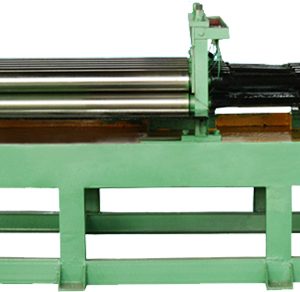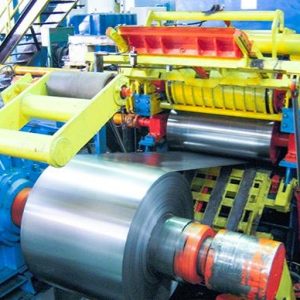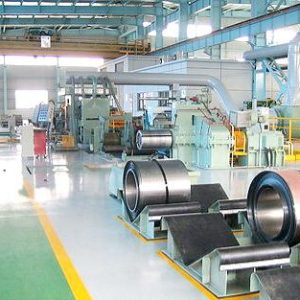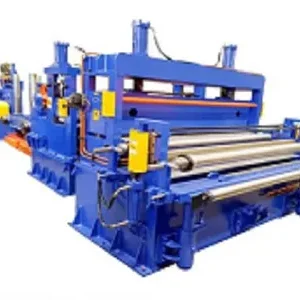

Tension Leveling Unit
Brand name: HANI
Packing Details : Wooden box with fumigation or Wooden Fram or Steel Frame
Delivery Details: 30~60days or Based on the quantity
Shipping: Sea freight、Land freight、Air freight
HANI focuses on cold rolling mill equipment technology, safeguarding your production.
Product Details
Advanced tension leveling technology for superior flatness and surface quality in metal strip processing
Introduction to Modern Tension Leveling Systems
In the ever-evolving landscape of metal processing technology, the tension leveling unit stands as a critical component in modern strip production lines. Tension leveling represents a sophisticated approach to metal strip processing that combines mechanical bending with controlled tension to eliminate shape defects and residual stresses. This advanced technology has revolutionized how manufacturers achieve superior flatness and surface properties in processed metals.
HANI has pioneered significant innovations in tension leveling technology, developing systems that deliver unparalleled precision and reliability. Our tension leveling units are engineered to address the most challenging flatness requirements across various metal processing applications, from stainless steel and aluminum to specialty alloys and coated materials.
Technical Principles of Tension Leveling
The scientific foundation of effective tension leveling lies in its dual-action principle. Unlike conventional roller leveling that relies solely on bending, modern tension leveling combines controlled tension with repeated bending over small-diameter work rolls. This dual-action mechanism effectively stretches the material beyond its yield point, eliminating internal stresses that cause waviness, bow, and other shape imperfections.
During the tension leveling process, the strip is subjected to precisely calculated tension forces while simultaneously passing through an arrangement of work rolls. This combination of tension and bending creates plastic deformation throughout the cross-section of the material, resulting in superior flatness and improved mechanical properties. The effectiveness of tension leveling is particularly notable for thin gauge materials where conventional leveling methods often fall short.
Advanced Features of Modern Tension Leveling Units
Today’s premium tension leveling systems incorporate sophisticated technologies that enhance performance and operational efficiency:
- Hydraulic AGC System: Advanced Automatic Gauge Control with millisecond response time ensures consistent strip thickness and flatness regardless of input material variations.
- Roll Bending Control: Precision hydraulic roll bending mechanisms compensate for roll deflection and thermal expansion during operation.
- Multi-Zone Cooling: Temperature-controlled roll cooling systems maintain optimal operating temperatures for consistent performance during extended production runs.
- Digital Load Monitoring: Real-time monitoring of roll forces and tension parameters with automatic adjustment capabilities.
- Entry/Exit Guiding Systems: Advanced guiding mechanisms with anti-wrinkle and anti-jump rollers ensure smooth material flow through the tension leveling unit.
Technical Specifications and Capabilities
The performance capabilities of tension leveling equipment vary significantly based on configuration and application requirements. Below is a comprehensive technical reference table for industrial-grade tension leveling units:
| Model | Roll Configuration | Width Range (mm) | Thickness Range (mm) | Max Tension (kN) | Control System |
|---|---|---|---|---|---|
| TL-350/400 | 2-High | 250-300 | 0.3-1.0 | 150 | Electric Screwdown |
| TL-450/550E | 4-High | 350-450 | 0.3-1.0 | 220 | Electric Screwdown |
| TL-450/550H | 4-High | 350-450 | 0.2-0.8 | 250 | Hydraulic AGC |
| TL-550/750 | 4-High | 550-750 | 0.32-1.0 | 350 | Hydraulic AGC |
| TL-700/900 | 4-High HC | 700-900 | 0.2-0.8 | 420 | Hydraulic AGC with CVC |
| TL-700/1200 | 4-High HC | 1000-1200 | 0.2-0.8 | 500 | Hydraulic AGC with CVC |
Production Line Integration and Workflow
A complete tension leveling production line typically follows this standardized workflow configuration:
- Uncoiler: Precision-controlled payoff reel with automatic strip end detection
- Hydraulic Shear: For trimming irregular strip heads and preparing clean entry
- Entry S-Roller Section: Provides initial tension control and alignment
- Entry Anti-Wrinkle Rollers: Prevent material distortion during entry
- Tension Leveling Unit: Core processing section where flatness correction occurs
- Exit Anti-Wrinkle Rollers: Stabilize material after leveling process
- Exit S-Roller Section: Maintains precise tension control during exit
- Recoiler: High-precision winding with automatic tension control
This integrated approach ensures consistent material handling throughout the entire tension leveling process. The strategic placement of S-rollers before and after the main tension leveling unit creates optimal tension profiles that enhance the effectiveness of the flattening operation while preventing material damage.
Advanced Control Systems for Precision Tension Leveling
Modern tension leveling units employ sophisticated control strategies that significantly enhance processing capabilities:
- Constant Elongation Control: Maintains precise material elongation regardless of input variations
- Constant Rolling Force Control: Adapts to material property changes in real-time
- Constant Roll Gap Control: Ensures consistent mechanical configuration throughout production runs
- Constant Tension Control: Optimizes tension profiles based on material characteristics and processing requirements
- Flatness Measurement Feedback: Closed-loop systems with real-time flatness monitoring and automatic correction
These control methodologies work in concert to deliver exceptional flatness results. The tension leveling process effectively eliminates yield point elongation phenomena that cause stretcher strains and Lüders bands in low-carbon steels, resulting in superior surface quality for subsequent processing operations.
Frequently Asked Questions About Tension Leveling
Q: What materials can be processed with tension leveling units?
A: Modern tension leveling systems can effectively process a wide range of materials including low-carbon steel, high-strength steel grades, stainless steel (all series), aluminum alloys, copper and copper alloys, titanium, and various coated materials. Each material requires specific tension leveling parameters to achieve optimal results.
Q: How does tension leveling differ from conventional roller leveling?
A: While conventional roller leveling relies primarily on bending stresses to correct flatness defects, tension leveling combines controlled tension with bending forces. This dual-action mechanism creates more uniform plastic deformation throughout the material cross-section, resulting in superior flatness and elimination of residual stresses that conventional methods cannot address.
Q: What surface improvements can be expected from proper tension leveling?
A: Beyond flatness correction, tension leveling significantly improves surface properties by eliminating stretcher strains, reducing surface roughness, enhancing material uniformity, and improving coating adhesion for subsequent processing. The controlled plastic deformation during tension leveling creates a more homogeneous material structure that responds better to forming operations.
Q: What is the typical production speed for industrial tension leveling units?
A: Production speeds vary based on material type, thickness, and width. For thin gauge materials (0.2-0.5mm), speeds typically range from 100-300 meters per minute. For heavier gauges (1.0-2.0mm), speeds generally range from 30-80 meters per minute. Advanced tension leveling systems feature variable speed drives that automatically adjust to optimal processing parameters.
Q: How often do work rolls need replacement in a tension leveling unit?
A: Roll life depends on material type, production volume, and maintenance practices. For carbon steel processing, work rolls typically last 500,000-800,000 linear meters before requiring regrinding. Stainless steel and harder alloys may reduce roll life by 30-40%. Modern tension leveling units feature quick-change roll cassettes that minimize downtime during maintenance operations.
Material Science Aspects of Tension Leveling
The effectiveness of tension leveling is grounded in fundamental materials science principles. When metal strip passes through a tension leveling unit, it experiences controlled plastic deformation that alters its mechanical properties in specific ways:
- Grain structure refinement in the surface layers
- Redistribution of residual stresses throughout the cross-section
- Increased yield strength through strain hardening effects
- Improved elastic recovery characteristics during subsequent forming
- Enhanced surface finish through micro-smoothing of irregularities
These metallurgical changes collectively contribute to improved performance in downstream processes. The tension leveling process effectively eliminates the yield point elongation phenomenon in low-carbon steels, preventing the formation of stretcher strains during subsequent forming operations. This represents a significant advantage over conventional leveling methods that cannot address this fundamental material behavior issue.
Conclusion: The Strategic Value of Advanced Tension Leveling
In today’s competitive metal processing landscape, the strategic implementation of advanced tension leveling technology delivers significant operational advantages. Modern tension leveling units provide unparalleled flatness control while enhancing material properties for downstream processing. The investment in sophisticated tension leveling equipment translates to reduced scrap rates, improved product quality, and enhanced customer satisfaction.
Tension leveling has evolved from a simple flatness correction process to a sophisticated metallurgical treatment that enhances the fundamental properties of processed materials. The continuous development of tension leveling technology promises even greater capabilities in the future, with emerging innovations in sensor technology, adaptive control algorithms, and materials science driving further advancements.
For manufacturers seeking to optimize their strip processing capabilities, implementing state-of-the-art tension leveling technology represents a strategic decision with measurable returns in quality, efficiency, and market competitiveness. The scientific principles behind effective tension leveling continue to drive innovation in metal processing technology worldwide.
Experience the difference that precision tension leveling can make in your production process. Contact our technical specialists today to discuss your specific application requirements and discover how our tension leveling solutions can enhance your manufacturing capabilities.
HANI is one of China’s leading professional cold rolling mill manufacturers, providing complete cold rolling systems to steel companies worldwide. HANI focuses on designing and manufacturing integrated cold rolling solutions that meet the industry’s highest standards of precision, efficiency, and durability. Our engineering expertise lies in providing turnkey cold rolling production lines to optimize the performance of modern steel manufacturing plants.