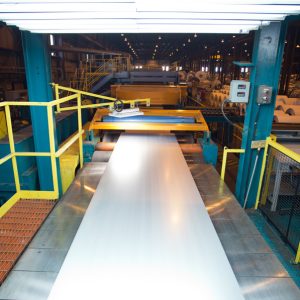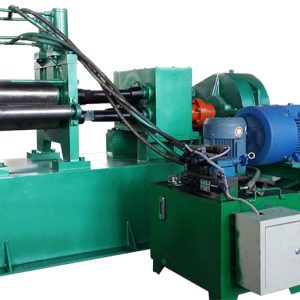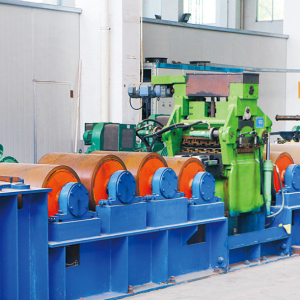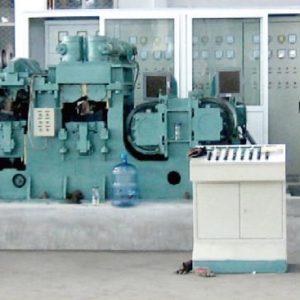

Tension levelling line
Brand name: HANI
Packing Details : Wooden box with fumigation or Wooden Fram or Steel Frame
Delivery Details: 30~60days or Based on the quantity
Shipping: Sea freight、Land freight、Air freight
HANI focuses on cold rolling mill equipment technology, safeguarding your production.
Product Details
Precision Metal Processing Through Advanced Tension Levelling Technology
In the demanding world of metal processing, achieving perfect flatness and eliminating internal stresses in metal strips and sheets is not merely a preference—it’s an absolute necessity. The tension levelling line represents the pinnacle of modern metal processing technology, delivering consistent, high-quality results that meet even the most stringent industry requirements. At the heart of this technological marvel lies the sophisticated tension leveling process, which has revolutionized how manufacturers approach material preparation and finishing.
Understanding the Tension Levelling Line
A tension levelling line is a specialized piece of equipment designed to eliminate shape defects in metal strips through a precise combination of bending and stretching operations. Unlike conventional roller levellers that rely solely on bending, the tension levelling line applies controlled tension throughout the material while simultaneously subjecting it to reverse bending. This dual-action approach effectively removes not just visible waviness but also internal stresses that can compromise material performance during subsequent manufacturing processes.
The fundamental principle behind the tension levelling line involves stretching the metal beyond its yield point while it’s subjected to controlled bending cycles. This mechanical treatment permanently resets the material’s internal structure, resulting in exceptional flatness that remains stable even after further processing. The tension leveling process is particularly effective for materials prone to shape defects like edge wave, center buckle, and coil set—common challenges in high-speed production environments.
Technical Components of a Modern Tension Levelling Line
Today’s advanced tension levelling line incorporates several critical subsystems working in perfect harmony:
- Entry Section: Features an uncoiler with precision tension control and strip guiding systems
- Pre-Levelling Unit: Initial straightening to prepare material for the main tension leveling process
- Main Leveling Section: Where the core tension leveling process occurs through a series of precisely controlled bending rolls
- Tension System: High-capacity bridle rolls that apply and maintain exact tension throughout processing
- Exit Section: Includes recoilers with automatic diameter control and tension management
- Control System: Advanced PLC and HMI interfaces providing real-time monitoring and parameter adjustment
The heart of the tension levelling line is its sophisticated bending roll arrangement. Typically configured in a pyramid or staggered setup, these hardened and ground rolls apply precise bending moments to the strip while under tension. The number of bending rolls typically ranges from 5 to 19, depending on material thickness, width, and the required flatness tolerances.
The Science Behind the Tension Leveling Process
What makes the tension leveling process so effective is its fundamental approach to material deformation. When metal is bent without tension, different layers of the material experience varying degrees of strain—outer layers stretch while inner layers compress. By introducing tension equal to or greater than the material’s yield strength, all layers are brought into a uniform state of plastic deformation.
According to materials science research, the tension leveling process achieves optimal results when the material is stretched to approximately 1-3% beyond its yield point. This precise elongation, combined with multiple bending cycles, effectively equalizes internal stresses throughout the cross-section. The result is material that maintains its flatness even after subsequent cutting, stamping, or forming operations.
Industry studies have demonstrated that properly executed tension leveling can improve flatness to tolerances as tight as 0.1 I-Unit (Industry Unit of flatness measurement), compared to 10-50 I-Units in material that hasn’t undergone proper leveling. This dramatic improvement translates directly to reduced scrap rates, faster processing speeds, and superior end-product quality.
Technical Specifications Comparison
| Parameter | Standard Tension Levelling Line | High-Precision Tension Levelling Line | Ultra-High Precision Line |
|---|---|---|---|
| Material Thickness Range | 0.3-12.0mm | 0.1-10.0mm | 0.05-6.0mm |
| Maximum Strip Width | 2000mm | 1650mm | 1250mm |
| Processing Speed | 10-250 m/min | 5-150 m/min | 2-80 m/min |
| Flatness Accuracy | ≤2 I-Unit | ≤1 I-Unit | ≤0.3 I-Unit |
| Tension Capacity | 60 tons | 40 tons | 25 tons |
| Bending Rolls | 7-11 rolls | 11-15 rolls | 15-19 rolls |
| Control System | PLC Basic | PLC + HMI Monitoring | Full Digital Twin Integration |
| Material Types | Carbon Steel, Stainless | Carbon, Stainless, Aluminum | Special Alloys, Titanium, Copper Alloys |
Applications Across Industries
The versatility of the tension levelling line makes it indispensable across numerous manufacturing sectors. In the automotive industry, perfectly leveled steel and aluminum strips form the foundation for precision stamping operations. The aerospace sector relies on tension levelling lines to prepare specialty alloys that must meet exacting flatness requirements. Electronics manufacturers employ these systems for processing thin copper and specialty alloys used in circuit boards and connectors.
Perhaps most significantly, the renewable energy sector has seen tremendous growth in tension leveling line applications. Solar panel frames, wind turbine components, and battery production all require materials with exceptional flatness and stress-free characteristics. The tension leveling process ensures these materials perform consistently throughout their manufacturing lifecycle.
Production Efficiency and ROI Considerations
Manufacturers investing in a comprehensive tension levelling line typically experience significant returns through multiple channels:
- Reduced scrap rates by 15-30% through elimination of shape-related defects
- Increased processing speeds of 25-40% due to elimination of stoppages for shape correction
- Extended tool life in downstream operations due to consistent material properties
- Reduced secondary operations as the tension leveling process eliminates the need for additional flattening steps
- Energy savings of approximately 15% compared to conventional leveling methods due to optimized mechanical design
The latest generation of tension levelling lines incorporates energy recovery systems that capture and reuse energy during deceleration phases. These systems can reduce overall power consumption by up to 22% compared to previous generations, making modern tension levelling equipment both economically and environmentally sustainable.
Maintenance and Operational Best Practices
Optimal performance of a tension levelling line requires adherence to rigorous maintenance protocols. Critical components like bending rolls should be inspected weekly for surface wear and dimensional accuracy. The tension measurement systems require calibration every 500 operating hours to maintain accuracy.
Operators should be thoroughly trained in the nuances of the tension leveling process, particularly regarding material-specific parameters. Different alloys respond uniquely to the tension leveling process—aluminum typically requires lower tension settings than steel of equivalent thickness, while high-strength alloys may need pre-heating to achieve optimal results.
Industry veterans recommend establishing baseline performance metrics for each material type processed through the tension levelling line. These benchmarks should include tension values, elongation percentages, and bending roll positions. Documenting these parameters creates valuable institutional knowledge that enhances operational consistency and facilitates troubleshooting when issues arise.
Frequently Asked Questions
Q: How does a tension levelling line differ from a conventional roller leveller? A: While conventional roller levellers rely solely on bending deformation, a tension levelling line applies significant tension (typically exceeding the material’s yield strength) while simultaneously bending the material. This combined action produces superior flatness and eliminates internal stresses that roller levellers cannot address.
Q: What materials can be processed on a tension levelling line? A: Modern tension levelling lines can process a wide range of materials including carbon steel, stainless steel, aluminum alloys, copper, brass, titanium, and specialty alloys. The specific capabilities depend on the machine’s design parameters, particularly maximum tension capacity and roll configuration.
Q: How often should roll changes be performed on a tension levelling line? A: Roll replacement frequency depends on production volume and material types. For moderate production environments processing primarily mild steel, bending rolls typically require replacement after 2,000-3,000 hours of operation. When processing harder materials like stainless steel or high-strength alloys, this interval may decrease to 1,500 hours.
Q: Can a tension levelling line process pre-coated materials without damaging the coating? A: Yes, modern tension levelling lines can process pre-coated materials with proper configuration. This requires specialized roll surface treatments, reduced tension settings, and often wider roll spacing to prevent coating damage. The tension leveling process actually helps prevent coating cracking during subsequent forming operations by eliminating internal stresses.
Q: What is the typical ROI timeframe for investing in a tension levelling line? A: Most manufacturers achieve full ROI within 14-28 months, depending on production volume and material scrap rates prior to implementation. The most significant savings come from reduced scrap, increased throughput, and elimination of secondary flattening operations.
Future Developments in Tension Levelling Technology
The evolution of tension levelling line technology continues at a rapid pace. Current research focuses on integrating artificial intelligence to predict optimal settings based on material certificates and historical performance data. These smart systems can automatically adjust the tension leveling process parameters in real-time based on incoming material variations.
Another emerging innovation involves hybrid tension levelling lines that combine mechanical tension leveling with thermal treatment capabilities. These advanced systems can process materials with extremely high yield strengths that would otherwise be impossible to level using conventional methods.
Sustainability is driving further innovation in tension levelling line design, with manufacturers developing systems that use up to 40% less energy than previous generations while maintaining or improving performance. Water-based lubrication systems are replacing oil-based alternatives, reducing environmental impact while maintaining processing quality.
Conclusion
The tension levelling line represents the gold standard in metal strip processing technology. Its ability to deliver consistent, stress-free material with exceptional flatness makes it indispensable for manufacturers demanding the highest quality standards. The sophisticated tension leveling process at its core transforms material properties in ways conventional methods cannot match.
For companies seeking to elevate their material processing capabilities, investing in a premium tension levelling line delivers tangible benefits throughout the production chain. HANI has established itself as an industry leader in tension levelling technology, providing solutions that combine German engineering precision with practical manufacturing knowledge.
As manufacturing demands continue to increase in complexity and precision requirements, the role of the tension levelling line will only grow in importance. Its unique ability to prepare materials for high-speed, high-precision downstream operations ensures that this technology will remain at the forefront of metal processing for decades to come. Whether processing conventional materials or the latest advanced alloys, the tension levelling line stands ready to meet the challenges of modern manufacturing with unwavering precision and reliability.
For manufacturers serious about quality, productivity, and long-term operational excellence, there is simply no substitute for the proven performance of a properly configured tension levelling line executing a precisely controlled tension leveling process. The investment pays dividends in reduced waste, improved yields, and superior end products that consistently exceed customer expectations.
HANI is one of China’s leading professional cold rolling mill manufacturers, providing complete cold rolling systems to steel companies worldwide. HANI focuses on designing and manufacturing integrated cold rolling solutions that meet the industry’s highest standards of precision, efficiency, and durability. Our engineering expertise lies in providing turnkey cold rolling production lines to optimize the performance of modern steel manufacturing plants.