
Three layer composite material cold rolling case
Brand name: HANI
Packing Details : Wooden box with fumigation or Wooden Fram or Steel Frame
Delivery Details: 30~60days or Based on the quantity
Shipping: Sea freight、Land freight、Air freight
HANI focuses on cold rolling mill equipment technology, safeguarding your production.
Product Details
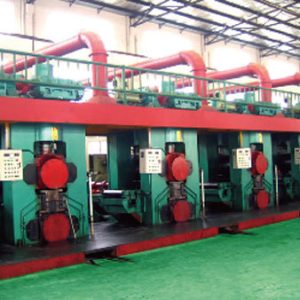
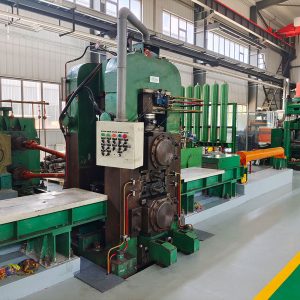
In the field of materials science, the most direct and effective way to endow a single material with the excellent properties of multiple materials is through material composite technology. By combining materials with different characteristics, we can comprehensively leverage their unique advantages to create novel materials with superior performance, meeting diverse industrial application requirements. Leveraging its profound technical expertise and rich practical experience in the field of metal composite material rolling, HANI has successfully tailored an advanced 650mm composite rolling mill for a Middle Eastern client. This mill focuses on achieving cold rolling composite of copper, nickel, and copper, bringing significant economic benefits and performance enhancements to the client.
I. Project Background and Requirement Analysis
The Middle East region is experiencing rapid development across multiple industries, including energy, electronics, and chemicals, leading to a growing demand for high-performance metal materials. In specific application scenarios, such as high-end electronic connectors and corrosion-resistant components for chemical equipment, materials are required to possess both excellent electrical conductivity and outstanding corrosion resistance. Copper is widely used in the electronics industry due to its superior electrical conductivity, but its corrosion resistance is relatively weak. Nickel, on the other hand, exhibits exceptional corrosion resistance, yet its electrical conductivity is inferior to that of copper. To meet the dual requirements of electrical conductivity and corrosion resistance simultaneously, the client proposed the idea of compositing copper, nickel, and copper to obtain a novel composite material that combines the advantages of both materials.
II. Technical Characteristics of the 650mm Composite Rolling Mill
(A) Advanced Cold Rolling Composite Process
This mill adopts an advanced cold rolling composite process. Unlike traditional hot rolling composite, cold rolling composite is carried out at room temperature, effectively avoiding adverse factors such as metal oxidation and grain growth that occur at high temperatures, thereby ensuring the interface bonding quality and overall performance of the composite material. During the rolling process, by precisely controlling key process parameters such as rolling force, rolling speed, and roll gap, the copper, nickel, and copper metals are subjected to powerful pressure, enabling atomic diffusion and bonding, forming a solid metallurgical bonding interface. This ensures that the composite material will not experience delamination or cracking during use.
(B) High-Precision Rolling Control System
To achieve high-precision rolling of copper-nickel-copper three-layer metal composite materials, the mill is equipped with an advanced high-precision rolling control system. This system adopts a closed-loop control method, utilizing high-precision sensors to continuously monitor various parameters during the rolling process, such as rolling force, strip shape, and thickness. The monitored data is then fed back to the control system, which promptly adjusts the control parameters of the rolling mill based on preset process parameters and real-time feedback data. This ensures that the rolled composite material has uniform thickness and good strip shape, meeting the client’s stringent requirements for product quality.
(C) Reliable Equipment Structure and Materials
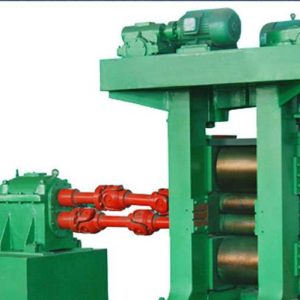
Considering the significant differences in the physical properties of copper, nickel, and copper, which exert different forces on the equipment during the rolling process, the mill adopts a high-strength and high-rigidity equipment structure design. This ensures stable operation of the equipment during rolling, preventing deformation due to uneven force distribution. Meanwhile, key components of the mill, such as rolls and bearings, are made of high-quality materials and undergo special heat treatment processes to enhance their wear resistance, fatigue resistance, and service life, reducing equipment maintenance costs.
III. Key Parameter Table
The following table lists the main technical parameters of the 650mm composite rolling mill during the rolling of copper-nickel-copper three-layer metal composite materials:
| Parameter Category | Parameter Name | Parameter Value |
|---|---|---|
| Mill Basic Parameters | Rolling Mill Type | Four-High Reversible Cold Rolling Mill |
| Work Roll Diameter | φ280mm | |
| Backup Roll Diameter | φ800mm | |
| Roll Body Length | 650mm | |
| Main Motor Power | 2×500kW | |
| Rolling Speed Range | 0.5 – 10m/s | |
| Rolling Process Parameters | Maximum Rolling Force | 25000kN |
| Total Rolling Deformation Rate | ≤70% | |
| Copper Layer Thickness Range | 0.1 – 5mm | |
| Nickel Layer Thickness Range | 0.05 – 3mm | |
| Composite Material Total Thickness Range | 0.3 – 10mm | |
| Control Precision Parameters | Thickness Tolerance | ±0.005mm |
| Strip Shape Precision | ≤3I | |
| Tension Control Precision | ±1% |
IV. Project Implementation Effects and Economic Benefits
(A) Significant Improvement in Product Performance
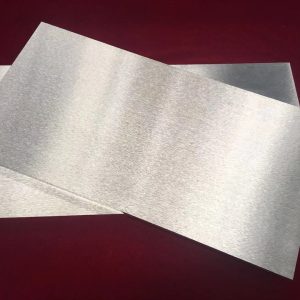
The copper-nickel-copper three-layer metal composite material rolled by the 650mm composite rolling mill successfully combines the high electrical conductivity of copper and the excellent corrosion resistance of nickel. Tests have shown that the electrical conductivity of this composite material reaches over 90% of that of pure copper, while its corrosion resistance is several times higher than that of pure copper, meeting the stringent usage requirements of the Middle Eastern client in high-end electronics, chemicals, and other fields.
(B) Reduction in Material Costs
Compared with traditional methods of using a single material or improving material performance through surface treatment, the use of copper-nickel-copper three-layer metal composite materials can significantly reduce material costs. On one hand, by reasonably adjusting the thickness ratio of the three metals, the amount of the precious metal nickel can be reduced while meeting performance requirements. On the other hand, the improved overall performance of the composite material enables the client to reduce the frequency of material replacement and maintenance costs during use, further lowering the overall usage cost.
(C) Enhanced Client’s Market Competitiveness
After using the copper-nickel-copper three-layer metal composite material produced by this mill, the Middle Eastern client’s products have gained stronger competitiveness in the market. With their superior performance and lower costs, the client’s products have secured a larger market share in areas such as high-end electronic connectors and corrosion-resistant components for chemical equipment, bringing significant economic benefits and a good market reputation to the enterprise.
HANI’s 650mm composite rolling mill for the Middle Eastern client has successfully achieved high-quality cold rolling composite of copper, nickel, and copper through advanced cold rolling composite processes, high-precision rolling control systems, and reliable equipment structures, creating tremendous value for the client. In the future, we will continue to dedicate ourselves to the research and innovation of metal composite material rolling technologies, providing clients with more high-quality and efficient solutions.
HANI is one of China’s leading professional cold rolling mill manufacturers, providing complete cold rolling systems to steel companies worldwide. HANI focuses on designing and manufacturing integrated cold rolling solutions that meet the industry’s highest standards of precision, efficiency, and durability. Our engineering expertise lies in providing turnkey cold rolling production lines to optimize the performance of modern steel manufacturing plants.