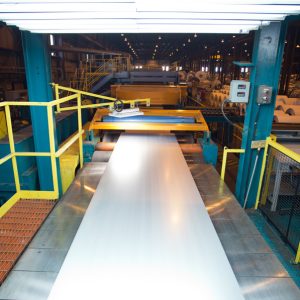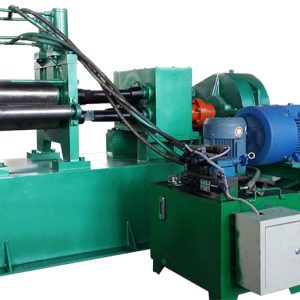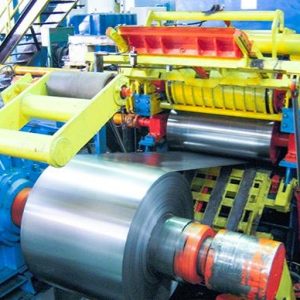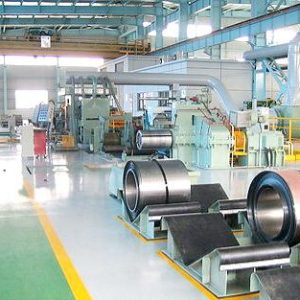

Tension Levelling (1450mm APC)
Brand name: HANI
Packing Details : Wooden box with fumigation or Wooden Fram or Steel Frame
Delivery Details: 30~60days or Based on the quantity
Shipping: Sea freight、Land freight、Air freight
HANI focuses on cold rolling mill equipment technology, safeguarding your production.
Product Details
Advanced Precision Control for Superior Metal Processing
In today’s demanding metal processing industry, achieving perfect flatness and mechanical properties in strip metal is not merely desirable—it’s essential. The 1450mm APC Tension Levelling system represents the pinnacle of modern metal processing technology, delivering unparalleled flatness, consistent mechanical properties, and superior surface quality for a wide range of ferrous and non-ferrous materials. This comprehensive guide explores how advanced tension levelling technology can transform your production capabilities while maintaining the highest standards of quality control and operational efficiency.
Understanding the Science Behind Tension Levelling
Tension levelling is fundamentally different from conventional roller levelling methods. While traditional levellers rely primarily on bending stresses alone, modern tension levelling combines controlled tension with repeated bending to eliminate yield point elongation and produce material with uniform mechanical properties and exceptional flatness. This scientific approach addresses the root causes of shape defects, including:
- Edge wave and center buckle
- Coil set and twist
- Yield point elongation
- Residual stresses
- Inconsistent mechanical properties across the strip width
The tension levelling process works by subjecting metal strips to tension exceeding their yield point while simultaneously passing them through a series of precisely aligned work rolls. This combination of tensile stress and cyclic bending permanently deforms the material, eliminating internal stresses that cause shape imperfections. Research from metallurgical laboratories has demonstrated that properly executed tension levelling can reduce residual stresses by up to 95% compared to conventional processing methods.
The 1450mm APC Tension Leveller: Engineering Excellence
HANI’s 1450mm APC (Automatic Process Control) Tension Leveller represents a significant advancement in metal processing technology. Unlike conventional systems, our APC technology continuously monitors and adjusts processing parameters in real-time, ensuring consistent output quality regardless of input material variations.
Core Technical Specifications
| Parameter | Specification | Details |
|---|---|---|
| Working Width | 1450mm | Maximum processing width |
| Material Thickness Range | 0.3-3.0mm | Compatible with various gauges |
| Processing Speed | Up to 400 m/min | High-throughput capability |
| Drive System | SIEMENS 6RA80 | Precision digital DC drive technology |
| Tension Control | ±0.5% accuracy | Closed-loop tension monitoring |
| Entry/Exit Configuration | Dual opening, single receiving | Optimized material flow |
| Control System | Advanced PLC with HMI interface | Real-time process monitoring |
| Power Requirements | 380V, 50Hz, 3-phase | Standard industrial configuration |
| Level of Automation | Fully automatic with manual override | Flexible operation modes |
The heart of this system is its sophisticated tension control mechanism. By applying precisely calibrated tension forces combined with controlled bending cycles, the machine achieves what conventional levellers cannot: elimination of the yield point phenomenon while maintaining dimensional stability. This is particularly crucial for high-strength steel grades and specialty alloys that are prone to stretcher strain defects during subsequent forming operations.
Advanced Features of the APC Control System
The Automatic Process Control (APC) system incorporated in this tension leveller represents a significant technological advancement. This intelligent control system continuously monitors multiple parameters including:
- Strip tension profiles
- Roll positioning accuracy
- Material elongation rates
- Surface quality metrics
- Temperature variations
These measurements feed into a sophisticated algorithm that makes millisecond-by-millisecond adjustments to maintain optimal processing conditions. This level of precision ensures that even materials with significant thickness variations or inconsistent mechanical properties emerge with uniform flatness and mechanical characteristics.
The tension levelling process implemented in this system features adaptive control algorithms that learn from each processing run, continuously improving performance while reducing setup times for new material specifications. Operators benefit from an intuitive HMI interface that provides comprehensive data visualization while requiring minimal training to achieve expert-level results.
Comparative Analysis: Tension Levelling vs. Conventional Methods
| Processing Method | Flatness Achievement | Yield Point Elimination | Surface Quality | Processing Speed | Material Waste |
|---|---|---|---|---|---|
| Conventional Roller Leveller | Moderate | None | Good | High | Moderate |
| Stretch Leveller | Excellent | Complete | Fair | Low | High |
| 1450mm APC Tension Leveller | Exceptional | Complete | Excellent | Very High | Minimal |
| Temper Mill | Good | Partial | Very Good | Medium | Low |
The data clearly demonstrates why sophisticated tension levelling technology has become the preferred solution for high-value applications. The 1450mm APC system uniquely combines the speed advantages of roller levellers with the superior flatness and mechanical property control of stretch levellers, while minimizing the drawbacks of both technologies.
Applications and Material Compatibility
The versatility of this tension levelling system makes it suitable for processing an extensive range of materials:
- Carbon steels (mild to high-strength)
- Stainless steel grades (austenitic, ferritic, duplex)
- Aluminum alloys (1xxx through 7xxx series)
- Copper and copper alloys
- Nickel alloys and specialty metals
Industries benefiting from precision tension levelling include:
- Automotive manufacturing (body panels, structural components)
- Appliance production (visible panels requiring perfect finish)
- Construction (roofing, cladding, structural elements)
- Electronics (housings, shielding components)
- Aerospace (precision components requiring strict flatness tolerances)
Each application demands specific tension levelling parameters, which the APC system stores in its extensive material database. This eliminates guesswork and reduces setup times while ensuring consistent quality regardless of operator experience level.
The Tension Levelling Process: Technical Deep Dive
The tension levelling process implemented in the 1450mm APC system follows a scientifically validated methodology:
- Material Entry and Initial Tensioning: The strip enters the machine where precisely calibrated entry bridle rolls apply initial tension, typically 60-70% of the material’s yield strength.
- Pre-Leveling Stage: A preliminary leveling station addresses gross shape defects before the material enters the main tension levelling section.
- Main Tension Levelling Zone: The heart of the system where the strip passes through multiple sets of work rolls while under high tension (typically exceeding yield strength by 15-25%). This combination of tension and cyclic bending permanently eliminates yield point elongation.
- Tension Gradient Control: Sophisticated tension profiling ensures uniform stress distribution across the entire strip width, eliminating edge wave and center buckle simultaneously.
- Exit Tension Management: The exit bridle rolls maintain controlled tension while gradually reducing stress to prevent distortion during coil winding.
- Real-Time Quality Verification: Integrated sensing systems continuously verify flatness and mechanical properties, feeding data back to the control system for immediate parameter adjustments.
This scientifically optimized tension levelling process delivers material with consistent mechanical properties across the entire strip width, eliminating the yield point phenomenon that causes stretcher strains during subsequent forming operations. Research has demonstrated that properly executed tension levelling can improve formability by up to 15% while eliminating cosmetic defects that would otherwise require costly secondary operations.
Operational Economics: ROI Analysis
While the initial investment in advanced tension levelling technology may appear substantial, the operational economics reveal compelling justification:
| Cost Factor | Conventional System | 1450mm APC Tension Leveller | Annual Savings |
|---|---|---|---|
| Material Yield | 92% | 98% | $120,000+ |
| Secondary Processing | Required for 35% of output | Required for <5% of output | $85,000+ |
| Scrap Reduction | Baseline | 60% reduction | $75,000+ |
| Labor Requirements | 3 operators per shift | 1 operator per shift | $150,000+ |
| Quality Rejections | 4.2% | 0.8% | $200,000+ |
| Energy Consumption | Baseline | 22% reduction | $45,000+ |
| Total Annual Value | $675,000+ |
These figures represent conservative estimates based on actual installations processing approximately 25,000 tons annually. The advanced tension levelling system typically delivers full ROI within 14-18 months of operation, while providing ongoing competitive advantages through superior product quality and processing flexibility.
Maintenance and Support Infrastructure
HANI provides comprehensive support for its tension levelling systems, including:
- Remote diagnostic capabilities
- Preventive maintenance scheduling
- Operator training programs
- Spare parts availability guarantee
- Process optimization consulting
The modular design of the 1450mm APC system simplifies maintenance procedures while maximizing uptime. Critical components feature condition monitoring systems that predict failures before they occur, allowing maintenance to be scheduled during planned production breaks rather than causing emergency shutdowns.
Frequently Asked Questions
Q: How does tension levelling differ from stretch levelling? A: While both processes eliminate yield point elongation, tension levelling achieves this with significantly less material elongation (typically 1-3% versus 3-8% for stretch levelling). This translates to less edge trimming, better dimensional control, and higher material yield. The tension levelling process also operates at much higher speeds than conventional stretch levellers.
Q: Can this system process high-strength materials like advanced high-strength steels (AHSS)? A: Yes, the 1450mm APC tension leveller is specifically engineered to handle materials with yield strengths up to 1200 MPa. The adaptive control system automatically compensates for material characteristics, ensuring optimal performance regardless of strength level.
Q: How long does material changeover take? A: With the APC system’s recipe management, complete changeovers between different material specifications typically require less than 15 minutes. The system stores parameters for over 500 material combinations, allowing operators to simply select the appropriate recipe for immediate optimal performance.
Q: What is the expected lifespan of critical components? A: Work rolls typically last 18-24 months under continuous operation, while drive components are rated for 10+ years of service. The system’s modular design allows for component replacement without requiring complete system shutdown.
Q: How does tension levelling affect material surface quality? A: Unlike abrasive leveling methods, tension levelling actually improves surface quality by eliminating micro-buckling and oil-canning effects. The precisely polished work rolls and controlled tension profiles prevent surface marking while eliminating shape defects that would otherwise be visible after forming or painting operations.
Q: Can the system integrate with existing production lines? A: Yes, the 1450mm APC tension leveller features standardized communication protocols (including Profibus, Profinet, and Ethernet/IP) for seamless integration with upstream and downstream equipment. Our engineering team specializes in custom integration solutions to maximize production flow efficiency.
Q: What energy savings can be expected compared to conventional systems? A: The regenerative drive technology and optimized power management reduce energy consumption by approximately 22% compared to conventional tension levelling systems. For a typical installation operating two shifts daily, this translates to approximately $45,000 in annual energy cost savings.
Conclusion: Advancing Manufacturing Excellence Through Precision Tension Levelling
The 1450mm APC Tension Leveller represents not merely a piece of equipment, but a comprehensive solution to some of the most challenging problems in modern metal processing. By combining advanced mechanical engineering with intelligent control systems, this technology delivers unprecedented levels of flatness control, mechanical property consistency, and operational efficiency.
Tension levelling has evolved from a simple shape correction process to a sophisticated metallurgical treatment that fundamentally improves material behavior during subsequent manufacturing operations. The tension levelling process engineered into the 1450mm APC system eliminates the root causes of quality issues rather than merely addressing their symptoms.
As manufacturing tolerances continue to tighten and material specifications become increasingly demanding, the ability to consistently produce perfectly flat material with uniform mechanical properties becomes not just advantageous—but essential. The tension levelling capabilities of this system provide manufacturers with a significant competitive edge through reduced scrap rates, elimination of secondary operations, and the ability to command premium pricing for superior quality products.
In an industry where fractions of a millimeter can determine success or failure, the precision of advanced tension levelling technology becomes your most valuable asset. The 1450mm APC system delivers this precision reliably, efficiently, and profitably—transforming raw coil stock into premium finished product ready for the most demanding applications.
For manufacturers seeking to elevate their production capabilities while simultaneously reducing costs, this tension levelling system represents the optimal convergence of engineering excellence and economic value. The tension levelling process it employs has been scientifically validated to deliver measurable improvements in product quality and manufacturing efficiency.
When you choose this advanced tension levelling solution, you’re not merely purchasing equipment—you’re investing in manufacturing excellence that will deliver returns for years to come. Experience the difference that precision tension levelling can make in your production processes and product quality. Contact our specialists today to schedule a detailed consultation and discover how our tension levelling technology can transform your manufacturing capabilities.
For additional technical specifications or to arrange a demonstration of our tension levelling capabilities, please contact our engineering team who will provide comprehensive information tailored to your specific production requirements. The tension levelling experts at HANI are ready to help you achieve manufacturing excellence through precision engineering and innovative technology.
HANI is one of China’s leading professional cold rolling mill manufacturers, providing complete cold rolling systems to steel companies worldwide. HANI focuses on designing and manufacturing integrated cold rolling solutions that meet the industry’s highest standards of precision, efficiency, and durability. Our engineering expertise lies in providing turnkey cold rolling production lines to optimize the performance of modern steel manufacturing plants.