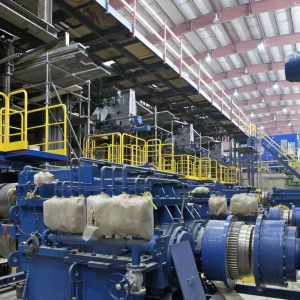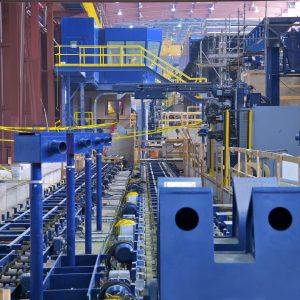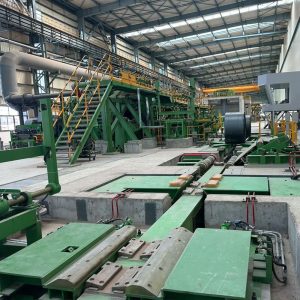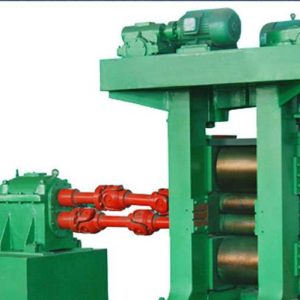

Degreasing line(Cold rolled coil and strip)
Brand name: HANI
Packing Details : Wooden box with fumigation or Wooden Fram or Steel Frame
Delivery Details: 30~60days or Based on the quantity
Shipping: Sea freight、Land freight、Air freight
HANI focuses on cold rolling mill equipment technology, safeguarding your production.
Product Details
In modern metal processing industries, achieving pristine surface quality is paramount for downstream applications. The Degreasing line represents one of the most critical components in the steel processing chain, functioning as the essential cleaning system before annealing, coating, or further processing. Without an effective Degreasing line implementation, manufacturers face significant quality issues including surface contamination, poor coating adhesion, and product rejection at alarming rates.
The Science Behind Effective Metal Degreasing
During high-temperature annealing processes, residual surface oils and contaminants undergo thermal decomposition, resulting in carbon deposits that compromise surface quality. Additionally, these contaminants cause surface darkening and strip adhesion during coil processing. An industrial-grade Degreasing line systematically removes protective oils, residual iron particles, and other surface pollutants to ensure optimal processing conditions for high-value steel products including tinplate, automotive sheets, and appliance-grade materials.
The fundamental challenge in degreasing technology lies in addressing diverse contaminant types. Mineral oils, animal/vegetable oils, drawing compounds, and particulate matter each require specific removal mechanisms. A sophisticated Degreasing line integrates multiple cleaning technologies to achieve comprehensive surface purification, typically combining chemical, electrochemical, and mechanical cleaning principles in a single integrated system.
Electrochemical Degreasing Technology
When steel strips pass through alkaline solutions within an advanced Degreasing line, the application of reversible-polarity direct current creates a powerful cleaning action. The steel strip alternates between anodic and cathodic states, generating significant gas evolution at the metal-solution interface. This electrochemical reaction produces microscopic gas bubbles that mechanically disrupt oil films through a combination of emulsification, polarization effects, and physical dislodging forces.
Field measurements confirm that electrochemical degreasing achieves contaminant removal rates 3-5 times faster than conventional chemical methods alone, with significantly lower residual carbon content (typically <5 mg/m² compared to 30-50 mg/m² for chemical-only systems). This performance advantage makes the electrochemical Degreasing line essential for high-performance applications in automotive and electronics industries where surface perfection is non-negotiable.
Technical Specifications: Electrochemical Degreasing Line
| Parameter | Specification |
|---|---|
| Material Compatibility | Carbon steel, low-alloy steel, stainless steel, copper alloys, aluminum alloys |
| Thickness Range | 0.2-2.0 mm |
| Width Range | 300-1350 mm |
| Maximum Coil Weight | 25 metric tons |
| Initial Oil Content | Up to 1000 mg/m² |
| Residual Carbon After Processing | <5 mg/m² |
| Line Speed | 20-200 m/min (adjustable based on material and contamination level) |
| Power Requirements | 3-phase AC 380V/415V, 50/60Hz, 800-1500 kW (varies by configuration) |
Chemical Degreasing Systems: Fundamentals and Applications
While electrochemical methods offer superior performance, many applications benefit from chemical degreasing technology within a comprehensive Degreasing line. Chemical degreasing relies on two complementary mechanisms: saponification for animal and vegetable oils, and emulsification for mineral oils. Alkaline solutions containing sodium hydroxide, silicates, phosphates, and specialized surfactants work synergistically to break down complex oil films through chemical reaction and physical displacement.
Modern chemical Degreasing line configurations feature multi-stage immersion and spray sections with precisely controlled temperature profiles (typically 60-85°C). The integration of ultrasonic technology in advanced systems enhances cleaning efficiency by 40-60% through cavitation effects that dislodge particles from micro-crevices and surface imperfections. When properly engineered, chemical degreasing systems achieve remarkable results even with heavily contaminated strips, making them valuable components within a comprehensive cleaning strategy.
Integrated Production Process Flow
A state-of-the-art Degreasing line incorporates multiple processing stations arranged in an optimized sequence to ensure thorough cleaning while maintaining production efficiency. The typical workflow follows this progression:
- Uncoiler Station: Precision-controlled unwinding with automatic tension regulation and edge guiding
- Two-Roller Pinch Feed: Initial strip stabilization and speed synchronization
- Five-Roller Straightener: Elimination of coil set and minor deformations
- Shearing Station: Precision cutting for weld preparation
- Welding System: Continuous operation through coil changes with minimal downtime
- Chemical Degreasing Section: Initial oil removal through immersion and spray technologies
- Electrochemical Degreasing Module: Deep cleaning through alternating polarity electrolysis
- Rotary Brush Units: Mechanical scrubbing for particulate removal
- Water Rinse Stations: Multi-stage rinsing with counter-current flow design
- Hot Air Dryer: Rapid moisture removal with temperature-controlled airflow
- Exit Shear: Precision cutting for coil termination
- Recoiler: Tension-controlled rewinding with programmable coil profiles
This comprehensive Degreasing line architecture ensures that contaminants are systematically removed at each stage, preventing cross-contamination and maximizing cleaning efficiency. The modular design allows for customization based on specific production requirements, material types, and quality standards.
Energy Efficiency and Environmental Considerations
Modern Degreasing line systems incorporate significant energy-saving technologies. Heat recovery systems capture waste thermal energy from drying sections to pre-heat cleaning solutions, reducing energy consumption by 25-35%. Closed-loop water recycling systems with oil skimming and filtration technologies minimize fresh water requirements by up to 90% compared to conventional open systems.
Chemical management systems monitor solution concentration in real-time through conductivity and pH sensors, automatically dosing replenishment chemicals only when needed. This precision control extends bath life by 40-60% while maintaining consistent cleaning performance. For manufacturers targeting environmental certifications, advanced Degreasing line configurations include vapor recovery systems that capture and condense volatile compounds, reducing emissions by more than 95% compared to standard systems.
Quality Assurance and Monitoring Systems
Contemporary Degreasing line installations feature comprehensive quality monitoring systems. In-line surface analyzers measure residual carbon and iron content using laser-induced breakdown spectroscopy (LIBS) technology, providing real-time feedback for process optimization. Water break tests are automatically conducted at the exit section to verify complete hydrophilicity of the cleaned surface.
Advanced data logging systems track more than 200 process parameters simultaneously, creating digital fingerprints for each coil processed. This data enables predictive maintenance scheduling, consumption analysis, and continuous process improvement. Manufacturers implementing these sophisticated monitoring systems within their Degreasing line operations report 30% fewer quality incidents and 25% longer component service life compared to systems without comprehensive monitoring capabilities.
Surface Quality Comparison: Before and After Degreasing Line Processing
Frequently Asked Questions
Q: What is the typical return on investment for a new Degreasing line installation?
A: Depending on production volume and current quality issues, manufacturers typically achieve ROI within 14-28 months through reduced scrap rates (often 3-5% improvement), decreased rework costs, lower energy consumption (20-30% reduction), and extended downstream equipment life. For high-volume operations processing 50,000+ tons annually, the financial benefits can exceed $500,000 USD per year.
Q: How does a Degreasing line affect subsequent annealing processes?
A: Properly implemented degreasing significantly improves annealing results by eliminating carbon deposits that interfere with grain growth and recrystallization. Studies show that effectively cleaned strips achieve more uniform grain structure, 15-25% faster annealing cycles due to improved heat transfer, and elimination of surface defects that would otherwise require post-annealing treatments. Additionally, furnace maintenance intervals extend by 40-60% due to reduced carbon buildup in heating chambers.
Q: Can a single Degreasing line handle multiple material types?
A: Modern multi-purpose Degreasing line systems are engineered to process various materials including carbon steel, stainless steel, copper alloys, and aluminum alloys. Quick-change recipe systems allow operators to switch between material-specific parameters within 15-20 minutes. HANI engineering teams have developed specialized configurations that optimize cleaning parameters for each material type while maintaining production efficiency.
Q: What maintenance requirements should operators expect?
A: A well-designed Degreasing line requires scheduled maintenance at three intervals: daily (solution concentration checks, filter inspections), weekly (pump performance verification, nozzle cleaning), and quarterly (tank descaling, electrode replacement, brush wear assessment). With proper maintenance protocols, critical components achieve 5-7 year service lives before requiring replacement. Remote diagnostic systems now enable predictive maintenance scheduling that minimizes unplanned downtime.
Q: How does water quality impact Degreasing line performance?
A: Water quality significantly influences cleaning efficiency and equipment longevity. Total dissolved solids (TDS) above 200 ppm reduce cleaning effectiveness by 15-25% and accelerate scaling in heating elements and piping systems. Advanced installations incorporate reverse osmosis or deionization systems to maintain water purity below 50 ppm TDS. For facilities in hard water regions, this investment typically pays for itself within 18 months through reduced chemical consumption and extended maintenance intervals.
Future Developments in Degreasing Technology
Industry research continues to advance Degreasing line capabilities through several promising technologies. Plasma-assisted cleaning systems show potential for completely eliminating chemical usage while achieving superior surface activation for coating applications. Nano-filtration technologies enable near-perfect recovery of cleaning agents, reducing chemical consumption by 90% compared to conventional systems.
Artificial intelligence integration is revolutionizing process control within modern Degreasing line installations. Machine learning algorithms analyze historical performance data to automatically optimize cleaning parameters based on real-time contamination levels, material characteristics, and production speed requirements. These intelligent systems adapt to changing conditions without operator intervention, maintaining consistent quality while minimizing resource consumption.
The evolution of Industry 4.0 connectivity enables comprehensive digital twins of degreasing operations. These virtual models simulate process performance under various conditions, allowing engineers to optimize configurations before physical implementation. Predictive analytics identify potential failure points weeks before they would typically manifest, enabling proactive maintenance that prevents production disruptions. These technological advancements position the modern Degreasing line as an increasingly intelligent, efficient, and indispensable component of advanced metal processing facilities worldwide.
Selecting the appropriate Degreasing line configuration requires careful analysis of material types, production volumes, quality requirements, and facility constraints. With over three decades of specialized engineering experience, HANI provides comprehensive consultation services to identify optimal solutions for each unique production environment. Their technical teams conduct detailed site assessments and material testing to ensure precise system specification that maximizes return on investment while meeting the most demanding quality standards.
The proper implementation of a high-performance Degreasing line represents not merely an equipment purchase, but a strategic investment in product quality, operational efficiency, and competitive market positioning. Manufacturers who recognize this critical process component as a value generator rather than a cost center consistently achieve superior results in today’s demanding global marketplace.
HANI is one of China’s leading professional cold rolling mill manufacturers, providing complete cold rolling systems to steel companies worldwide. HANI focuses on designing and manufacturing integrated cold rolling solutions that meet the industry’s highest standards of precision, efficiency, and durability. Our engineering expertise lies in providing turnkey cold rolling production lines to optimize the performance of modern steel manufacturing plants.