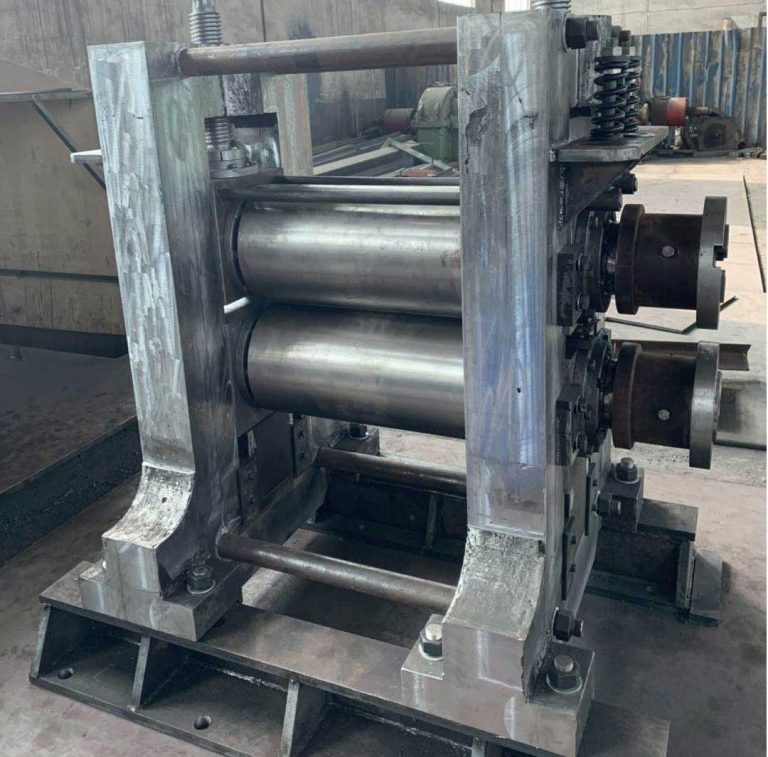
Application Scenarios and Advantage Characteristics of 6 Hi Cold Rolling Mill
The 6 hi cold rolling mill represents one of the most significant advancements in metal processing technology, offering superior precision, flexibility, and efficiency compared to conventional rolling systems. This comprehensive guide explores the diverse application scenarios and distinctive advantages that make six-high rolling mills indispensable in modern manufacturing.
1. Introduction to 6 Hi Cold Rolling Mill
The 6 hi cold rolling mill has emerged as a cornerstone technology in the metal processing industry, fundamentally transforming how manufacturers produce high-quality sheet metal products. Unlike traditional four-high mills, the six-high configuration incorporates an additional pair of intermediate rolls positioned between the work rolls and backup rolls, creating a more sophisticated and capable rolling system.
This innovative design was developed to address the inherent limitations of conventional rolling mills, particularly when processing thin gauge materials or high-strength alloys. The additional intermediate rolls serve multiple critical functions: they provide better support for the smaller diameter work rolls, enable more precise control over strip shape and flatness, and significantly reduce the tendency for edge drop and center buckle defects.
Historical Development
The concept of six-high rolling mills dates back to the mid-20th century when metallurgists and mechanical engineers sought solutions for rolling increasingly thinner and harder materials. The breakthrough came with the development of HC (High Crown) technology, which allowed for dynamic crown control during the rolling process. Today’s 6 hi cold rolling mills incorporate decades of refinement, featuring advanced hydraulic systems, sophisticated automation, and precision-engineered components that deliver exceptional performance across a wide range of applications.
2. Working Principle and Mechanism
Understanding the working principle of a 6 hi cold rolling mill requires examining the interaction between its six rolls and how they collectively achieve superior rolling performance. The mill configuration consists of three pairs of rolls arranged in a vertical stack:
Work Rolls (Smallest Diameter)
Directly contact the strip material, typically ranging from 200-400mm in diameter. Their smaller size enables higher reduction ratios and better surface finish quality.
Intermediate Rolls (Medium Diameter)
Support the work rolls and can be shifted axially to control strip shape. Diameter typically ranges from 350-500mm, providing crucial crown control capability.
Backup Rolls (Largest Diameter)
Provide the main structural support, with diameters from 800-1400mm. They absorb the majority of rolling forces and maintain system rigidity.
Roll Deflection Control Mechanism
The primary advantage of the six-roll configuration lies in its superior ability to control roll deflection. When rolling force is applied, all rolls experience some degree of bending. In a four-high mill, the work roll deflection directly affects strip thickness uniformity. However, in a 6 hi cold rolling mill, the intermediate rolls act as a buffer, distributing the load more evenly and reducing work roll deflection by 40-60% compared to four-high configurations.
Key Mechanism: Intermediate Roll Shifting (IRS)
The intermediate rolls in modern 6 hi cold rolling mills can be shifted axially (typically ±100-150mm) during operation. This shifting capability allows operators to dynamically adjust the effective crown of the roll stack, compensating for thermal expansion, roll wear, and varying strip widths. The result is consistently flat strip with minimal edge drop across the entire production run.
3. Industrial Application Scenarios
The versatility of the 6 hi cold rolling mill makes it suitable for an exceptionally wide range of industrial applications. From automotive manufacturing to aerospace components, these mills serve as critical production equipment across multiple sectors.
3.1 Automotive Industry Applications
The automotive sector represents one of the largest consumers of cold-rolled sheet metal produced by six-high mills. Modern vehicles require materials that combine high strength with excellent formability, and the 6 hi cold rolling mill excels at producing such materials.
| Automotive Component | Material Type | Typical Thickness (mm) | Quality Requirements |
|---|---|---|---|
| Body Panels | IF Steel, BH Steel | 0.6 – 0.8 | Excellent surface finish, high formability |
| Structural Members | HSLA, DP Steel | 1.0 – 2.0 | High strength, consistent thickness |
| Fuel Tanks | Stainless Steel | 0.8 – 1.2 | Corrosion resistance, weldability |
| Transmission Parts | High Carbon Steel | 1.5 – 3.0 | Tight tolerances, uniform hardness |
3.2 Stainless Steel Production
Stainless steel processing represents a particularly demanding application where the 6 hi cold rolling mill demonstrates its superiority. The high work hardening rate of stainless steel requires precise control over reduction schedules and rolling forces. Six-high mills equipped with HC (High Crown) or CVC (Continuously Variable Crown) technology can maintain flatness tolerances within ±5 I-units even when rolling austenitic grades like 304 and 316.
3.3 Electrical Steel Manufacturing
The production of grain-oriented and non-oriented electrical steels for transformer cores and motor laminations demands exceptional thickness uniformity and surface quality. A 6 hi cold rolling mill can achieve thickness tolerances of ±0.5% or better, which is critical for minimizing core losses in electrical applications. The ability to roll silicon steel with silicon content up to 3.5% without edge cracking makes six-high mills the preferred choice for electrical steel producers.
3.4 Aluminum and Non-Ferrous Metal Processing
While originally developed for steel processing, modern 6 hi cold rolling mills have been successfully adapted for aluminum alloy production. The lower rolling forces required for aluminum allow for even thinner gauge production, with some mills capable of rolling aluminum foil stock down to 0.15mm thickness. Applications include:
- Beverage can stock: Requiring excellent surface quality and consistent mechanical properties
- Automotive aluminum sheets: For lightweight vehicle body panels
- Lithographic sheets: Demanding superior flatness for printing applications
- Heat exchanger fins: Requiring precise thickness control for thermal efficiency
- Electronic components: Including capacitor foils and battery current collectors
3.5 Home Appliance Manufacturing
The home appliance industry relies heavily on cold-rolled steel sheets for manufacturing refrigerators, washing machines, air conditioners, and other household products. The 6 hi cold rolling mill produces materials with the surface quality necessary for subsequent coating and finishing operations. Typical requirements include:
Surface Roughness
Ra 0.3-1.2 μm depending on application, controlled through work roll texturing
Thickness Range
0.4-1.5mm for most appliance applications with ±1% tolerance
Flatness
Within 10 I-units for premium grades used in visible surfaces
4. Key Advantage Characteristics
The 6 hi cold rolling mill offers numerous advantages over alternative rolling configurations. These benefits stem from its unique mechanical design and the advanced control systems that modern mills incorporate.
4.1 Superior Flatness Control
Flatness control represents perhaps the most significant advantage of six-high mill technology. The intermediate roll shifting capability, combined with work roll bending, provides multiple independent actuators for shape control. This redundancy allows operators to address complex flatness defects that would be impossible to correct with simpler mill configurations.
Flatness Achievement Comparison
4.2 Reduced Edge Drop
Edge drop—the tendency for strip edges to be thinner than the center—is a persistent challenge in cold rolling. The 6 hi cold rolling mill addresses this through intermediate roll shifting, which effectively shortens the contact length between rolls at the strip edges. This mechanism can reduce edge drop by 50-70% compared to four-high mills, resulting in higher yield and less edge trimming waste.
4.3 Higher Reduction Capability
The smaller work roll diameter possible in six-high configurations enables higher reduction per pass. This is governed by the relationship between roll diameter, friction coefficient, and maximum achievable reduction. Smaller work rolls create a smaller contact arc, reducing the separating force and allowing for greater thickness reduction before slipping occurs.
| Advantage | Technical Basis | Quantitative Benefit | Production Impact |
|---|---|---|---|
| Higher Reduction Ratio | Smaller work roll diameter | 30-50% per pass | Fewer passes required |
| Better Surface Quality | Reduced roll marks, better lubrication | Ra < 0.3 μm achievable | Premium product grades |
| Energy Efficiency | Lower rolling force requirement | 15-25% energy savings | Reduced operating costs |
| Width Flexibility | IRS compensation capability | 600-2100mm range | Diverse product mix |
| Gauge Accuracy | Reduced roll deflection | ±0.5% of target | Consistent quality |
4.4 Automation and Process Control
Modern 6 hi cold rolling mills incorporate sophisticated automation systems that optimize performance in real-time. These systems include:
- Automatic Gauge Control (AGC): Maintains thickness within ±0.5% through continuous feedback from X-ray or isotope gauges, adjusting roll gap and rolling speed in milliseconds.
- Automatic Flatness Control (AFC): Uses shapemeter roll feedback to adjust work roll bending and intermediate roll shifting, correcting flatness deviations before they propagate.
- Roll Eccentricity Compensation: Eliminates periodic thickness variations caused by roll runout through predictive algorithms and high-speed hydraulic actuators.
- Thermal Crown Control: Manages roll temperature distribution through zone cooling to maintain consistent roll profile throughout the production campaign.
4.5 Extended Roll Life
The distribution of rolling forces across six rolls rather than four significantly extends roll life. Work rolls in a 6 hi cold rolling mill typically achieve 20-30% longer service life compared to equivalent four-high installations. This translates directly to reduced roll grinding costs, fewer roll changes, and higher mill availability.
5. Technical Specifications
The technical specifications of a 6 hi cold rolling mill vary depending on the intended application, production capacity, and material types to be processed. Below are typical specifications for mills used in different industrial sectors.
| Parameter | Small Mill | Medium Mill | Large Mill | Unit |
|---|---|---|---|---|
| Strip Width Range | 400-800 | 600-1350 | 900-2100 | mm |
| Entry Thickness | 1.5-4.0 | 2.0-6.0 | 2.5-8.0 | mm |
| Exit Thickness | 0.15-1.5 | 0.2-2.5 | 0.3-4.0 | mm |
| Work Roll Diameter | 180-220 | 280-350 | 380-450 | mm |
| Intermediate Roll Diameter | 280-320 | 380-450 | 480-550 | mm |
| Backup Roll Diameter | 600-750 | 900-1100 | 1200-1450 | mm |
| Maximum Rolling Force | 8,000 | 18,000 | 35,000 | kN |
| Maximum Rolling Speed | 600 | 1200 | 1800 | m/min |
| Main Motor Power | 1,500-2,500 | 3,500-6,000 | 8,000-15,000 | kW |
| IRS Stroke | ±80 | ±120 | ±150 | mm |
| Work Roll Bending Force | ±400 | ±800 | ±1200 | kN/chock |
6. Comparison with Other Mill Types
Understanding how the 6 hi cold rolling mill compares to other rolling mill configurations helps manufacturers select the optimal equipment for their specific requirements.
6.1 Six-High vs. Four-High Mills
The four-high mill remains the most common configuration in the steel industry due to its simplicity and lower capital cost. However, the 6 hi cold rolling mill offers significant advantages in specific applications:
| Characteristic | 4-High Mill | 6-High Mill | Advantage Factor |
|---|---|---|---|
| Minimum Work Roll Diameter | 350-450 mm | 180-280 mm | Higher reduction capability |
| Flatness Control Range | ±15 I-units | ±5 I-units | 3x better flatness |
| Edge Drop Control | Limited | Excellent (IRS) | 50-70% reduction |
| Capital Cost | Lower | 15-25% higher | ROI through quality |
| Maintenance Complexity | Simpler | More complex | Requires skilled personnel |
| Thin Gauge Capability | Limited to ~0.3 mm | Down to 0.15 mm | Extended product range |
6.2 Six-High vs. Twenty-High Mills
For ultra-thin gauge production, twenty-high (Sendzimir) mills offer even smaller work roll diameters. However, the 6 hi cold rolling mill provides a better balance between capability and complexity for most applications:
6-High Mill Advantages
- Higher production speeds (up to 1800 m/min)
- Wider strip capability (up to 2100 mm)
- Simpler roll change procedures
- Lower operating costs
- Better suited for thicker gauges
20-High Mill Advantages
- Thinner minimum gauge (down to 0.05 mm)
- Better for very hard materials
- Superior edge quality on narrow strip
- Higher reduction per pass on thin stock
- Preferred for precision strip production
7. Essential Rolling Formulas
Understanding the fundamental equations governing cold rolling is essential for optimizing 6 hi cold rolling mill performance. These formulas guide process engineers in setting up rolling schedules and predicting mill behavior.
7.1 Rolling Force Calculation
Sims’ Rolling Force Equation:
P = w × Ld × Qp × σm
Where:
P = Rolling force (N)
w = Strip width (mm)
Ld = Projected contact length = √(R × Δh) (mm)
Qp = Geometric factor (typically 1.0-1.5)
σm = Mean flow stress of material (MPa)
7.2 Maximum Achievable Reduction
Maximum Draft (Thickness Reduction):
Δhmax = μ² × R
Where:
Δhmax = Maximum thickness reduction per pass (mm)
μ = Coefficient of friction (typically 0.05-0.15 for cold rolling)
R = Work roll radius (mm)
This formula demonstrates why smaller work rolls in a 6 hi cold rolling mill can achieve higher percentage reductions—the smaller radius means the bite angle remains within acceptable limits even with significant absolute reduction.
7.3 Roll Deflection Formula
Work Roll Deflection (Simplified):
δ = (5 × P × L³) / (384 × E × I)
Where:
δ = Maximum deflection at roll center (mm)
P = Total rolling force (N)
L = Roll barrel length (mm)
E = Young’s modulus of roll material (~210 GPa for steel)
I = Second moment of area = π × D⁴ / 64 (mm⁴)
7.4 Rolling Power Requirement
Motor Power Calculation:
N = (P × Ld × v) / (R × η × 1000)
Where:
N = Required motor power (kW)
P = Rolling force (kN)
Ld = Contact length (mm)
v = Rolling speed (m/s)
R = Work roll radius (mm)
η = Drive train efficiency (typically 0.85-0.92)
7.5 Forward Slip Calculation
Forward slip is a critical parameter affecting gauge control and surface quality:
Forward Slip Formula:
Sf = (vexit – vroll) / vroll × 100%
Typical values: 2-8% for cold rolling
Higher values indicate more aggressive reduction schedules
8. Future Development Trends
The 6 hi cold rolling mill continues to evolve as manufacturers seek higher productivity, better quality, and improved sustainability. Several key trends are shaping the future of this technology.
8.1 Digital Twin Technology
Advanced simulation capabilities now allow operators to create digital twins of their 6 hi cold rolling mills. These virtual models enable:
- Predictive maintenance scheduling based on real-time condition monitoring
- Virtual commissioning of new rolling schedules before production trials
- Optimization of process parameters through machine learning algorithms
- Training of operators in a risk-free virtual environment
8.2 Advanced Materials Processing
The demand for advanced high-strength steels (AHSS) and third-generation automotive steels is driving innovation in 6 hi cold rolling mill design. New developments include:
Enhanced Roll Cooling
Multi-zone cooling systems with up to 32 independent zones for precise thermal crown control when rolling high-strength materials.
Increased Rolling Force
New mill designs capable of 40,000+ kN rolling force to handle materials with yield strengths exceeding 1500 MPa.
Smart Lubrication
AI-controlled lubrication systems that adjust oil concentration and application in real-time based on rolling conditions.
8.3 Sustainability Initiatives
Environmental considerations are increasingly important in rolling mill design and operation. Modern 6 hi cold rolling mills incorporate:
- Energy recovery systems: Regenerative drives that return braking energy to the grid, reducing net energy consumption by 10-15%
- Closed-loop cooling: Water recycling systems that minimize freshwater consumption and eliminate thermal discharge
- Oil mist collection: Advanced filtration systems that capture and recycle rolling oil vapors
- Noise reduction: Acoustic enclosures and vibration damping to meet increasingly stringent workplace regulations
8.4 Industry 4.0 Integration
The integration of 6 hi cold rolling mills into smart factory environments is accelerating. Key developments include:
-
1
Real-time quality tracking: Every coil’s complete production history stored in cloud databases for full traceability
-
2
Predictive analytics: Machine learning models that predict quality deviations before they occur
-
3
Remote monitoring: Expert support available globally through augmented reality interfaces
-
4
Autonomous operation: Self-optimizing control systems that continuously improve performance
Conclusion
The 6 hi cold rolling mill stands as a testament to decades of engineering innovation in the metal processing industry. Its unique six-roll configuration delivers unmatched flatness control, superior edge quality, and the flexibility to process an exceptionally wide range of materials and gauges. From automotive body panels to electrical steel laminations, from stainless steel kitchen appliances to aluminum beverage cans, the applications of this versatile equipment touch virtually every aspect of modern life.
As manufacturing demands continue to evolve—driven by the need for lighter vehicles, more efficient electrical machines, and sustainable production practices—the 6 hi cold rolling mill will remain at the forefront of cold rolling technology. The ongoing integration of digital technologies, advanced materials science, and environmental consciousness ensures that this proven platform will continue to deliver value for decades to come.
For manufacturers considering investment in cold rolling equipment, the 6 hi cold rolling mill offers an optimal balance of capability, flexibility, and return on investment. Whether upgrading existing facilities or building new production lines, this technology provides the foundation for producing high-quality flat products that meet the most demanding specifications of today’s global markets.