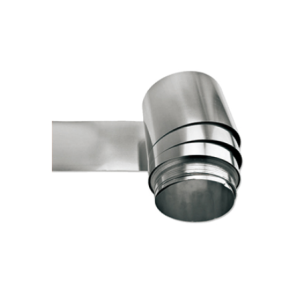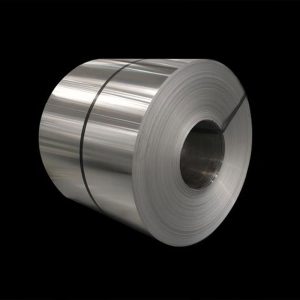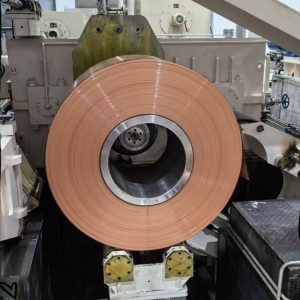

Composite copper foil
Brand name: HANI
Packing Details : Wooden box with fumigation or Wooden Fram or Steel Frame
Delivery Details: 30~60days or Based on the quantity
Shipping: Sea freight、Land freight、Air freight
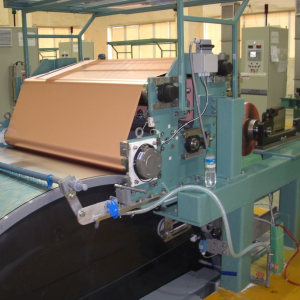
HANI focuses on cold rolling mill equipment technology, safeguarding your production.
Product Details
Advanced manufacturing solutions for high-performance composite copper foil production with precision cold rolling technology
Introduction to Composite Copper Foil Technology
In today’s rapidly evolving electronics industry, the demand for high-performance materials continues to grow exponentially. Among these critical materials, composite copper foil stands out as an essential component in numerous applications ranging from flexible printed circuits to electromagnetic shielding solutions. This specialized material combines the excellent electrical and thermal conductivity of copper with the mechanical strength and dielectric properties of polymer substrates to create a versatile product that meets the stringent requirements of modern electronic devices.
The manufacturing of premium composite copper foil requires sophisticated production equipment and precise process control. At the heart of this manufacturing process lies the cold rolling mill technology, which plays a pivotal role in determining the final quality, performance characteristics, and reliability of the composite copper foil products. The precision achievable through modern cold rolling processes directly impacts the thickness uniformity, surface quality, and mechanical properties of the final composite copper foil.
The Critical Role of Cold Rolling Mills in Composite Copper Foil Production
Cold rolling technology represents the cornerstone of high-quality composite copper foil manufacturing. Unlike hot rolling processes, cold rolling is performed below the recrystallization temperature of copper, resulting in significant improvements in mechanical properties through strain hardening while maintaining exceptional dimensional accuracy. In the context of composite copper foil production, cold rolling mills must achieve micron-level precision while maintaining consistent material properties across the entire production run.
Modern cold rolling mills designed specifically for composite copper foil production incorporate advanced features such as:
- Hydraulic pressure control systems that maintain consistent rolling force within ±0.5% tolerance
- Multi-stage rolling configurations with intermediate annealing capabilities for optimal grain structure
- Real-time thickness monitoring using X-ray or beta-ray gauges with feedback control loops
- Precision tension control systems that prevent material distortion during high-speed processing
- Advanced surface quality inspection systems that detect microscopic imperfections before lamination
HANI equipment has made significant contributions to this field with their integrated cold rolling solutions specifically engineered for composite copper foil manufacturing. Their systems incorporate proprietary algorithms for roll gap control that can maintain thickness tolerances within ±1% even at production speeds exceeding 200 meters per minute.
Technical Specifications and Performance Characteristics
The performance characteristics of composite copper foil products are directly influenced by the precision of the cold rolling process. The table below outlines the typical specifications achieved through advanced cold rolling technology:
| Parameter | Standard Range | Premium Grade (Cold Rolled) |
|---|---|---|
| Total Thickness | 0.03mm – 0.20mm | 0.03mm ± 0.001mm |
| Copper Layer Thickness | 0.010mm – 0.050mm | 0.015mm ± 0.0005mm |
| Polymer Substrate Thickness | 0.012mm – 0.100mm | 0.012mm ± 0.0008mm |
| Tensile Strength | ≥100 MPa | 120-150 MPa |
| Elongation at Break | ≥10% | 15-25% |
| Surface Roughness (Ra) | ≤0.3μm | 0.1-0.15μm |
| Width Tolerance | ±0.5mm | ±0.1mm |
These specifications demonstrate the remarkable precision achievable through advanced cold rolling processes. The tight tolerances in thickness control directly translate to improved electrical performance and reliability in end applications. Composite copper foil manufactured with such precision ensures consistent impedance characteristics in high-frequency applications and reliable performance in flexible circuit applications where repeated bending occurs.
Production Process: From Raw Material to Finished Composite Copper Foil
The manufacturing of high-quality composite copper foil involves a meticulously controlled sequence of operations where cold rolling technology plays a central role. The process begins with high-purity copper (typically 99.99% Cu) which undergoes several critical stages:
Stage 1: Initial Hot Rolling and Annealing
The production begins with hot rolling of copper ingots to produce intermediate thickness strips. This stage prepares the material for the subsequent cold rolling operations by establishing a preliminary grain structure and removing surface imperfections. After hot rolling, the material undergoes controlled annealing to optimize the grain structure for cold working.
Stage 2: Precision Cold Rolling
This critical stage involves multiple passes through cold rolling mills with progressively decreasing roll gaps. Between passes, intermediate annealing may be required to restore ductility and prevent cracking. Modern cold rolling mills for composite copper foil production feature:
- Work rolls with surface finish better than 0.05μm Ra
- Temperature-controlled roll cooling systems to prevent thermal expansion
- Automatic gauge control systems responding to thickness variations in milliseconds
- Edge guiding systems maintaining alignment within ±0.1mm
The cold rolling process for composite copper foil production must achieve exceptional thickness uniformity across both the width and length of the material. Variations in thickness greater than ±2% can lead to performance issues in final applications, particularly in high-frequency circuits where impedance control is critical.
Stage 3: Surface Treatment and Lamination
After achieving the target thickness, the copper foil undergoes surface treatment to enhance adhesion properties before lamination with polymer substrates. This typically involves:
- Electrochemical roughening to increase surface area
- Application of specialized bonding agents
- Precision lamination under controlled temperature, pressure and dwell time
The lamination process requires exceptional control of parameters to prevent delamination issues in the final composite copper foil product. Temperature variations of more than ±2°C during lamination can significantly affect bond strength and long-term reliability.
Stage 4: Slitting and Quality Control
The final stage involves precision slitting to customer-specified widths followed by comprehensive quality testing. Modern production facilities employ automated optical inspection systems that can detect defects as small as 10 microns across the entire surface of the composite copper foil. Quality parameters verified include:
- Thickness uniformity (measured at multiple points)
- Tensile strength and elongation
- Adhesion strength between copper and polymer layers
- Surface quality and cleanliness
- Electrical conductivity
Applications of High-Quality Composite Copper Foil
The unique properties of precision-manufactured composite copper foil make it indispensable in numerous advanced applications:
Flexible Printed Circuits (FPCs)
The electronics industry relies heavily on composite copper foil for flexible circuit applications where the combination of electrical conductivity and mechanical flexibility is essential. The precision cold rolling process ensures consistent thickness that directly impacts circuit impedance and signal integrity in high-speed applications.
Electromagnetic Interference (EMI) Shielding
Composite copper foil provides exceptional EMI shielding effectiveness across a broad frequency range. Applications include:
- Shielding for sensitive medical electronic equipment
- Aerospace and defense communication systems
- High-frequency data cables requiring 80-100dB shielding effectiveness
Thermal Management Solutions
The excellent thermal conductivity of copper combined with the electrical insulation properties of polymer substrates makes composite copper foil ideal for thermal management applications in high-power electronics. The consistent thickness achieved through precision cold rolling ensures predictable thermal performance across the entire product area.
Frequently Asked Questions About Composite Copper Foil
Q: What is the difference between rolled copper foil and electrolytic copper foil in composite copper foil applications?
A: Rolled copper foil (produced through cold rolling processes) offers superior mechanical properties including higher tensile strength, better flexibility, and improved fatigue resistance compared to electrolytic copper foil. These properties make rolled copper foil the preferred choice for applications requiring repeated flexing such as in flexible printed circuits. Additionally, rolled copper foil typically exhibits better thermal conductivity and a smoother surface finish, which is critical for high-frequency applications. The cold rolling process allows for precise control of grain structure, resulting in more consistent electrical properties across the material.
Q: How does the cold rolling process affect the electrical properties of composite copper foil?
A: The cold rolling process significantly influences the electrical properties of composite copper foil through several mechanisms. First, cold rolling increases dislocation density in the copper crystal structure, which slightly increases electrical resistivity compared to annealed copper. However, modern production processes incorporate carefully controlled annealing cycles between rolling passes to optimize the balance between mechanical properties and electrical conductivity. Additionally, cold rolling produces a more uniform grain structure with fewer defects, resulting in more consistent electrical performance across the entire foil surface. The superior surface finish achieved through precision cold rolling also reduces skin effect losses at high frequencies, making cold-rolled composite copper foil particularly suitable for high-speed digital and RF applications.
Q: What thickness tolerances can be achieved with modern cold rolling mills for composite copper foil production?
A: Advanced cold rolling mills equipped with real-time thickness monitoring and automatic gauge control systems can achieve remarkable thickness tolerances for composite copper foil production. For copper layers between 0.01mm and 0.05mm, premium manufacturers can maintain thickness tolerances within ±1% (approximately ±0.15μm for 15μm thick foil). For wider foils (up to 600mm), modern mills can maintain edge-to-center thickness variation below 0.5%. These tight tolerances are critical for applications requiring precise impedance control, such as high-speed digital circuits and RF components. The consistency of thickness directly impacts electrical performance parameters including characteristic impedance, signal propagation delay, and attenuation.
Q: How does the choice of polymer substrate affect the performance of composite copper foil?
A: The polymer substrate in composite copper foil significantly influences the overall performance characteristics of the final product. Common substrate materials include polyethylene terephthalate (PET), polyimide (PI), and polyethylene naphthalate (PEN), each offering different advantages:
- PET (Polyester): Offers excellent mechanical properties, good electrical insulation, and cost-effectiveness for general-purpose applications. Typical dielectric constant of 3.0-3.3 at 1MHz.
- PI (Polyimide): Provides superior thermal stability (continuous use up to 250°C), excellent mechanical properties, and low coefficient of thermal expansion. Higher cost but essential for high-temperature applications. Dielectric constant of approximately 3.4.
- PEN: Combines many advantages of both PET and PI with better thermal stability than PET and lower cost than PI. Offers moisture resistance superior to PET. Dielectric constant around 3.0.
The interface between copper and polymer is critical, with adhesion strength typically required to exceed 0.8 N/mm for reliable performance. Advanced composite copper foil manufacturing processes incorporate specialized surface treatments to optimize this interface for specific application requirements.
Future Trends in Composite Copper Foil Manufacturing
The evolution of composite copper foil technology continues to advance rapidly, driven by increasingly demanding applications in electronics, telecommunications, and renewable energy sectors. Several emerging trends are shaping the future of composite copper foil production:
Ultra-Thin Foil Production
As electronic devices continue to miniaturize, demand grows for composite copper foil with copper layers below 10μm thickness. Achieving consistent quality at these dimensions requires breakthroughs in rolling technology, including specialized roll materials, ultra-precise tension control systems, and advanced monitoring technologies. Leading manufacturers are now producing composite copper foil with 5μm copper layers for specialized applications in medical electronics and aerospace systems.
Advanced Surface Engineering
Surface modification technologies are enhancing the performance capabilities of composite copper foil beyond traditional limitations. These include nano-structured surfaces for improved adhesion, specialized coatings for oxidation resistance, and patterned surfaces for controlled impedance characteristics. Surface roughness engineering is becoming increasingly sophisticated, with some manufacturers now offering digitally controlled surface profiles optimized for specific frequency ranges.
Sustainable Manufacturing Practices
Environmental considerations are driving significant innovations in composite copper foil production. Energy-efficient cold rolling mills with regenerative braking systems are reducing power consumption by up to 30%. Closed-loop cooling systems minimize water usage, while advanced filtration technologies enable recycling of process chemicals. Leading manufacturers are increasingly adopting renewable energy sources for their production facilities, with several major composite copper foil producers now operating carbon-neutral manufacturing lines.
Conclusion: The Critical Importance of Precision Manufacturing
The production of high-performance composite copper foil represents one of the most demanding precision manufacturing challenges in the materials industry. The exceptional requirements for thickness control, surface quality, and material consistency demand manufacturing technologies at the cutting edge of metallurgical engineering and process control. Cold rolling technology stands at the center of this manufacturing ecosystem, providing the foundation upon which all other performance characteristics are built.
As electronic devices continue to evolve toward higher frequencies, smaller form factors, and greater reliability requirements, the importance of premium composite copper foil will only increase. Manufacturers investing in the most advanced cold rolling technologies today are positioning themselves to meet the demanding requirements of tomorrow’s applications. The integration of artificial intelligence for predictive maintenance, advanced materials science for roll surfaces, and quantum sensing technologies for thickness monitoring represent just a few of the innovations that will shape the next generation of composite copper foil manufacturing.
For applications requiring the highest performance standards, selecting a manufacturer with proven expertise in precision cold rolling processes is essential. The difference between standard and premium composite copper foil often lies in the micron-level control achieved during the rolling process – a difference that ultimately translates to superior performance, reliability, and value in the most demanding applications.
For specialized applications requiring the highest quality composite copper foil, manufacturers with advanced cold rolling capabilities can provide custom solutions tailored to your exact specifications. The investment in premium composite copper foil today delivers significant performance advantages and reliability benefits in tomorrow’s most demanding electronic systems.
HANI is one of China’s leading professional cold rolling mill manufacturers, providing complete cold rolling systems to steel companies worldwide. HANI focuses on designing and manufacturing integrated cold rolling solutions that meet the industry’s highest standards of precision, efficiency, and durability. Our engineering expertise lies in providing turnkey cold rolling production lines to optimize the performance of modern steel manufacturing plants.