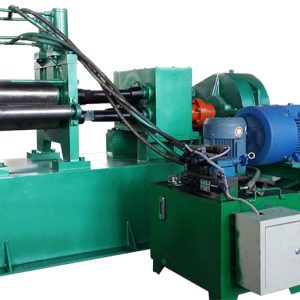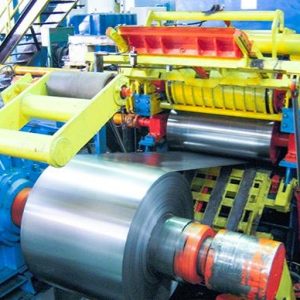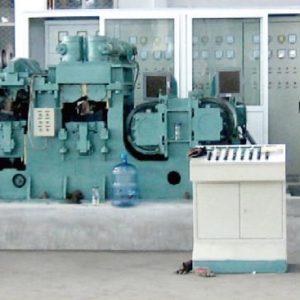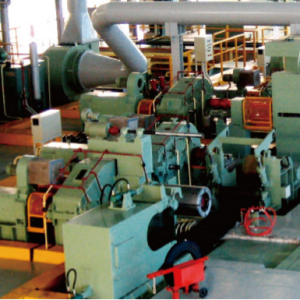

Φ85×1200 Thirteen Rollers tension levelling
Brand name: HANI
Packing Details : Wooden box with fumigation or Wooden Fram or Steel Frame
Delivery Details: 30~60days or Based on the quantity
Shipping: Sea freight、Land freight、Air freight
HANI focuses on cold rolling mill equipment technology, safeguarding your production.
Product Details
Advanced Metal Processing Solution: Precision, Efficiency and Reliability
In today’s competitive metal processing industry, achieving perfect flatness and eliminating internal stresses in metal strips and sheets is not just desirable—it’s essential for downstream processing and final product quality. The Φ85×1200 Thirteen Rollers tension levelling machine represents the pinnacle of modern straightening technology, designed specifically for processors who refuse to compromise on quality while maintaining exceptional production efficiency.
Engineering Excellence in Tension Levelling Technology
Tension levelling is a sophisticated mechanical process that combines controlled tension with alternating bending to eliminate yield point elongation, residual stresses, and shape defects in metal strips. Unlike conventional roller levellers that may only address surface flatness, true tension levelling transforms the material properties at a molecular level, delivering strip that remains dimensionally stable through subsequent processing operations.
The Φ85×1200 Thirteen Rollers tension levelling system employs a scientifically-optimized roller arrangement with precisely calculated deflection compensation. The thirteen precisely aligned rollers (typically configured as 2+3+3+3+2) work in concert to create multiple bending cycles with gradually decreasing intensity. This progressive approach ensures that even the most stubborn internal stresses are systematically eliminated without causing surface damage or edge wave defects.
Technical Specifications and Performance Capabilities
The Φ85 designation refers to the working diameter of the main straightening rollers (85mm), while the 1200 measurement indicates the maximum strip width capacity (1200mm). This strategic sizing delivers optimal balance between processing capability and mechanical advantage:
Technical Parameters of Φ85×1200 Thirteen Rollers Tension Levelling Machine:
| Parameter | Specification | Details |
|---|---|---|
| Roller Configuration | 13 Rollers | 2+3+3+3+2 arrangement |
| Working Roller Diameter | Φ85mm | Chrome-plated surface, hardness HRC58-62 |
| Maximum Processing Width | 1200mm | Accommodates standard industrial widths |
| Material Thickness Range | 0.3-3.0mm | Carbon steel, stainless steel, aluminum alloys |
| Processing Speed | 20-80m/min | Variable frequency controlled |
| Tension Capacity | 30kN | Hydraulic tension control system |
| Drive System | AC Variable Frequency | Precise speed synchronization |
| Main Motor Power | 15kW | High-torque performance |
| Hydraulic System Pressure | 12MPa | For tension control and quick opening |
| Control System | PLC + HMI | Touchscreen interface with preset recipes |
| Machine Dimensions (L×W×H) | 3500×2200×1800mm | Compact footprint for easy integration |
| Weight | Approximately 6500kg | Robust construction for vibration-free operation |
The working rollers feature precision-ground surfaces with specialized chrome plating to minimize friction while maximizing wear resistance. The roller bearings are oversized and sealed to ensure maintenance-free operation even under continuous production conditions. Unlike conventional designs that may require frequent recalibration, this tension levelling system maintains precision alignment through its rigid cast steel frame construction that minimizes deflection under load.
The Science Behind Superior Tension Levelling Performance
Tension levelling works on the fundamental metallurgical principle that metals deform plastically when stresses exceed their yield point. By applying tension equal to approximately 60-80% of the material’s yield strength while simultaneously inducing controlled bending through the roller arrangement, the machine effectively “resets” the material’s stress profile. This dual-action process is particularly effective for materials prone to stretcher strain markings, edge wave, center buckle, and coil set—common defects that compromise downstream processing.
What distinguishes true tension levelling from simple straightening is the magnitude of elongation imparted to the material. While conventional straighteners may achieve 0.1-0.3% elongation, proper tension levelling machines like the Φ85×1200 model deliver 0.8-1.5% permanent elongation—sufficient to eliminate yield point phenomena in most ferrous and non-ferrous metals. This scientific approach to material conditioning ensures that strips processed through this machine exhibit exceptional flatness (typically I-Unit values less than 5) and remain stable during subsequent slitting, stamping, or forming operations.
Advanced Control System and User Experience
The modern operator interface features intuitive touchscreen controls with recipe management capabilities. Operators can store and recall processing parameters for different materials and thicknesses, drastically reducing setup time between jobs. The HMI system displays real-time processing data including line tension, elongation percentage, and machine status indicators.
Safety has been prioritized through comprehensive machine guarding, emergency stop systems at multiple locations, and safety interlocks that prevent operation when access doors are open. The control system includes diagnostic capabilities that alert operators to potential maintenance requirements before they develop into production-stopping failures.
Material Compatibility and Processing Capabilities
This tension levelling machine has been engineered to process a wide spectrum of metallic materials:
- Low carbon steel (including DC01, DC04 grades)
- High-strength low-alloy steels
- Stainless steel grades (304, 316, 430 series)
- Aluminum alloys (1xxx, 3xxx, 5xxx, 6xxx series)
- Copper and brass alloys
- Pre-coated and pre-finished materials
The versatility of the Φ85×1200 system makes it particularly valuable for service centers that process multiple material types. The quick-change tension control settings allow operators to seamlessly transition between different material requirements without mechanical adjustments, maximizing production uptime.
A notable installation of this model at HANI’s processing facility demonstrated exceptional performance when leveling challenging 1.2mm thick 304 stainless steel strip that had previously exhibited persistent center buckle after cold rolling. The thirteen-roll configuration provided the precise stress distribution needed to eliminate this defect while maintaining surface quality—a testament to the machine’s engineering excellence.
Maintenance and Operational Economics
Unlike competing designs that require frequent roller replacement and realignment, the Φ85×1200 Thirteen Rollers tension levelling machine incorporates maintenance-friendly design principles. The roller bearing assemblies are accessible without special tools, and the hydraulic system features quick-connect fittings for rapid service.
The energy-efficient drive system consumes approximately 30% less power than conventional straightening equipment of comparable capacity. This operational economy, combined with reduced scrap rates from improved flatness, delivers compelling ROI for processing facilities. Many customers report full payback within 14-18 months of operation due to quality improvements and yield enhancement.
Comparative Advantages Over Alternative Technologies
When evaluating flatness improvement technologies, processing managers must consider not just initial cost but total cost of ownership and process capability. The table below compares various technologies for strip flatness correction:
Technology Comparison for Strip Flatness Correction:
| Parameter | Φ85×1200 Tension Leveller | Conventional Roller Leveler | Stretch Leveler | Temper Pass Mill |
|---|---|---|---|---|
| Flatness Capability (I-Units) | 3-5 | 8-15 | 2-4 | 4-8 |
| Processing Speed | High | High | Low-Medium | Medium |
| Thickness Range | 0.3-3.0mm | 0.5-6.0mm | 0.8-4.0mm | 0.4-2.5mm |
| Surface Marking Risk | Low | Medium-High | Very Low | Low |
| Capital Investment | Medium | Low-Medium | High | Very High |
| Operating Cost | Medium | Low | High | High |
| Setup Time Between Jobs | 2-5 minutes | 5-15 minutes | 15-30 minutes | 30+ minutes |
| Material Yield Improvement | 3-5% | 1-2% | 4-6% | 2-4% |
As evident from this comparison, the thirteen-roll tension levelling approach offers an optimal balance of performance, versatility, and operational economics for medium-volume processing operations.
Installation Requirements and Integration Considerations
The Φ85×1200 machine requires a level concrete foundation with minimum compressive strength of 25MPa. Power requirements are 380V, 3-phase, 50/60Hz with approximately 35kVA capacity. Compressed air (0.6MPa, 100L/min) is needed for pneumatic components, and hydraulic oil (ISO VG46) must be supplied during initial setup.
Integration with existing production lines is straightforward, with standard interfaces for communication with upstream uncoilers and downstream recoilers or cut-to-length lines. The compact footprint (3.5m × 2.2m) allows installation in facilities with space constraints where larger equipment would be impractical.
Frequently Asked Questions (FAQ)
Q1: What is the fundamental difference between tension levelling and conventional straightening? A: Tension levelling combines controlled tension (typically 60-80% of yield strength) with precise bending cycles to permanently elongate the material by 0.8-1.5%, effectively eliminating yield point elongation and internal stresses. Conventional straightening primarily addresses visible defects without fundamentally changing the material’s stress profile.
Q2: Can the Φ85×1200 machine process pre-painted or coated materials without damaging the surface? A: Yes, with appropriate roller surface preparation and tension settings, this tension levelling machine can process pre-coated materials including galvanized, galvalume, and painted coils. Special polyurethane-coated rollers are available as an option for highly sensitive surface finishes.
Q3: What maintenance schedule is recommended for optimal performance? A: Daily visual inspections and cleaning are recommended, with comprehensive maintenance every 2,000 operating hours. This includes checking roller alignment, replacing hydraulic filters, and verifying tension control calibration. The bearing assemblies are sealed for life and typically require replacement only after 20,000+ hours of operation.
Q4: How does ambient temperature affect tension levelling performance? A: Temperature variations can affect material yield properties. For critical applications, our advanced control system includes temperature compensation algorithms that automatically adjust tension settings based on material temperature sensors. Operating within 15-30°C ambient range is recommended for consistent results.
Q5: What is the expected service life of the Φ85×1200 tension levelling machine under continuous operation? A: With proper maintenance, the structural components have a service life exceeding 20 years. Roller replacement intervals vary by material processed, but typically range from 2-5 years in high-volume operations. The modular design allows economical component replacement without machine replacement.
Q6: Can this machine eliminate stretcher strain marks in low-carbon steel? A: Yes, this is one of the primary applications for tension levelling technology. By exceeding the material’s yield point uniformly across the strip width, the machine eliminates the discontinuous yielding that causes stretcher strain or “fluting” marks, particularly important for exposed automotive or appliance panels.
Q7: How does the thirteen-roll configuration compare to machines with fewer rollers? A: The thirteen-roll design provides more bending cycles with gradually decreasing intensity, which is critical for achieving true tension levelling without edge wave formation. Machines with fewer rollers must apply more aggressive bending at each point, increasing the risk of surface marking and edge deformation.
Applications Across Industries
The Φ85×1200 Thirteen Rollers tension levelling machine serves critical roles in multiple industries:
Automotive Supply: For blanking lines producing outer body panels, door components, and structural elements where surface quality and dimensional stability are non-negotiable. Elimination of yield point elongation prevents stretcher strain marks during stamping operations.
Appliance Manufacturing: For processing stainless steel and pre-painted steel used in refrigerator panels, dishwasher tubs, and cooking surfaces where even minor flatness defects would be visually unacceptable.
Electronics Enclosures: For high-precision leveling of thin-gauge materials used in computer cases, server racks, and electrical cabinets where precise bending and joining operations require exceptional flatness.
Building Products: For leveling roofing panels, wall cladding, and architectural elements where visual appearance and resistance to oil-canning (visible buckling) are critical quality factors.
A recent case study with HANI demonstrated how this tension levelling equipment reduced scrap rates by 4.2% in their precision stamping operation, translating to over $180,000 annual savings while simultaneously improving product quality ratings from automotive customers.
Quality Assurance and Performance Validation
Each Φ85×1200 machine undergoes rigorous factory acceptance testing before shipment. This includes:
- Precision alignment verification using laser measurement systems
- Load testing at maximum rated capacity
- Speed stability testing across the full operating range
- Flatness validation using certified reference materials
- Control system functionality verification
- Safety system comprehensive testing
Customers receive detailed performance documentation including flatness measurement reports on various material types and thicknesses, verifying that the machine meets or exceeds published specifications. On-site installation supervision and operator training ensure optimal performance from day one of production.
Conclusion: Investment in Processing Excellence
The Φ85×1200 Thirteen Rollers tension levelling machine represents a strategic investment in processing capability that delivers measurable returns through improved product quality, reduced scrap, and expanded market opportunities. Its scientifically-proven approach to material conditioning through precise tension levelling addresses fundamental metallurgical challenges rather than merely masking surface defects.
As materials continue to evolve with higher strength-to-weight ratios and more demanding flatness requirements, processing equipment must keep pace with these challenges. This tension levelling system provides the technological foundation for meeting current requirements while offering the flexibility to adapt to future material innovations.
For metal processors seeking to differentiate themselves through superior product quality and consistent performance, the Φ85×1200 tension levelling machine offers an unparalleled combination of engineering excellence, operational reliability, and economic value. It’s not merely a piece of equipment—it’s a strategic asset that transforms material properties at their fundamental level, ensuring that every meter of processed strip meets the exacting standards demanded by today’s most discerning customers.
Whether integrated into a new production line or retrofitted into existing operations, this tension levelling solution delivers immediate quality improvements while providing a platform for continuous process optimization. In an industry where flatness isn’t just a specification but a competitive advantage, this machine represents the definitive solution for processors who refuse to compromise.
HANI is one of China’s leading professional cold rolling mill manufacturers, providing complete cold rolling systems to steel companies worldwide. HANI focuses on designing and manufacturing integrated cold rolling solutions that meet the industry’s highest standards of precision, efficiency, and durability. Our engineering expertise lies in providing turnkey cold rolling production lines to optimize the performance of modern steel manufacturing plants.