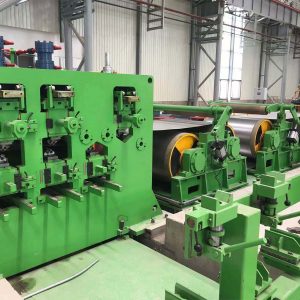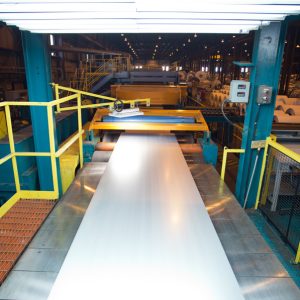

Tension levelling
Brand name: HANI
Packing Details : Wooden box with fumigation or Wooden Fram or Steel Frame
Delivery Details: 30~60days or Based on the quantity
Shipping: Sea freight、Land freight、Air freight
HANI focuses on cold rolling mill equipment technology, safeguarding your production.
Product Details
Advanced Steel Processing Technology for Perfect Flatness and Material Properties
Tension levelling represents one of the most sophisticated metal processing technologies in modern steel manufacturing. This critical process transforms coiled steel materials that have undergone thermal treatments into perfectly flat strips with enhanced mechanical properties. Unlike conventional straightening methods that merely address surface deformations, tension levelling works by simultaneously applying controlled tension and bending forces to the steel strip, effectively eliminating internal stresses and yield point elongation issues that plague traditional processing methods.
At the heart of modern metal forming industries, tension levelling systems deliver consistent material properties that are essential for downstream manufacturing processes. The technology combines mechanical stretching with precise bending cycles to achieve superior flatness tolerances unattainable through other methods. This dual-action approach restructures the material’s grain orientation and eliminates yield point phenomena that cause stretcher strains and uneven forming during subsequent fabrication operations.
The Science Behind Effective Tension Levelling
The fundamental principle behind steel coil tension leveling lies in exceeding the material’s yield point under controlled conditions. When steel strip passes through a properly configured tension levelling system, it experiences a precisely calculated elongation typically between 0.5% and 2.5%, depending on material grade and application requirements. This controlled deformation permanently eliminates discontinuous yielding characteristics while simultaneously removing residual stresses accumulated during prior processing stages.
The process involves multiple bending cycles around precisely positioned work rolls combined with significant tensile forces applied by entry and exit drives. This synergistic action effectively works the material beyond its yield point in both tension and bending modes. The result is a strip material with homogeneous mechanical properties across its entire width and length, eliminating edge wave, center buckle, twist, and camber defects that compromise downstream processing efficiency.
Technical Specifications and System Capabilities
Our tension levelling systems are engineered to process a comprehensive range of ferrous and non-ferrous materials with exceptional precision. The following table outlines our standard equipment capabilities across different production requirements:
| Parameter | 650mm Model | 750mm Model | 850mm Model | 1000mm Model |
|---|---|---|---|---|
| Material Compatibility | Carbon Steel, Stainless Steel | Carbon Steel, Stainless Steel | Carbon Steel, Stainless Steel | Carbon Steel, Stainless Steel |
| Thickness Range (mm) | 0.2 – 1.2 | 0.2 – 1.2 | 0.3 – 0.8 | 0.2 – 1.2 |
| Maximum Extension Rate | 0.2% – 3% | 0.2% – 3% | 0.2% – 3% | 0.2% – 3% |
| Operating Speed (m/min) | 150 – 300 | 150 – 300 | 150 – 300 | 150 – 300 |
| Straightening Configuration | 1B1S or 2B1S | 1B1S or 2B1S | 1B1S or 2B1S | 1B1S or 2B1S |
| Hydraulic System Pressure | 8 MPa | 8 MPa | 8.5 MPa | 10 MPa |
| Main Drive System | DC/Z4 Series | DC/Z4 Series | DC/Z4 Series | DC/Z4 Series |
| Control System | PLC with HMI interface | PLC with HMI interface | PLC with HMI interface | PLC with HMI interface |
Note: 1B1S = One Bend One Straighten configuration; 2B1S = Two Bends One Straighten configuration
Comprehensive System Components
A complete tension levelling line comprises several critical subsystems working in perfect synchronization:
- Hydraulic Loading/Unloading System: Facilitates efficient coil handling with precise positioning capabilities
- Uncoiler with Automatic Tension Control: Maintains consistent strip tension throughout the process
- Entry and Exit Bridles (S-Rollers): Generate the primary tensile forces required for the tension levelling process
- Precision Bending Section: Features adjustable work rolls that determine the bending radius and intensity
- Straightening Section: Finalizes the flatness correction with fine adjustment capabilities
- Recoiler with Programmable Tension Control: Ensures perfect coil formation after processing
- Integrated Control System: Features advanced algorithms for automatic parameter optimization based on material characteristics
Industrial Applications and Benefits of Steel Coil Tension Leveling
Tension levelling delivers transformative benefits across numerous manufacturing sectors. In automotive production, tension levelled materials eliminate costly stamping rejects caused by inconsistent material flow. The appliance industry relies on tension levelling to achieve perfect surface finishes on visible components, eliminating costly post-production corrections. Construction material manufacturers utilize tension levelling to ensure dimensional stability in structural components.
Perhaps the most significant advantage of proper tension levelling is the elimination of yield point elongation. Materials processed through effective tension levelling systems demonstrate consistent stress-strain behavior during subsequent forming operations, eliminating stretcher strains and ensuring uniform material flow. This translates directly to improved production yields, reduced scrap rates, and superior product quality.
Precision Engineering for Superior Performance
HANI tension levelling systems incorporate advanced engineering principles to deliver consistent performance under demanding production conditions. The frame construction utilizes finite element analysis to optimize rigidity and vibration resistance, ensuring micron-level precision even at maximum production speeds. All critical components undergo rigorous quality control procedures, with wear surfaces treated to extend service life in high-production environments.
Our tension levelling systems feature proprietary control algorithms that automatically adjust bending roll positions and tension parameters based on real-time material feedback. This intelligent control system compensates for variations in incoming material properties, maintaining consistent output quality regardless of input variations. The hydraulic systems incorporate state-of-the-art proportional valve technology for smooth, responsive control of all machine functions.
Material Science Considerations in Tension Levelling
Effective tension levelling requires deep understanding of material behavior under combined stress conditions. For low-carbon steels, the process must exceed the upper yield point by approximately 0.5-1.0% to completely eliminate yield point elongation. Stainless steel grades require different elongation parameters due to their distinct strain-hardening characteristics.
Advanced tension levelling systems incorporate material-specific processing curves stored in their control systems. These curves account for variables including material grade, thickness, width, prior processing history, and desired final properties. This scientific approach to steel coil tension leveling ensures optimal mechanical property development while maintaining dimensional accuracy.
Frequently Asked Questions
Q: What is the fundamental difference between tension levelling and conventional roller levelling? A: Tension levelling combines significant tensile stress with bending deformation to permanently eliminate yield point elongation, whereas roller levelling only addresses geometric flatness through bending cycles without addressing the material’s stress-strain behavior.
Q: How does tension levelling affect material mechanical properties? A: Proper tension levelling eliminates discontinuous yielding behavior while slightly increasing yield strength through strain hardening. The process creates homogeneous mechanical properties across the entire strip width and length.
Q: What industries benefit most from implementing tension levelling systems? A: Automotive stamping operations, precision appliance manufacturing, electrical steel processing, and any industry requiring consistent material behavior during subsequent forming operations see the greatest return on investment from tension levelling equipment.
Q: What determines the optimal extension percentage for a given material? A: Material grade, thickness, prior processing history, and intended downstream applications all factor into determining optimal extension rates. Generally, materials prone to stretcher strains require higher extension percentages (1.5-2.5%), while less susceptible materials may only need 0.5-1.0%.
Q: How does tension levelling impact production efficiency? A: While tension levelling adds a processing step, it dramatically reduces downstream scrap rates, eliminates costly rework operations, and increases production line speeds by ensuring consistent material behavior. Most manufacturers see payback periods under two years from reduced scrap and improved yields alone.
Advanced Control Systems for Optimal Performance
Modern tension levelling lines incorporate sophisticated control systems that monitor multiple parameters simultaneously. Load cells measure actual tension forces while laser-based flatness measurement systems provide real-time feedback to the control algorithms. The integrated system automatically adjusts bending roll positions and drive parameters to maintain optimal processing conditions regardless of material variations.
These advanced control capabilities are essential for consistent tension levelling performance. Without precise tension control combined with accurate bending radius adjustment, the process cannot reliably exceed the material’s yield point throughout its cross-section. HANI systems incorporate redundant measurement systems to ensure consistent processing quality even during extended production runs.
Maintenance and Operational Considerations
Proper maintenance of tension levelling equipment is crucial for consistent performance. Critical wear components including bearing assemblies, roll surfaces, and hydraulic seals require scheduled inspection and replacement according to usage hours. Our tension levelling systems feature modular design principles that minimize downtime during component replacement operations.
Operator training represents another critical success factor in tension levelling operations. Skilled operators understand the relationship between material characteristics and machine settings, enabling them to optimize the process for varying production requirements. We provide comprehensive training programs covering both theoretical principles and practical operation of our tension levelling systems.
Conclusion: The Future of Precision Metal Processing
Tension levelling continues to evolve as material requirements become increasingly demanding. The integration of Industry 4.0 technologies enables predictive maintenance scheduling and remote process optimization, further enhancing production efficiency. Advanced sensor systems now monitor material properties in real-time, automatically adjusting process parameters to maintain optimal results despite incoming material variations.
For manufacturers seeking to elevate their product quality while reducing production costs, investing in proper tension levelling technology delivers compelling returns. The elimination of yield point elongation, consistent material behavior, and superior flatness characteristics translate directly to improved production yields and enhanced product performance.
When considering steel coil tension leveling solutions, partner with manufacturers who understand both the mechanical engineering requirements and the material science principles behind effective processing. Quality tension levelling systems represent significant investments that should deliver decades of reliable service when properly maintained and operated.
For the most demanding applications requiring perfect flatness and consistent material properties, tension levelling remains the gold standard in strip material processing technology. Its unique ability to simultaneously address geometric defects and material behavior issues makes it indispensable in high-quality manufacturing environments worldwide.
HANI is one of China’s leading professional cold rolling mill manufacturers, providing complete cold rolling systems to steel companies worldwide. HANI focuses on designing and manufacturing integrated cold rolling solutions that meet the industry’s highest standards of precision, efficiency, and durability. Our engineering expertise lies in providing turnkey cold rolling production lines to optimize the performance of modern steel manufacturing plants.