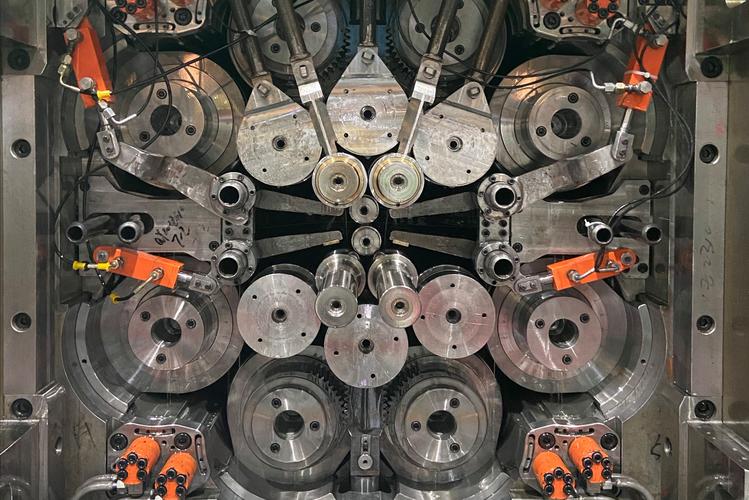
Warm Congratulations on the Successful Installation, Debugging and Smooth Production Launch of HANI 600 Pickling Tandem Rolling Mill Unit
The successful installation, debugging, and smooth production launch of the HANI 600 Pickling Tandem Rolling Mill Unit marks a significant milestone in the advancement of integrated steel processing technology. This achievement not only demonstrates engineering excellence but also underscores the growing demand for high-efficiency, continuous production systems in the cold-rolled steel industry. As a state-of-the-art pickling line tandem cold mill, the HANI 600 unit integrates acid pickling and cold rolling into a single, seamless process—eliminating intermediate handling, reducing energy consumption, and significantly improving product quality and yield.
What Is a Pickling Line Tandem Cold Mill?
A pickling line tandem cold mill (PLTCM) is an advanced metallurgical production line that combines two critical stages of steel strip processing: surface cleaning (pickling) and cold reduction (rolling). Traditionally, these processes were performed separately—first, hot-rolled coils would undergo pickling to remove iron oxide scale using hydrochloric or sulfuric acid, then be dried, coiled, stored, and later fed into a cold rolling mill. This batch-oriented approach introduced inefficiencies, including coil handling losses, surface re-oxidation, and inconsistent tension control.
In contrast, a PLTCM links the pickling section directly to a multi-stand tandem cold mill, enabling continuous processing from hot-rolled input to finished cold-rolled strip in one pass. The result is a leaner, faster, and more cost-effective operation with superior surface finish, tighter thickness tolerances, and enhanced mechanical properties.
Technical Highlights of the HANI 600 PLTCM
The HANI 600 unit represents the latest generation of compact, high-productivity PLTCMs designed for medium-to-high volume production of cold-rolled steel strips. With a nominal width capacity of 600 mm, it is particularly suited for specialty steel producers, automotive component suppliers, and manufacturers requiring precision strips for electrical, construction, or appliance applications.
| Parameter | Specification |
|---|---|
| Line Type | Pickling Line Tandem Cold Mill (PLTCM) |
| Nominal Strip Width | 300–600 mm |
| Input Material | Hot-rolled steel coil (CQ, DQ, HSLA grades) |
| Input Thickness Range | 1.2–4.0 mm |
| Output Thickness Range | 0.3–2.5 mm |
| Max. Rolling Speed | 800 m/min |
| Pickling Medium | Hydrochloric acid (HCl), 18–20% concentration |
| Number of Rolling Stands | 5 stands (4-high configuration) |
| Rolling Force per Stand | Up to 12 MN |
| Thickness Tolerance | ±3 µm (for 0.5–1.5 mm range) |
| Flatness Control | Hydraulic roll bending + CVC/PC technology |
| Automation Level | Fully automated with Level 1 & Level 2 control systems |
Key Advantages of Integrated PLTCM Technology
The integration of pickling and cold rolling offers multiple operational and economic benefits over conventional separate-line setups:
-
Reduced Capital Expenditure: Eliminates the need for intermediate coil storage, cranes, and handling equipment.
-
Lower Operating Costs: Energy savings of 15–25% due to heat retention from the pickling section and reduced re-coiling losses.
-
Improved Surface Quality: Immediate cold rolling after pickling prevents re-oxidation and minimizes surface defects like rust spots or water stains.
-
Enhanced Gauge Accuracy: Continuous tension control across the entire line enables tighter thickness tolerances and better flatness.
-
Higher Yield: Typical yield improvement of 2–4% due to elimination of head/tail scrap from intermediate coiling.
-
Flexibility for Advanced Grades: Capable of processing high-strength low-alloy (HSLA), dual-phase (DP), and bake-hardenable (BH) steels with consistent mechanical properties.
Process Flow of the HANI 600 Unit
The HANI 600 PLTCM follows a meticulously engineered sequence to ensure optimal performance:
-
Uncoiling & Welding: Hot-rolled coils are uncoiled and end-welded to form a continuous strip using an automatic flash butt welder.
-
Entry Accumulator: A loop pit or horizontal accumulator stores strip to allow uninterrupted operation during coil changes.
-
Pickling Section: The strip passes through 3–5 acid tanks (typically HCl at 70–85°C), followed by rinsing, drying, and edge trimming.
-
Tandem Cold Mill: Five 4-high stands reduce thickness in a single pass, with interstand tension control and real-time AGC (Automatic Gauge Control).
-
Exit Section: Includes a tension reel, flying shear for tail-end cutting, and optional inspection stations (e.g., surface defect detection, thickness gauging).
-
Coiling: Finished strip is wound onto mandrels under precise tension control to prevent telescoping or edge damage.
How Does a 600mm Pickling Tandem Cold Mill Improve Yield for Automotive Steel Strips?
For automotive-grade cold-rolled steel (e.g., DC04, DC06), the HANI 600 PLTCM achieves yield rates exceeding 98.5% by eliminating intermediate coil handling. Traditional lines lose 1.5–3% material during decoking, recoiling, and storage due to edge damage and surface contamination. In contrast, the continuous process ensures every meter of strip is processed under controlled tension and temperature, minimizing breakage and scrap.
What Acid Concentration and Temperature Are Optimal for HCl Pickling in a Tandem Mill?
Based on industrial best practices and metallurgical studies, hydrochloric acid concentration between 18–20% at 75–82°C provides the most efficient scale removal for carbon steel without excessive base metal loss. The HANI 600 system includes acid regeneration (e.g., spray roaster) to recover FeCl₂ and maintain consistent bath chemistry—critical for stable cold rolling entry conditions.
Can a 5-Stand Tandem Mill Achieve ±3µm Thickness Tolerance on 0.4mm Strip?
Yes—with modern hydraulic AGC systems, X-ray gauges, and adaptive control algorithms, the HANI 600 consistently delivers ±3µm tolerance on strips as thin as 0.4 mm. Key enablers include:
-
High-response servo valves for roll gap adjustment (response time < 10 ms)
-
Interstand tension feedback loops using load cells and speed differentials
-
Thermal camber compensation based on real-time roll temperature mapping
Environmental and Safety Considerations
Modern PLTCMs like the HANI 600 incorporate comprehensive environmental safeguards:
-
Acid Mist Suppression: Multi-stage scrubbers and mist eliminators reduce HCl emissions to < 5 mg/m³ (well below EU BAT limits).
-
Wastewater Treatment: Neutralization and filtration systems ensure effluent meets local discharge standards for pH, Fe²⁺, and Cl⁻.
-
Noise Control: Acoustic enclosures around mill stands keep noise levels below 85 dB(A) at operator positions.
-
Energy Recovery: Waste heat from acid regeneration is reused for tank heating, reducing natural gas consumption by ~30%.
Future-Proofing with Digital Integration
The HANI 600 is equipped with Industry 4.0-ready architecture, supporting:
-
Predictive Maintenance: Vibration sensors on gearboxes and roll bearings feed data to cloud-based analytics for failure forecasting.
-
Digital Twin Simulation: Operators can test rolling schedules virtually before physical execution, optimizing setup time.
-
Remote Diagnostics: Secure VPN access allows OEM engineers to troubleshoot control logic or hydraulic issues in real time.
Conclusion: A Benchmark for Compact PLTCM Systems
The successful commissioning of the HANI 600 Pickling Tandem Rolling Mill Unit sets a new benchmark for efficiency, quality, and sustainability in narrow-strip cold rolling. By seamlessly integrating pickling and rolling, it addresses core challenges faced by specialty steel producers—reducing costs, enhancing product consistency, and enabling rapid response to market demands. As global competition intensifies, such integrated solutions will become increasingly vital for maintaining competitiveness in high-value steel segments.
For steel mills evaluating next-generation processing lines, the HANI 600 demonstrates that even compact pickling line tandem cold mill systems can deliver world-class performance when engineered with precision, automation, and environmental responsibility at their core.