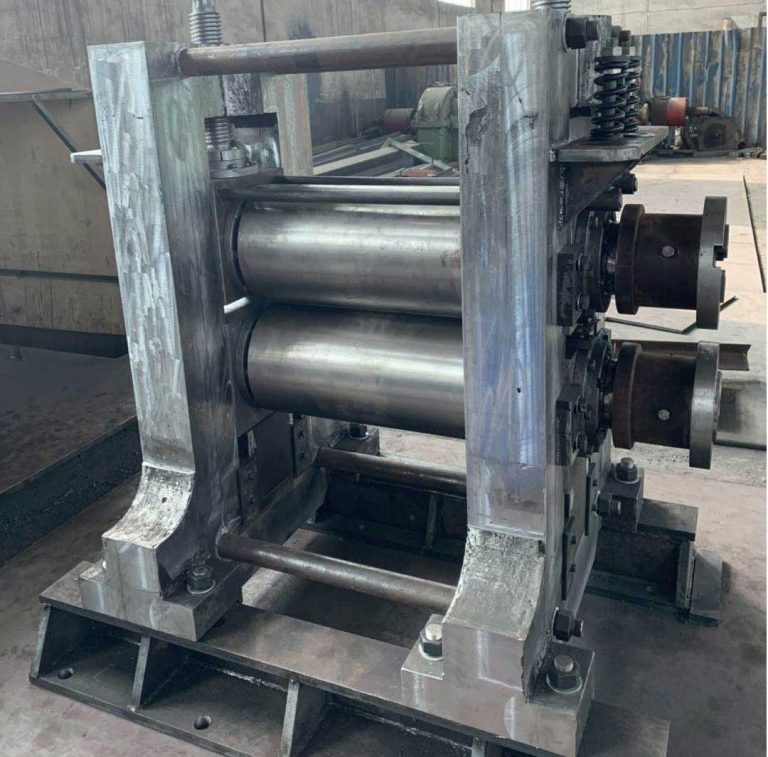
The importance of rolling methods and product development for six-high cold rolling mills
Six‑high cold rolling mills are widely used for producing high‑precision strip and sheet, especially for automotive, home appliance, and packaging applications. Understanding rolling methods and continuous product development can directly improve strip flatness, thickness accuracy, and production efficiency. This article explains how 6 hi cold rolling mills work, why rolling strategies matter, and how modern development practices help users get better and more stable products.
1. What is a 6 hi cold rolling mill?
A 6 hi cold rolling mill is a multi‑roll mill with six rolls arranged in three layers. It is mainly used to roll steel, stainless steel, aluminum and other metals from hot‑rolled or pickled thickness down to thin gauge strip at room temperature.
Typical six‑high roll configuration:
• Top backup roll (BUR)
• Top intermediate roll (IMR)
• Top work roll (WR)
• Bottom work roll (WR)
• Bottom intermediate roll (IMR)
• Bottom backup roll (BUR)
Compared with 4‑high mills, a 6 hi cold rolling mill allows smaller work roll diameters while still supporting high rolling forces through backup and intermediate rolls. This structure improves strip flatness control and enables rolling to very thin gauges with stable shape.
1.1 Typical technical parameters for a single stand 6 hi cold mill
| Item | Typical value | Notes |
|---|---|---|
| Entry thickness | 1.8 – 4.0 mm | Pickled hot‑rolled strip |
| Exit thickness | 0.12 – 1.0 mm | Depending on material and width |
| Strip width | 600 – 1,650 mm | Narrow or wide strip configuration |
| Max coil weight | 20 – 35 t | Depends on decoiler/reeler design |
| Work roll diameter | 420 – 520 mm | Small roll improves thickness control |
| Intermediate roll diameter | 650 – 750 mm | Often with shifting & bending |
| Backup roll diameter | 1,000 – 1,300 mm | Provides high stiffness |
| Max rolling force per stand | 8 – 20 MN | Higher for high‑strength steels |
| Max strip speed | 800 – 1,600 m/min | Depends on drive and cooling |
| Typical exit thickness tolerance | ±0.005 – ±0.015 mm | With automatic gauge control |
Actual values depend on project design, material grade, and whether the line is a single stand reversing mill or a multi‑stand tandem mill. The table provides a reference window for general engineering discussions and rough sizing.
2. Why rolling methods matter for 6 hi cold rolling mills
Rolling methods decide how forces, speeds, and tensions are applied in the mill. On a 6 hi cold rolling mill, proper rolling strategy prevents strip defects and ensures stable operation. Poor methods can lead to poor flatness, edge waves, center buckles, chatter marks, and frequent strip breaks.
2.1 Longitudinal rolling as the core method
Six‑high mills usually adopt longitudinal rolling. The strip passes between the top and bottom work rolls, and thickness reduction is achieved along the strip length. Because reduction is repeated over many meters of strip, any small setting error can accumulate and turn into serious thickness deviation or shape issues.
For longitudinal rolling, engineers pay special attention to:
- Entry and exit thickness setpoints and reduction schedule
- Entry and exit tension levels
- Strip speed and acceleration curves
- Roll crown, bending forces, and intermediate roll shifting
- Lubrication and coolant distribution
2.2 Rolling force and its influence on flatness
Rolling force is the main parameter in cold rolling. On 6 hi cold mills, the target is usually to maintain nearly constant rolling force during steady rolling because it helps stabilize the strip shape. However, there are conditions where the rolling force should be adjusted to keep good flatness.
| Condition | Risk if force is too high | Recommended action |
|---|---|---|
| Very thin exit thickness (<0.2 mm) | Strip buckling, edge cracks, chatter marks | Appropriately reduce rolling force, raise tension gradually |
| Small work roll diameter | Excessive roll flattening, unstable contact arc | Limit peak force and rely more on tension and bending control |
| High forward and backward tension | Strip necking, local elongation, shape defects | Balance force and tension, avoid excessive tension for thin strip |
| Soft materials (deep drawing steels, aluminum) | Surface damage, pickup, waviness | Use lighter reductions per pass and optimized lubrication |
For many products, maintaining a nearly constant force is a base principle. When exit thickness becomes very small or tension influence becomes large, the operator and automatic control system should allow rolling force to decrease to avoid strip shape problems. This controlled adjustment is a typical feature of mature rolling know‑how.
2.3 Tension and reduction schedule
The reduction schedule describes how thickness is decreased over several passes (in reversing mills) or stands (in tandem mills). For a 6 hi cold rolling mill, a typical reversing schedule for low carbon steel might look like the table below.
| Pass | Entry thickness (mm) | Exit thickness (mm) | Reduction (%) | Typical tension range (kN) |
|---|---|---|---|---|
| 1 | 2.5 | 1.8 | 28% | 40 – 80 |
| 2 | 1.8 | 1.2 | 33% | 60 – 110 |
| 3 | 1.2 | 0.8 | 33% | 80 – 130 |
| 4 | 0.8 | 0.5 | 38% | 90 – 150 |
| 5 | 0.5 | 0.3 | 40% | 90 – 160 |
The data above are indicative values for mild steel on a high‑rigidity 6 hi cold rolling mill. Actual schedules must be verified by process engineers for each material grade, width, and mechanical property requirement.
When the strip becomes thinner, tension shares a higher ratio of the total deformation load. At this point, if rolling force is kept too high, strip flatness becomes hard to control. Deliberately lowering rolling force while properly controlling tension is a practical method to maintain flatness and avoid surface defects.
3. Main process route of a 6 hi cold rolling line
A complete process for cold strip production usually covers several steps from hot‑rolled coil to finished coil. A 6 hi cold rolling mill is a key section, but its performance depends heavily on upstream and downstream processes.
3.1 Typical process flow
- Raw material preparation (hot‑rolled coils inspection and storage)
- Pickling (removing oxide scale and rust)
- Entry side joining (welding or stitching coils)
- Cold rolling on a 6 hi mill (gauge and shape reduction)
- Degreasing and cleaning (removing rolling oil)
- Annealing or heat treatment (restoring formability)
- Skin pass / temper rolling (improving surface and yield strength)
- Slitting, cut‑to‑length, and final inspection
If any section in this chain is weak, the 6 hi cold rolling mill cannot deliver stable quality. For example, poor pickling leads to surface scale that damages work rolls and generates surface defects. Insufficient cleaning leaves oil stains that influence annealing and coating quality. Therefore, rolling methods must be coordinated with the complete line.
3.2 Role of the 6 hi cold rolling mill in the line
On the process route, the 6 hi cold rolling mill mainly provides:
- Precise thickness control through automatic gauge control (AGC)
- Flatness control using work roll bending, IMR shifting, and sometimes CVC or other crown control systems
- Control of mechanical properties by adjusting total reduction and distribution of reductions
- Surface quality through optimized roll grinding, lubrication, and strip pass schedule
Proper product development around these functions ensures the mill can adapt to new grades and higher customer requirements over time.
4. Why product development is critical for six‑high cold mills
Product development is not only about designing a new mill. It also includes improving existing equipment, refining process recipes, and upgrading components to meet evolving market demands. For 6 hi cold rolling mills, this work directly affects production cost, product mix, and competitiveness.
4.1 Typical product development targets
- Rolling thinner strip with stable shape (for example, below 0.15 mm)
- Handling wider strip at the same mill stand without loss of flatness
- Improving thickness accuracy (smaller thickness tolerances)
- Raising strip surface quality to meet exposed panel requirements
- Rolling higher strength steels and advanced alloys
- Reducing specific power consumption and rolling oil consumption
- Extending roll campaign life and lowering maintenance time
Each of these goals requires coordinated changes: mechanical design adjustments, hydraulic system tuning, control system optimization, and rolling method improvements.
4.2 Examples of development directions on a 6 hi cold rolling mill
| Development item | Typical measure | Expected benefit |
|---|---|---|
| Thinner gauge rolling capability | Smaller work rolls, high response hydraulic screw‑downs, optimized tension control | Stable rolling down to 0.12 mm or even thinner for certain materials |
| Improved flatness control | Intermediate roll shifting, advanced flatness measurement, upgraded bending systems | Minimized edge waves and center buckles, better shape at high speeds |
| Higher strength steel rolling | Increased mill stiffness, higher rolling force capacity, adapted roll materials | Capability to produce high strength automotive and structural grades |
| Energy efficiency | Optimized roll cooling, modern drives, improved pass schedule | Lower kWh per ton and reduced operating cost |
| Automation and digitalization | Upgrade AGC, AFC, data logging, and process models | More consistent quality, easier troubleshooting, shorter learning curve |
In practice, these developments are typically implemented gradually, based on production feedback and economic evaluation, rather than all at once.
5. Why reducing rolling force can help strip shape on 6 hi mills
From a theoretical view, the contact pressure between work rolls and strip produces elastic deformation of both the strip and the rolls. On a 6 hi cold rolling mill with smaller work rolls, this deformation is relatively large and directly affects strip shape.
When rolling thick strip, rolling force is high, but strip rigidity is also high. As thickness decreases, strip becomes more flexible, and its shape is more sensitive to uneven elongation across the width. At this stage, large rolling forces can easily distort the strip, even if thickness control is good.
5.1 Typical situations where force reduction is useful
- Small final thickness: When rolling into thin gauge, tension produces a stronger influence on elongation than the roll gap itself. Reducing force allows the tension system and flatness actuators to work more effectively.
- High entry or exit tension: When tension is high, total deformation energy is already sufficient. Extra rolling force may not be necessary and can cause over‑flattening of the work rolls.
- Small work roll diameter: Mills designed for very thin strip use small work rolls, which are more sensitive to bending and flattening. High force leads to larger roll deflection and unstable contact distribution.
- Edge wave or center buckle appears: Instead of relying only on bending adjustments, controlled reduction of rolling force often stabilizes the stress state and helps restore flatness.
On modern mills, these actions are usually performed by the automation system using predetermined models. However, operators still need to understand the physical reasons to respond correctly when facing unusual materials or surface conditions.
6. Practical rolling methods for 6 hi cold rolling mills
Practical know‑how is often the difference between an average mill and a high‑performing one. Below are some field‑oriented methods used by experienced rolling engineers and operators.
6.1 Setting up for a new product
- Define product requirements: Thickness range, width, surface class, flatness level, mechanical properties, and downstream processing needs (deep drawing, painting, forming).
- Analyze material data: Yield strength, tensile strength, elongation, and work hardening behavior from laboratory or previous production.
- Design reduction schedule: Decide number of passes, reduction per pass, and target force and tension levels.
- Choose roll grinding shape: Adjust work and backup roll crown to suit planned reductions and target flatness.
- Set AGC and AFC parameters: Set gains, dead bands, and response times suitable for material and thickness.
- Trial coil and data review: Run a limited number of coils, record all actual forces, tensions, and flatness, then refine the schedule.
6.2 Common defects and rolling method adjustments
| Observed issue | Possible reason (6 hi mill) | Typical corrective actions |
|---|---|---|
| Edge wave | Excessive elongation at strip edges, inadequate edge support | Increase work roll bending, adjust IMR shift, reduce force slightly for thin strip |
| Center buckle | More elongation in the center than edges | Decrease crown effect, reduce central reduction, review reduction schedule |
| Chatter marks | Self‑excited vibration from roll stack or drive | Change rolling speed, optimize lubrication, check roll and bearing condition |
| Thickness variation along coil length | Inadequate AGC tuning or inconsistent entry thickness | Fine‑tune AGC, stabilize entry tension, improve upstream thickness control |
| Frequent strip breaks | Too high reduction or tension, surface defects in entry strip | Reduce reduction per pass, lower tension, improve entry strip inspection |
These adjustments are examples; each mill has its own configuration and may require different parameter ranges. But the principles are widely applicable across many 6 hi cold rolling mills.
7. Design and modernization ideas for 6 hi cold rolling mills
For plants planning new investments or upgrades, combining proper rolling methods with suitable hardware is critical. Below are some technical directions often considered in modern 6 hi mill projects.
7.1 Mill stand and roll system
- High stiffness housing: Built to resist elastic deformation under heavy rolling forces, which directly improves thickness and shape stability.
- Optimized roll diameters: Smaller work rolls for thinner gauges, with suitable intermediate and backup rolls to ensure load capacity.
- Roll bending and shifting: Essential for flexible crown control. Many modern mills use continuous variable crown (CVC) or similar concepts.
- Quick roll change systems: Reduce downtime and increase mill availability for multi‑product operations.
7.2 Automation and control systems
A 6 hi cold rolling mill reaches its full potential only when combined with advanced automation. Typical systems include:
- Automatic gauge control (AGC) with hydraulic gap control and mass flow models
- Automatic flatness control (AFC) with real‑time flatness feedback
- Tension and speed control with coordinated acceleration and deceleration
- Coil tracking, data logging, and quality tracking systems
- Roll management and campaign tracking to maximize roll life
By combining these features with tested rolling methods, mills can achieve stable production of demanding products such as automotive outer panels, tinplate, or electrical steel strip.
8. Reference operating ranges for 6 hi cold rolling mills
The table below summarizes approximate operating ranges for typical products on a modern 6 hi cold rolling mill. These values serve as reference information for engineers and managers when planning capability or discussing upgrades.
| Product type | Thickness range (mm) | Width range (mm) | Typical strength level (MPa) | Notes |
|---|---|---|---|---|
| Low carbon cold‑rolled sheet | 0.25 – 2.0 | 700 – 1,600 | Yield 140 – 280 | General purpose, home appliance, forming |
| Deep drawing grades | 0.35 – 1.5 | 800 – 1,500 | Yield 120 – 210 | Requires careful control of strain aging and surface |
| High strength automotive grades | 0.5 – 2.0 | 900 – 1,550 | Yield 280 – 600+ | Requires high force capacity and robust stand stiffness |
| Tinplate base (for subsequent tinning) | 0.18 – 0.40 | 650 – 1,000 | Yield 220 – 320 | Needs very uniform thickness and strong flatness control |
| Stainless cold strip | 0.2 – 2.5 | 600 – 1,350 | Yield 250 – 700+ | Requires higher forces and robust roll material selection |
These ranges show why many producers choose a 6 hi configuration: it combines flexibility with precision for a wide set of materials and thicknesses.
9. How rolling methods and product development bring benefits to users
For users of 6 hi cold rolling mills, the combination of optimized rolling methods and ongoing product development brings several very practical advantages.
- More stable quality: Less coil‑to‑coil variation, fewer complaints, and higher acceptance at customers’ plants.
- Higher yield: Lower scrap from edge waves, thickness out‑of‑tolerance, and surface defects.
- Broader product portfolio: Ability to develop products with higher strength, thinner gauges, or special surfaces without new major equipment.
- Lower operating costs: Reduced energy usage, improved roll and bearing life, optimized rolling oil consumption.
- Shorter development cycles: With structured product development and data‑based rolling models, new grades can be industrialized faster.
In competitive markets, these points are not optional. They decide whether a mill can keep up with demand for advanced automotive steels, high‑surface‑quality appliances, or thin packaging strip.
10. Practical tips for engineers and managers
To get the most from a 6 hi cold rolling mill, engineers and managers can follow some practical principles in their daily work and long‑term planning.
- Build and maintain a rolling database for each product: pass schedules, forces, tensions, speed curves, and defect statistics.
- Review rolling methods regularly when customer requirements or material suppliers change.
- Involve operators in product development; their experience often reveals issues not visible in data alone.
- When upgrading hardware, also plan matching automation and rolling model updates rather than mechanical changes alone.
- Use trial coils with structured experiments (changing one parameter at a time) to refine pass schedules and shape control strategies.
A 6 hi cold rolling mill is a complex system where mechanical design, process metallurgy, and digital control meet. Rolling methods define how this system is used every day, and product development ensures it keeps improving over its entire life cycle. For producers aiming at long‑term competitiveness, both aspects deserve continuous and systematic attention.