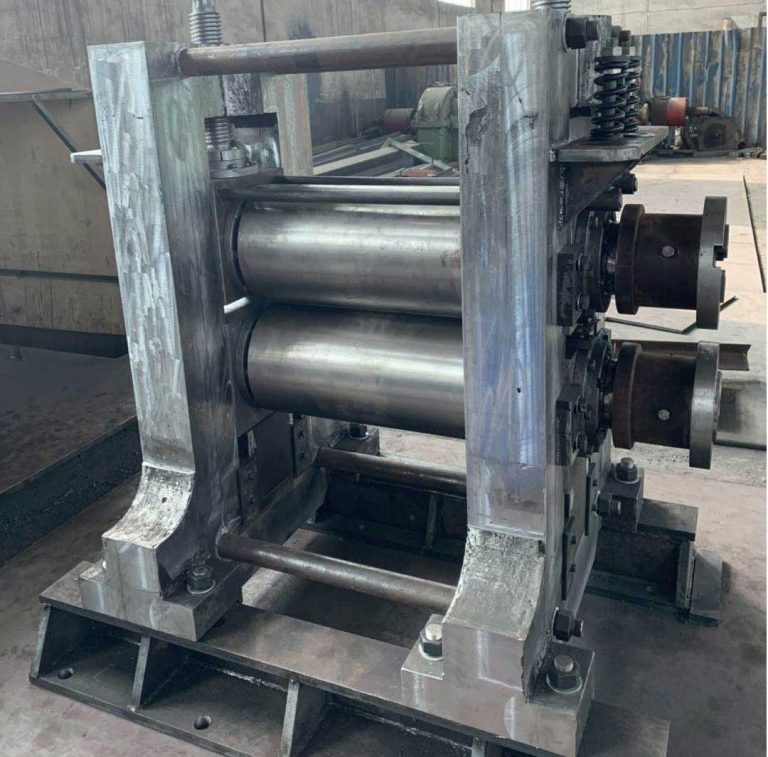
Guidelines for customizing four-high cold rolling mills and how manufacturers ensure product quality
When it comes to metal processing in industries like automotive, aerospace, electronics, and construction, the 4 hi cold rolling mill plays a pivotal role in achieving precise thickness, smooth surface finish, and consistent mechanical properties in metal strips—especially steel, aluminum, and copper alloys. Unlike standard off-the-shelf machinery, many operations require customized configurations to meet specific production goals. Understanding how to properly customize a four-high cold rolling mill and what quality assurance practices reputable manufacturers follow can significantly impact your operational efficiency, product consistency, and long-term ROI.
Why Customization Matters for 4 Hi Cold Rolling Mills
Standard rolling mills may suffice for general applications, but when you’re producing high-precision strips for battery foils, transformer cores, or medical devices, even minor deviations in flatness or thickness tolerance can lead to scrap or rework. A custom-designed 4 hi cold rolling mill allows engineers to tailor key parameters such as roll diameter, roll gap control, drive power, and automation level to match exact material specifications and throughput requirements.
For example, rolling ultra-thin aluminum foil (below 0.1 mm) demands different roll stiffness, backup roll support, and tension control compared to rolling 2.0 mm stainless steel strips. Off-the-shelf solutions often compromise on one or more of these aspects, leading to inconsistent output or premature wear.
Key Considerations When Customizing a Four-High Cold Rolling Mill
Customization isn’t just about “making it bigger” or “adding more power.” It’s a systematic engineering process that aligns machine design with your production reality. Below are critical factors to evaluate:
1. Material Type and Thickness Range
Different metals have unique deformation behaviors. Aluminum requires lower rolling forces than stainless steel, while copper demands excellent surface cleanliness to avoid contamination. Define your input coil specs clearly:
- Material grade (e.g., AA1050, SUS304, C11000)
- Incoming thickness (e.g., 1.5 mm to 3.0 mm)
- Target exit thickness (e.g., 0.2 mm to 1.2 mm)
- Width range (e.g., 600 mm to 1250 mm)
2. Required Tolerances and Surface Quality
Are you aiming for ±5 µm thickness tolerance? Do you need a mirror finish (Ra ≤ 0.1 µm) or a matte texture? These requirements directly influence roll grinding precision, roll material selection (e.g., forged alloy steel vs. high-chrome cast iron), and whether you need an online gauge system.
3. Production Speed and Annual Capacity
A mill designed for 300 m/min won’t perform well at 800 m/min without proper motor sizing, cooling, and vibration damping. Share your expected annual tonnage so the manufacturer can size components accordingly—overdesigning wastes capital; underdesigning causes bottlenecks.
4. Level of Automation and Control
Modern four-high cold rolling mills often integrate PLC-based systems with HMI interfaces, automatic gap control (AGC), and real-time thickness monitoring via X-ray or beta gauges. Decide if you need:
- Manual adjustment only
- Semi-automatic with operator-assisted setup
- Fully automated with recipe management and data logging
Typical Technical Parameters for Custom 4 Hi Cold Rolling Mills
To give you a realistic benchmark, here’s a comparison of common configurations used in industrial settings. Note that actual specs vary based on application.
| Parameter | Light-Duty (Foil Rolling) | Medium-Duty (General Purpose) | Heavy-Duty (High-Strength Alloys) |
|---|---|---|---|
| Work Roll Diameter | Φ80–150 mm | Φ180–280 mm | Φ300–450 mm |
| Backup Roll Diameter | Φ300–500 mm | Φ500–800 mm | Φ800–1200 mm |
| Max Rolling Force | 500–1,500 kN | 2,000–5,000 kN | 6,000–12,000 kN |
| Max Line Speed | 200–500 m/min | 300–800 m/min | 400–1,000 m/min |
| Thickness Reduction per Pass | Up to 60% | Up to 70% | Up to 75% |
| Drive Power (Main Motor) | 100–300 kW | 400–1,200 kW | 1,500–3,500 kW |
These values are indicative. For instance, a mill rolling electrical steel for motors might prioritize flatness control over speed, using hydraulic AGC with ±2 µm accuracy, while a foil mill for lithium-ion batteries focuses on surface cleanliness and minimal edge wave.
How Reputable Manufacturers Ensure Product Quality
Not all suppliers deliver the same reliability. Top-tier manufacturers implement a multi-layered quality assurance system that spans from raw material procurement to final commissioning. Here’s what to look for:
1. Certified Quality Management Systems
ISO 9001 certification is non-negotiable. It ensures documented processes for design review, supplier evaluation, inspection protocols, and corrective actions. Some go further with ISO 14001 (environmental) or ISO 45001 (safety), reflecting a culture of continuous improvement.
2. Rigorous Material Sourcing and Traceability
Critical components like work rolls and gearboxes must use certified steel grades with full mill test reports (MTRs). Reputable builders maintain traceability from heat number to final assembly—so if a roll fails prematurely, they can investigate root cause, not just replace it.
3. Precision Machining and Assembly Standards
The frame alignment tolerance for a 4 hi cold rolling mill is typically within ±0.02 mm over 3 meters. This requires CNC machining centers, laser alignment tools, and skilled fitters. Ask for assembly records or third-party inspection certificates (e.g., from SGS or TÜV).
4. Comprehensive Factory Acceptance Testing (FAT)
Before shipment, the entire mill should undergo simulated production runs. Key tests include:
- No-load operation at max speed (vibration & noise check)
- Load test with dummy coils (force calibration, AGC response)
- Emergency stop and safety interlock verification
- Software functionality (recipe recall, alarm logs, data export)
You—or your representative—should witness this FAT. It’s far cheaper to fix issues at the factory than after installation.
5. Post-Delivery Support and Training
A quality mill is only as good as the team operating it. Leading manufacturers provide:
- On-site installation supervision
- Operator and maintenance training (including troubleshooting guides)
- Remote diagnostics capability
- Availability of spare parts for 10+ years
Common Pitfalls to Avoid During Customization
Even experienced buyers make mistakes. Here are frequent oversights:
- Underestimating foundation requirements: A 500-ton mill needs a reinforced concrete base with precise leveling. Skipping geotechnical assessment leads to misalignment and bearing failure.
- Ignoring lubrication and cooling systems: High-speed rolling generates heat. Inadequate oil mist or emulsion systems cause roll thermal crown and strip sticking.
- Overlooking coil handling integration: Your mill is only as fast as your payoff/recoil system. Ensure compatibility in mandrel type, torque, and threading automation.
- Choosing the cheapest quote: Low-cost mills often use undersized bearings, unhardened gears, or manual adjustments that increase downtime. Total cost of ownership matters more than upfront price.
Final Thoughts for Buyers
Investing in a custom four-high cold rolling mill is a strategic decision that affects product quality for decades. Take time to define your technical needs precisely, engage with manufacturers early in the design phase, and verify their quality credentials—not just their brochure claims. Request references from similar applications, visit their workshop if possible, and insist on detailed documentation. The right partner doesn’t just sell you a machine—they become an extension of your production team, helping you achieve consistent, high-value output with minimal waste and maximum uptime.