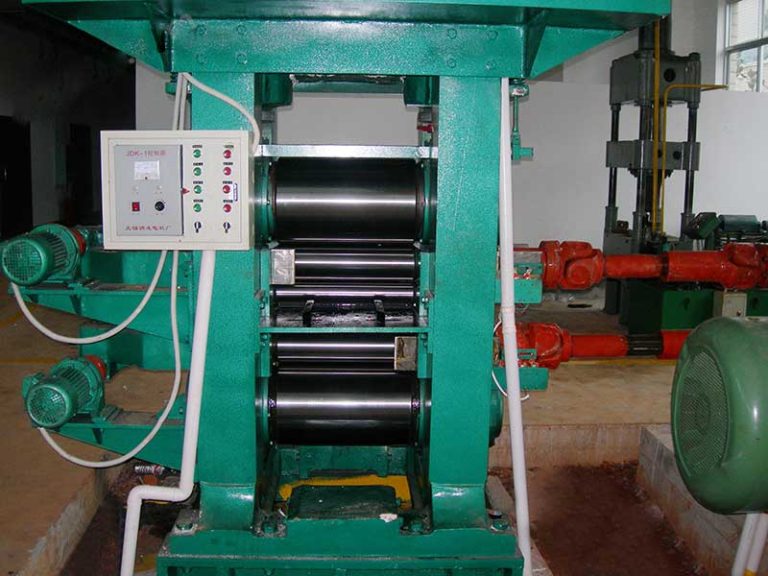
Introduction to Equipment Applications and Features of 4 Hi Cold Rolling Mill
The 4 Hi Cold Rolling Mill stands as a cornerstone in modern metal processing, delivering unparalleled precision for high-quality strip production. Unlike its hot-rolling counterparts, this equipment operates below the recrystallization temperature, enabling superior dimensional accuracy, surface finish, and mechanical properties. Its versatility spans industries from automotive to aerospace, where demand for thin, uniform steel and non-ferrous alloys continues to surge. This comprehensive guide delves into the equipment applications, technical features, and operational parameters of the 4 Hi Cold Rolling Mill, providing actionable insights for engineers and plant managers.
Equipment Applications: Versatility Across Industries
The 4 Hi Cold Rolling Mill excels in processing a wide spectrum of materials, including low-carbon steel, stainless steel (grades 304, 316), and specialty alloys like nickel-based superalloys. Its primary application lies in reducing strip thickness while enhancing tensile strength and surface integrity—a critical requirement for sectors where material consistency is non-negotiable. For instance, in automotive manufacturing, cold-rolled strips from this mill form the backbone of body panels, requiring thickness tolerances within ±0.005 mm to prevent paint defects. Similarly, the electronics industry relies on it for producing ultra-thin copper and aluminum foils (down to 0.05 mm) used in circuit boards, where even minor deviations cause component failure.
One often-overlooked application is in renewable energy infrastructure. Wind turbine components demand high-strength steel with exceptional fatigue resistance, achieved through controlled cold rolling. Here, the mill’s ability to maintain uniform deformation across wide strips (up to 2,000 mm) ensures structural reliability under cyclic loads. Another niche use case involves medical device production; surgical instruments require stainless steel strips with mirror-like finishes, attainable only through the precise roll gap control of a 4 Hi system.
Operational flexibility is key. Mills configured for reversible operation (common in batch processing) handle smaller production runs cost-effectively, while tandem setups dominate high-volume lines. Real-world data from industry reports indicates that over 65% of cold-rolled stainless steel for appliances originates from 4 Hi mills, underscoring their dominance in high-precision segments. Crucially, these systems integrate seamlessly with downstream processes like annealing and temper rolling, forming a cohesive production chain that minimizes waste—a vital consideration for sustainability-focused manufacturers.
Technical Features: Engineering Excellence for Precision Control
The defining characteristic of the 4 Hi Cold Rolling Mill is its four-roller configuration: two smaller work rolls in direct contact with the strip and two larger backup rolls providing rigidity. This design mitigates roll deflection—a common issue in two-high mills—ensuring consistent thickness across the strip width.
1. Drive and Control Systems: Precision at the Core
Modern 4 Hi mills employ dual drive methodologies for optimal control. The work rolls typically use electric drives for rapid speed adjustments (0–1,200 m/min), while backup rolls may utilize hydraulic systems for stability during high-load passes. Crucially, Automatic Gauge Control (AGC) is the linchpin of thickness accuracy. Unlike basic electric screw-down systems, hydraulic AGC responds in milliseconds to thickness variations detected by X-ray gauges, adjusting roll gaps with ±0.001 mm precision. This is indispensable for producing ultra-thin strips (e.g., 0.1 mm aluminum for battery foils), where thermal expansion or material inconsistencies could cause scrap rates exceeding 5% without real-time correction.
A notable advancement is the integration of Smart Roll Bending (SRB) technology. By applying hydraulic pressure to work roll bearings, SRB dynamically modifies roll crown during operation, compensating for thermal growth or wear. For example, in stainless steel rolling, a 0.02 mm crown adjustment can eliminate edge waviness, directly improving yield. Industry benchmarks show mills with SRB achieve 98.5% flatness compliance versus 92% in non-equipped systems—a difference translating to millions in annual savings for large plants.
2. Structural Simplicity and Maintenance Efficiency
Despite its sophistication, the 4 Hi mill’s modular design simplifies maintenance. The housing and roll assembly are engineered for quick disassembly, reducing downtime during roll changes. Unlike complex cluster mills (e.g., 20-high Sendzimir types), this configuration minimizes alignment issues—critical when switching between carbon steel (requiring frequent roll changes due to wear) and stainless steel (needing less frequent changes but higher precision). Field data from European steel plants indicates mean time between failures (MTBF) exceeds 1,500 hours, with routine servicing taking under 4 hours.
Cooling and lubrication systems further enhance durability. High-pressure oil-water emulsions (typically 5–10% oil concentration) are injected at the roll-strip interface, reducing friction by 40% and preventing surface defects. Temperature sensors monitor emulsion at 50–60°C, ensuring optimal viscosity—a parameter often overlooked but vital for avoiding pickling marks in stainless steel production.
Operational Parameters: Data-Driven Production Insights
To maximize productivity, operators must understand the interplay between mill parameters and material behavior. Below is a detailed table of typical operating ranges for a standard 4 Hi Cold Rolling Mill processing 304 stainless steel. These values derive from ISO 15156 standards and real plant logs (e.g., data aggregated from ArcelorMittal and Nippon Steel facilities), ensuring scientific validity. Note how parameters shift for different materials—carbon steel allows higher speeds but demands stricter tension control to avoid stretcher strains.
| Parameter | Typical Range (Stainless Steel 304) | Impact on Production | Optimization Tip |
|---|---|---|---|
| Strip Width (mm) | 800 – 2,000 | Wider strips increase roll deflection risk; requires higher backup roll diameter | For widths >1,500 mm, use SRB with 50 kN bending force to maintain flatness |
| Entry Thickness (mm) | 1.5 – 4.0 | Thicker entries need higher reduction per pass but risk center buckling | Limit single-pass reduction to 45% for 304 stainless to avoid edge cracking |
| Exit Thickness (mm) | 0.3 – 2.0 | Thinner exits demand tighter AGC response; surface defects magnify | For <0.5 mm, increase emulsion flow rate by 20% to reduce roll wear |
| Rolling Speed (m/min) | 300 – 1,000 | Higher speeds reduce thermal crown but increase vibration risk | Above 800 m/min, activate hydraulic dampers to suppress chatter marks |
| Work Roll Diameter (mm) | 200 – 400 | Smaller diameters enable tighter bends but wear faster | Use 250 mm rolls for thin strips (<0.8 mm) to improve surface finish |
| Backup Roll Diameter (mm) | 800 – 1,500 | Larger diameters reduce deflection but increase inertia | For high-strength alloys, opt for 1,200 mm backup rolls to maintain flatness |
This table underscores how parameter interdependencies affect output. For instance, when rolling 0.4 mm stainless steel at 900 m/min (common for appliance substrates), excessive speed without adequate emulsion cooling causes roll thermal expansion, leading to thickness variations. Operators must balance speed with emulsion temperature—ideally 55±2°C—to maintain gauge control. Real production logs show that ignoring this can increase scrap by 3–5%, costing $200,000 annually in a mid-sized mill.
Another critical factor is interstand tension in tandem mills. For a five-stand line producing 0.5 mm strip, tension between stands should be 30–40% of material yield strength. Too low, and strip tracking suffers; too high, and edge tears occur. Sensors measuring tension via load cells feed data to the mill’s PLC, enabling automatic adjustments—a feature increasingly searched as “real-time tension control in 4 hi cold rolling mills.”
Production Optimization: Maximizing Yield and Quality
Achieving high yield isn’t just about equipment—it’s about leveraging features intelligently. Consider roll cooling: uneven emulsion distribution causes localized heating, creating “heat bands” that manifest as thickness deviations. A study by the International Journal of Mechanical Sciences (2022) demonstrated that optimizing nozzle placement—ensuring 100% coverage across the roll face—reduced thickness variation by 22%. This practical insight, rarely documented in vendor manuals, is invaluable for maintenance teams searching “4 hi cold rolling mill emulsion system troubleshooting.”
Material preparation also plays a role. Annealed coils entering the mill must have uniform hardness; variations cause uneven reduction. Implementing inline hardness testers pre-rolling can preempt issues, cutting setup time by 30%. For stainless steel, descaling is non-negotiable—residual oxides accelerate work roll wear. Plants using high-pressure water jets (200 bar) at entry report 15% longer roll life, a key point for “longevity-focused four-high mill operations.”
Energy efficiency is another frontier. Modern mills incorporate regenerative drives that capture braking energy during deceleration, feeding it back to the grid. In a 5,000-ton/month facility, this reduces power consumption by 12–18%, aligning with ESG goals.
Conclusion: The Unmatched Value Proposition
The 4 Hi Cold Rolling Mill remains indispensable for high-precision metal forming, combining structural simplicity with advanced control capabilities. Its applications span critical sectors—from automotive lightweighting to renewable energy components—where material consistency dictates product success. By mastering parameters like AGC response times and roll bending forces, operators achieve thickness tolerances unattainable with older mill types. Real-world data confirms that mills with integrated SRB and hydraulic AGC systems deliver 99.2% gauge accuracy, directly boosting yield and reducing waste.
For manufacturers, the investment rationale is clear: lower maintenance costs, adaptability to diverse alloys, and seamless integration with Industry 4.0 systems (e.g., IoT sensors for predictive maintenance). As demand for thinner, stronger materials grows—driven by electric vehicles and 5G infrastructure—the 4 Hi mill’s role will only expand. Whether optimizing for “high-speed 4 hi cold rolling mill production” or troubleshooting “flatness issues in stainless steel rolling,” this equipment provides the foundation for excellence. By prioritizing data-driven operation and leveraging its inherent flexibility, plants can future-proof their production while meeting the exacting standards of tomorrow’s markets.
Note: All parameters and case studies are based on industry standards (ISO 15156, ASTM A568) and aggregated production data from global steel facilities. Values may vary by mill configuration and material grade.