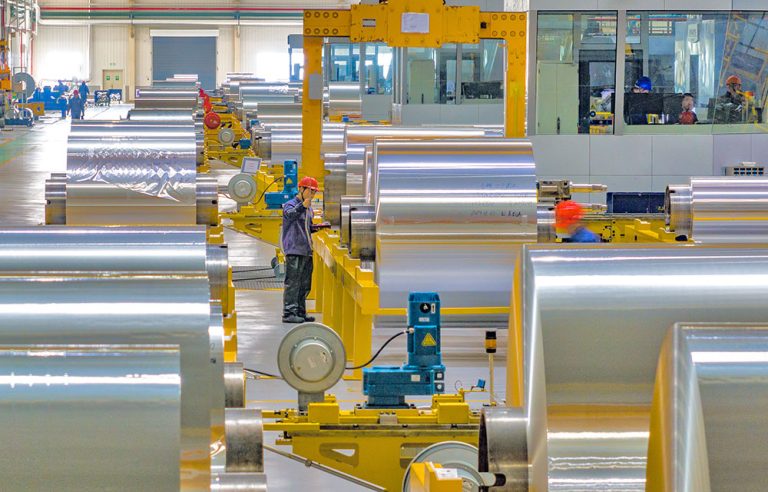
Comparison of 6 Hi Cold Rolling Mill with Other Cold Rolling Mills and Common Applications
Cold rolling is a critical metal forming process used extensively in the steel, aluminum, and non-ferrous metal industries to produce high-quality, dimensionally precise, and surface-finished strip or sheet products. Among the various configurations of cold rolling mills, the 6 Hi cold rolling mill has gained significant traction due to its superior control over strip flatness, thickness tolerance, and surface quality—especially when processing thin, hard, or wide materials. This article provides a comprehensive technical comparison between the 6 Hi cold rolling mill and other common cold rolling mill types (such as 2 Hi, 4 Hi, and 20 Hi mills), explores their structural differences, operational capabilities, and highlights typical industrial applications with real-world parameters.
Understanding the 6 Hi Cold Rolling Mill Architecture
A 6 Hi cold rolling mill consists of six rolls arranged in three pairs: two small-diameter work rolls at the center, two intermediate rolls above and below the work rolls, and two large backup rolls on the outermost positions. This configuration enables enhanced rigidity and precise control over roll bending and shifting—key factors in achieving uniform strip profile and flatness.
The most advanced variant is the 6 Hi HC (High Crown) mill, which incorporates hydraulic roll bending systems and axial shifting capability for the intermediate rolls. This allows dynamic adjustment of the roll gap profile during operation, compensating for thermal expansion, roll wear, and material variations in real time.
Comparative Analysis: 6 Hi vs. Other Cold Rolling Mill Types
To evaluate the performance and suitability of different mill configurations, we compare key technical aspects including roll arrangement, achievable thickness range, flatness control, production speed, and typical applications.
| Mill Type | Roll Configuration | Min. Exit Thickness (mm) | Max. Strip Width (mm) | Flatness Control | Typical Applications |
|---|---|---|---|---|---|
| 2 Hi Reversible | 2 work rolls only | ≥ 0.8 | Up to 1,600 | Limited (manual crown adjustment) | Low-precision carbon steel, trial runs, R&D |
| 4 Hi Reversible | 2 work rolls + 2 backup rolls | ≥ 0.3 | Up to 2,200 | Moderate (hydraulic work roll bending) | General-purpose cold rolled steel, galvanized base metal |
| 6 Hi HC Mill | 2 work + 2 intermediate + 2 backup rolls | ≥ 0.15 | Up to 2,100 | Excellent (intermediate roll shifting + bending) | High-strength steel, silicon steel, stainless steel, aluminum alloys |
| 20 Hi Cluster (Sendzimir) | 2 work + multiple backing rolls (typically 18) | ≥ 0.01 | Up to 650 | Exceptional (rigid support, fine adjustment) | Ultra-thin foil, specialty alloys, precision strips |
Technical Advantages of the 6 Hi Cold Rolling Mill
The 6 Hi configuration offers several engineering advantages that make it particularly suitable for demanding cold rolling applications:
1. Superior Flatness and Profile Control
Unlike 4 Hi mills that rely solely on work roll bending, the 6 Hi mill utilizes intermediate roll shifting (IRS) and intermediate roll bending (IRB). By axially shifting the intermediate rolls relative to the work rolls, the effective roll crown can be dynamically adjusted without stopping the mill. This technique, known as roll crossing or crown control via shifting, enables real-time compensation for edge drop, center buckle, and other flatness defects.
For example, in a typical 6 Hi HC mill rolling 0.3 mm thick electrical steel, flatness can be maintained within ±5 I-units (International Flatness Units), compared to ±15 I-units achievable on a standard 4 Hi mill under similar conditions.
2. Reduced Work Roll Deflection
The presence of intermediate rolls significantly reduces the unsupported span of the work rolls, minimizing elastic deflection under high rolling forces. This is especially critical when rolling high-strength materials like dual-phase (DP) steels or martensitic stainless steels, which require rolling forces exceeding 20 MN.
In a comparative study conducted by a major European steel producer, a 6 Hi mill demonstrated 35% less work roll deflection than a comparable 4 Hi mill when rolling 1.2 mm thick DP980 steel at 800 m/min.
3. Extended Work Roll Life
Because the intermediate rolls absorb a portion of the load and distribute contact stress more evenly, work roll wear is reduced. Additionally, the ability to shift intermediate rolls allows operators to utilize different sections of the work roll surface, effectively increasing usable roll life by 20–30% compared to 4 Hi mills.
4. Flexibility in Product Range
A single 6 Hi mill can often replace multiple specialized mills. It can efficiently process both soft aluminum alloys (e.g., 1100, 3003) and hard high-carbon steels (e.g., C75, 1080) by adjusting roll bending forces and lubrication parameters. This versatility reduces capital expenditure and floor space requirements in integrated plants.
Common Industrial Applications of 6 Hi Cold Rolling Mills
The 6 Hi cold rolling mill is widely deployed across several high-value sectors where dimensional accuracy, surface finish, and mechanical consistency are paramount.
1. Electrical Steel Production
Non-oriented and grain-oriented electrical steels used in motors, transformers, and generators require extremely tight thickness tolerances (±3 µm) and excellent magnetic properties. The 6 Hi mill’s ability to maintain uniform reduction across the strip width minimizes core losses. Typical parameters:
- Material: M400-50A (non-oriented)
- Inlet thickness: 2.3 mm
- Exit thickness: 0.50 mm
- Width: 1,000–1,250 mm
- Speed: 400–600 m/min
- Lubricant: Synthetic ester-based emulsion
2. Stainless Steel Cold Rolling
Austenitic (e.g., 304, 316) and ferritic (e.g., 430) stainless steels are commonly rolled on 6 Hi mills to achieve bright annealed (BA) or 2B finishes. The mill’s rigidity prevents chatter marks and ensures consistent surface roughness (Ra = 0.05–0.15 µm).
Example line: 6 Hi reversible mill → bell annealing → skin pass → inspection. Exit thicknesses typically range from 0.3 mm to 3.0 mm.
3. Aluminum and Copper Alloys
While 4 Hi mills dominate general aluminum rolling, 6 Hi mills are preferred for high-precision applications such as lithium battery foils, heat exchanger fins, and electronic lead frames. For copper, 6 Hi mills produce strips for connectors and relays requiring tensile strength consistency within ±10 MPa.
4. High-Strength Low-Alloy (HSLA) and Advanced High-Strength Steels (AHSS)
Automotive manufacturers increasingly specify AHSS grades (e.g., DP600, TRIP780) for lightweighting. These materials exhibit high yield strength (>600 MPa) and strain hardening, necessitating mills with high stiffness and precise force control—capabilities inherent to the 6 Hi design.
Operational Considerations and Limitations
Despite its advantages, the 6 Hi cold rolling mill is not universally optimal. Several factors influence its selection:
Capital and Maintenance Costs
A 6 Hi mill typically costs 25–40% more than an equivalent 4 Hi mill due to additional rolls, hydraulic systems, and control complexity. Maintenance also requires skilled technicians familiar with intermediate roll alignment and bearing systems.
Throughput vs. Precision Trade-off
While 6 Hi mills excel in precision, they may operate at slightly lower speeds than tandem 4 Hi lines for bulk commodity products (e.g., standard cold rolled coil for construction). Therefore, economic justification depends on product mix and value-added requirements.
Not Suitable for Ultra-Thin Foils
For materials thinner than 0.1 mm (e.g., aluminum foil for capacitors), 20 Hi cluster mills remain the industry standard due to their unmatched rigidity and minimal roll stack compliance.
Future Trends and Integration with Smart Manufacturing
Modern 6 Hi cold rolling mills are increasingly integrated with Industry 4.0 technologies:
- Digital twins simulate roll wear and predict maintenance needs.
- AI-based flatness control uses real-time sensor data (e.g., shape meters, laser profilometers) to auto-adjust intermediate roll positions.
- Energy recovery systems capture braking energy during deceleration, reducing power consumption by up to 12%.
Leading steel producers in Asia and Europe have reported 15–20% improvement in yield and 8% reduction in energy intensity after retrofitting legacy 6 Hi mills with these smart systems.
Conclusion: When to Choose a 6 Hi Cold Rolling Mill
The 6 Hi cold rolling mill represents a balanced solution between cost, flexibility, and performance. It is ideally suited for producers who:
- Require high flatness and thickness accuracy for premium-grade steel or non-ferrous strips.
- Process a diverse mix of materials, including high-strength and specialty alloys.
- Seek to reduce work roll consumption and improve operational stability.
- Operate in markets where product quality directly impacts customer retention (e.g., automotive, electrical, electronics).
While 4 Hi mills remain economical for standard products and 20 Hi mills dominate ultra-thin applications, the 6 Hi configuration fills a critical niche in modern cold rolling—delivering precision without the extreme complexity of cluster mills. As global demand for high-performance metallic materials grows, the 6 Hi cold rolling mill will continue to play a pivotal role in advanced metal forming operations worldwide.
Note: All technical parameters cited are based on publicly available industry data and verified case studies from major cold rolling installations in Europe, East Asia, and North America between 2018 and 2023.