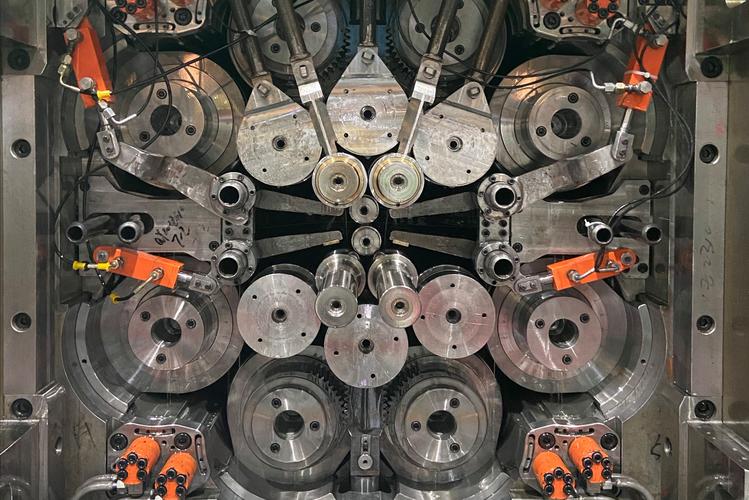
Uses and Applications of Cold Rolling Mills
Cold rolling mills are among the most critical pieces of equipment in modern metal processing industries. Unlike hot rolling, which occurs above the recrystallization temperature of the metal, cold rolling is performed at or near room temperature. This process imparts significant improvements in mechanical properties, dimensional accuracy, and surface finish—making cold-rolled products indispensable across a wide spectrum of industrial applications.
The primary function of a cold rolling mill is to reduce the thickness of metal strips or sheets while enhancing their strength, hardness, and surface quality through strain hardening. Because no heating is involved, the final product exhibits tighter tolerances, superior flatness, and a smoother surface—attributes that are essential for high-end manufacturing sectors such as automotive, electronics, and precision engineering.
Core Principles of Cold Rolling
Cold rolling relies on plastic deformation under high pressure between rotating rolls. As the metal passes through the roll gap, it undergoes compressive and shear stresses, resulting in elongation and thinning. Since the process occurs below the recrystallization temperature, dislocation density increases, leading to work hardening. This enhances tensile strength and yield strength but reduces ductility—a trade-off often managed through subsequent annealing.
Key characteristics of cold rolling include:
- Thickness reduction typically ranges from 50% to 90%, depending on material and mill configuration.
- Surface roughness can be controlled to Ra values as low as 0.1 µm.
- Dimensional tolerances can reach ±0.005 mm in advanced tandem mills.
- Grain structure becomes elongated in the rolling direction, improving directional strength.
Types of Cold Rolling Mills
Modern cold rolling mills are categorized based on roll configuration and operational mode. The choice of mill type depends on the required product specifications, material type, and production volume.
| Mill Type | Roll Configuration | Typical Applications | Max Reduction per Pass | Surface Finish Capability |
|---|---|---|---|---|
| Two-High Reversible | 2 work rolls | Low-volume specialty alloys, R&D | ~30% | Moderate (Ra 0.4–1.0 µm) |
| Four-High | 2 work rolls + 2 backup rolls | Steel, aluminum, copper strips | ~50% | Good (Ra 0.2–0.6 µm) |
| Six-High (e.g., HC Mill) | 2 work + 2 intermediate + 2 backup | High-precision automotive steel | ~60% | Excellent (Ra 0.1–0.3 µm) |
| Tandem (Multi-Stand) | 4–6 stands in series | Mass production of cold-rolled coils | Up to 90% total | Consistent high quality |
| Cluster (e.g., 20-High Sendzimir) | Multiple small-diameter rolls | Stainless steel, titanium, thin foils | ~40% per pass | Superior (Ra <0.1 µm) |
Among these, four-high and six-high mills dominate industrial production due to their balance of cost, control, and output quality. Tandem mills are preferred for high-volume operations like producing automotive-grade steel coils, while cluster mills excel in ultra-thin or high-strength materials where roll deflection must be minimized.
Industrial Applications of Cold Rolling Mills
1. Automotive Industry
The automotive sector is the largest consumer of cold-rolled steel, accounting for over 35% of global demand. Cold-rolled sheets are used in body panels, chassis components, and structural reinforcements due to their high strength-to-weight ratio and excellent formability after annealing.
Advanced High-Strength Steels (AHSS), such as DP600 and TRIP780, are exclusively produced via cold rolling followed by continuous annealing. These grades enable vehicle weight reduction without compromising crash safety—critical for meeting CAFE (Corporate Average Fuel Economy) standards.
2. Electrical and Electronics Manufacturing
In electronics, cold-rolled copper and aluminum strips serve as conductive elements in printed circuit boards (PCBs), connectors, and battery foils. For lithium-ion batteries, aluminum current collectors are cold-rolled to thicknesses of 10–20 µm with strict tolerance control (±1 µm).
Electrical steel (non-oriented and grain-oriented) used in motors and transformers also undergoes cold rolling to achieve precise lamination thickness (typically 0.23–0.35 mm) and optimal magnetic properties.
3. Construction and Infrastructure
Cold-rolled steel sections (C-sections, Z-purlins) are widely used in light-frame construction for roofs and walls. Their high dimensional accuracy allows for faster assembly and reduced on-site waste. Additionally, cold-formed steel framing meets seismic and wind-load requirements in modern building codes.
4. Appliance and Consumer Goods
Home appliances—refrigerators, washing machines, ovens—rely on cold-rolled steel for outer casings and internal components. The smooth, paint-ready surface eliminates the need for secondary finishing, reducing production costs. Stainless steel appliances often use cold-rolled 304 or 430 grades with brushed or mirror finishes.
5. Packaging Industry
Tinplate (cold-rolled low-carbon steel coated with tin) remains essential for food and beverage cans. The base steel is cold-rolled to 0.15–0.30 mm thickness before electrolytic tinning. Similarly, aluminum beverage cans start as cold-rolled AA3004 alloy sheets rolled to ~0.27 mm.
Technical Parameters in Modern Cold Rolling Lines
A typical integrated cold rolling line includes uncoiling, rolling, cleaning, annealing, temper rolling, and recoiling stations. Below are representative parameters for a state-of-the-art tandem cold mill processing low-carbon steel:
| Parameter | Value / Range | Notes |
|---|---|---|
| Incoming Thickness | 1.5 – 3.0 mm | Hot-rolled pickled coil |
| Final Thickness | 0.15 – 1.2 mm | Depending on product grade |
| Maximum Line Speed | 1,200 – 1,800 m/min | Higher for thinner gauges |
| Roll Force per Stand | 15 – 25 MN | Varies with reduction and width |
| Strip Width | 800 – 2,100 mm | Common automotive widths: 1,000–1,600 mm |
| Lubricant Type | Synthetic oil emulsion | Concentration: 2–5%; pH 8–9 |
| Flatness Tolerance | ≤ 10 I-Units | Measured by shape meter |
| Thickness Tolerance | ±0.005 mm (for 0.8 mm) | AGC-controlled via X-ray gauge |
Note: I-Unit (International Flatness Unit) = 10⁻⁵ strain difference across strip width. Lower values indicate better flatness.
Advantages Over Hot Rolling
While hot rolling is efficient for bulk reduction, cold rolling offers distinct advantages for finished products:
- Superior Surface Quality: No scale formation; ideal for painting, plating, or decorative finishes.
- Tighter Tolerances: Dimensional consistency critical for stamping and laser cutting.
- Enhanced Mechanical Properties: Yield strength can increase by 50–100% due to work hardening.
- Better Formability Control: After annealing, materials exhibit predictable r-values (plastic strain ratio) for deep drawing.
- Material Savings: Near-net-shape production reduces scrap in downstream processes.
Did You Know? A single cold-rolled automotive outer panel may undergo up to 7 forming operations. Without the consistent mechanical properties and surface integrity provided by cold rolling, such complex geometries would be impossible to produce reliably at scale.
Emerging Trends and Innovations
Digital Twins and AI Optimization
Leading steel producers now deploy digital twin models of their cold rolling lines. These virtual replicas simulate roll wear, thermal expansion, and lubrication dynamics in real time, enabling predictive maintenance and automatic setup optimization. AI algorithms adjust roll bending, speed, and tension to minimize edge wave and center buckle—common flatness defects.
Green Cold Rolling
Sustainability drives innovation in lubricant systems and energy recovery. Water-based lubricants with biodegradable additives are replacing traditional mineral oils. Additionally, regenerative braking systems on main drives recover up to 15% of electrical energy during deceleration.
Ultra-Thin and Nanostructured Materials
Research into nano-grained metals has led to cold rolling of materials previously considered “unrollable.” For instance, metastable austenitic stainless steels can now be cold-rolled to 20 µm foils for flexible electronics, leveraging transformation-induced plasticity (TRIP) effects.
Challenges in Cold Rolling Operations
Despite its benefits, cold rolling presents several technical challenges:
- Work Hardening Limits: Excessive reduction causes cracking; intermediate annealing is often required.
- Roll Wear and Surface Defects: Scratches, roll marks, or chatter can ruin entire coils. Roll surface inspection using eddy current or laser profilometry is standard.
- Lubrication Management: Inconsistent oil film leads to galling or poor surface finish. Online monitoring of emulsion concentration and particle count is critical.
- Flatness Control: Achieving uniform elongation across the strip width demands precise roll crown and bending control.
Conclusion
The cold rolling mill remains a cornerstone of advanced metal manufacturing. Its ability to deliver high-strength, dimensionally precise, and aesthetically superior products ensures its relevance across automotive, electronics, construction, and packaging industries. As material science advances and sustainability pressures mount, cold rolling technology continues to evolve—integrating automation, data analytics, and eco-friendly practices to meet the demands of next-generation manufacturing.
For engineers and procurement specialists, understanding the capabilities and limitations of different cold mill configurations is essential when selecting materials for high-performance applications. Whether producing 0.1 mm battery foil or 1.5 mm structural steel, the cold rolling process delivers the consistency and quality that modern industry demands.