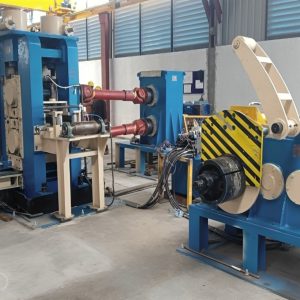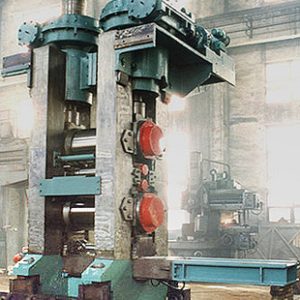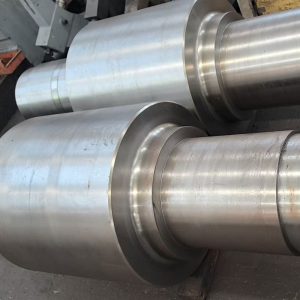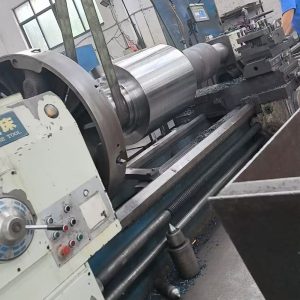

Tension roller unit
Brand name: HANI
Packing Details : Wooden box with fumigation or Wooden Fram or Steel Frame
Delivery Details: 30~60days or Based on the quantity
Shipping: Sea freight、Land freight、Air freight
HANI focuses on cold rolling mill equipment technology, safeguarding your production.
Product Details
In modern industrial manufacturing, particularly within the steel production and metal processing sectors, precision engineering components play a crucial role in ensuring product quality, operational efficiency, and production consistency. Among these critical components, the tension roller stands out as an essential element in continuous processing lines. This comprehensive guide explores the technical specifications, operational principles, applications, and advantages of high-performance tension rollers manufactured to exacting standards.
Technical Overview and Operational Principles
A tension roller functions as the mechanical interface that converts torque from drive mechanisms into controlled tension applied to strip materials. This conversion occurs through the friction between roller surfaces and the processed material. The fundamental physics governing this process involves precise calculation of normal force, coefficient of friction, and wrap angle to achieve the desired tension profile. In continuous processing lines, tension control accuracy directly impacts product quality, dimensional stability, and surface finish.
Modern tension roller configurations typically consist of multiple rollers working in coordinated pairs. These assemblies may be driven independently via electric motors or hydraulic motors, or interconnected through sophisticated gear differential mechanisms. Regardless of the drive configuration, the fundamental operating principle remains consistent: creating a controlled speed differential between entry and exit material flow to generate precise tension (denoted as T) across the processing zone.
The engineering design of an effective tension roller must account for numerous variables including material properties, processing speeds, environmental conditions, and maintenance requirements. HANI’s engineering team has developed proprietary methodologies for optimizing these parameters based on decades of field experience across diverse industrial applications.
Critical Functions and Performance Benefits
The implementation of a properly designed tension roller delivers multiple operational benefits that directly impact production efficiency and product quality:
- Strip Tracking Control: Advanced tension rollers incorporate precision crown profiles, automatic alignment systems, and edge guiding technologies to prevent material deviation and ensure consistent tracking through processing lines.
- Uncoiling and Recoiling Optimization: By providing precisely controlled tension throughout the processing cycle, the tension roller enables smooth, consistent unwinding and rewinding operations without material slippage, telescoping, or edge damage.
- Dimensional Stability Enhancement: Proper tension application during processing significantly improves flatness characteristics and dimensional consistency of finished products by minimizing material deformation during critical processing stages.
- Processing Energy Reduction: Scientific studies have demonstrated that optimal tension application can reduce metal deformation resistance by up to 15%, resulting in significant energy savings during forming operations while simultaneously improving material properties.
Technical Specifications and Material Selection
The performance characteristics of a tension roller are heavily influenced by material selection, surface treatment technologies, bearing systems, and drive integration methodologies. The following table provides detailed specifications for industrial-grade tension rollers designed for demanding continuous processing applications:
| Parameter | Standard Configuration | Heavy-Duty Configuration | Ultra-Precision Configuration |
|---|---|---|---|
| Roller Diameter Range | 300-600mm | 600-1200mm | 400-800mm |
| Maximum Line Speed | 15 m/s | 8 m/s | 20 m/s |
| Tension Range | 5-50 kN | 50-300 kN | 2-30 kN (±0.5% accuracy) |
| Roller Surface Material | Hardened steel (HRC60+) | Special alloy with tungsten carbide cladding | Precision-ground ceramic composite |
| Bearing System | Double-row tapered roller bearings | Custom-engineered spherical roller bearings with cooling | Precision angular contact bearing pairs with active monitoring |
| Drive Integration | Standard gear coupling | Hydraulic differential system | Direct torque motor with real-time feedback control |
Advanced tension roller designs incorporate specialized surface texturing techniques to optimize the coefficient of friction between roller surfaces and processed materials. Research conducted at metallurgical institutes has demonstrated that micro-textured surfaces can provide up to 22% more consistent tension transmission compared to conventional smooth roller surfaces, particularly when processing thin gauge materials or materials with variable surface properties.
Industrial Applications and Sector-Specific Configurations
The versatility of modern tension roller implementations spans numerous industrial sectors, each requiring specialized engineering considerations:
Metal Processing and Steel Production
In continuous annealing, galvanizing, and coating lines, the tension roller maintains precise strip tension throughout thermal processing cycles. Temperature-resistant materials and specialized cooling systems ensure consistent performance despite exposure to extreme thermal gradients. Advanced tension roller systems for steel processing incorporate proprietary thermal compensation algorithms that automatically adjust roller positioning to maintain optimal strip tracking despite thermal expansion effects.
Non-Ferrous Metal Processing
Aluminum, copper, and specialty alloy processing lines demand different tension roller characteristics than steel processing. Surface finish requirements are typically more stringent, necessitating specialized roller coatings that prevent material transfer and surface marking. The tension roller for these applications often incorporates non-metallic composite materials and precision-ground ceramic surfaces to eliminate contamination risks.
Specialty Paper and Film Manufacturing
Though less commonly associated with tension roller technology, high-speed paper and polymer film production lines benefit significantly from properly engineered tension control systems. These specialized tension rollers feature ultra-smooth surfaces, static dissipation capabilities, and micro-vibration control to prevent marking or stretching of delicate materials during high-speed processing.
Engineering Considerations for Optimal Performance
Designing an effective tension roller requires careful analysis of multiple engineering factors that directly impact performance, longevity, and maintenance requirements:
Wrap Angle Optimization
Scientific research has established that the wrap angle between material and tension roller directly impacts achievable tension range and control precision. The relationship follows the Capstan equation (Tout = Tineμθ), where μ represents the coefficient of friction and θ represents the wrap angle in radians. Engineering a tension roller with adjustable wrap angles provides operational flexibility but requires careful mechanical design to maintain alignment precision.
Thermal Management Systems
In high-speed processing lines, friction between rollers and material generates significant thermal energy that can compromise dimensional stability and bearing performance. Advanced tension rollers incorporate internal cooling channels, temperature monitoring systems, and thermal expansion compensation mechanisms to maintain performance consistency throughout extended production cycles.
Vibration Analysis and Damping
Dynamic analysis of tension roller assemblies has revealed that resonant frequencies can significantly impact strip stability and surface quality. Modern tension roller designs incorporate finite element analysis (FEA) to optimize structural rigidity, strategic mass distribution, and integrated damping systems to eliminate harmful vibrations across the operational speed range.
Maintenance Protocol and Service Life Optimization
The operational longevity of a tension roller depends heavily on proper maintenance protocols and monitoring systems:
- Scheduled Bearing Lubrication: Temperature-monitored automatic lubrication systems can extend bearing life by up to 40% compared to manual lubrication protocols.
- Surface Wear Monitoring: Laser profilometry systems can detect surface wear patterns before they impact processing quality, enabling predictive maintenance scheduling.
- Alignment Verification: Periodic laser alignment checks ensure parallelism between rollers remains within tolerance specifications, preventing edge wave and center buckle defects in processed materials.
- Vibration Signature Analysis: Continuous vibration monitoring can detect bearing degradation, imbalance conditions, and structural resonance issues before catastrophic failure occurs.
Frequently Asked Questions
Q: What is the typical service life of an industrial tension roller under continuous operation?
A: With proper maintenance protocols, a high-quality tension roller can provide 15-20 years of reliable service in demanding industrial applications. Critical factors affecting service life include operating speed, tension loads, environmental conditions, and maintenance frequency. Premium tension rollers incorporate wear-resistant materials and advanced bearing systems that consistently exceed industry average service life metrics.
Q: How does roller surface finish impact tension control precision in thin-gauge materials?
A: Surface finish directly impacts the coefficient of friction between roller and material, which determines tension transmission efficiency. For thin-gauge materials (under 0.5mm), surface roughness values between 0.2-0.4 μm Ra provide optimal performance. Too smooth a surface can cause slippage under high-speed conditions, while too rough a surface can mark delicate materials. Advanced tension rollers incorporate specialized surface texturing that creates microscopic channels to optimize friction characteristics while preventing material marking.
Q: What are the energy efficiency considerations when selecting a tension roller?
A: Energy consumption in tension roller systems comes primarily from bearing friction losses and drive system inefficiencies. High-precision bearings with optimized preload can reduce rotational resistance by 25-30% compared to standard industrial bearings. Direct-drive tension rollers eliminate mechanical transmission losses associated with gearboxes and couplings, improving overall system efficiency by 8-12%. Additionally, optimized roller weight reduces rotational inertia, decreasing energy requirements during acceleration and deceleration cycles.
Q: How does a tension roller integrate with modern automation and Industry 4.0 initiatives?
A: Contemporary tension rollers incorporate multiple sensor technologies including strain gauges, rotary encoders, temperature sensors, and vibration monitors that provide real-time operational data. This information feeds into centralized control systems that can automatically adjust tension parameters based on material properties, processing speeds, and quality requirements. Predictive maintenance algorithms analyze performance trends to schedule maintenance activities during planned downtime, maximizing production availability while minimizing unexpected failures.
Conclusion and Technical Support
The tension roller represents a critical engineering component in modern continuous processing lines, with performance characteristics that directly impact product quality, production efficiency, and operational costs. Proper selection, installation, and maintenance of tension roller assemblies require specialized technical knowledge and experience with specific material processing requirements.
Engineering teams designing new processing lines or upgrading existing equipment should conduct thorough analysis of material properties, processing speeds, tension requirements, and environmental conditions before finalizing tension roller specifications. The investment in properly engineered tension control systems typically delivers significant returns through improved product quality, reduced scrap rates, lower energy consumption, and extended equipment service life.
For specialized applications requiring custom-engineered solutions, HANI offers comprehensive technical consultation services to optimize tension roller performance for specific production requirements. Our engineering team combines theoretical knowledge with practical field experience to deliver tension roller solutions that exceed industry performance standards while maximizing return on investment.
When precision, reliability, and production efficiency are paramount considerations, the selection of an appropriate tension roller becomes one of the most important engineering decisions in continuous processing line design. The comprehensive technical understanding presented in this guide provides a foundation for informed decision-making when specifying these critical components for industrial applications. The proper implementation of advanced tension roller technology represents not just a mechanical solution, but a strategic advantage in competitive manufacturing environments where quality and efficiency determine market success.
HANI is one of China’s leading professional cold rolling mill manufacturers, providing complete cold rolling systems to steel companies worldwide. HANI focuses on designing and manufacturing integrated cold rolling solutions that meet the industry’s highest standards of precision, efficiency, and durability. Our engineering expertise lies in providing turnkey cold rolling production lines to optimize the performance of modern steel manufacturing plants.