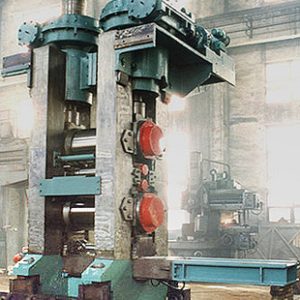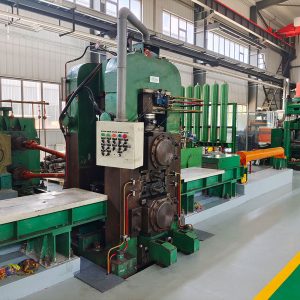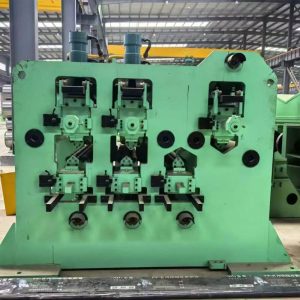

Cold rolling mill auxiliary equipment
Brand name: HANI
Packing Details : Wooden box with fumigation or Wooden Fram or Steel Frame
Delivery Details: 30~60days or Based on the quantity
Shipping: Sea freight、Land freight、Air freight
HANI focuses on cold rolling mill equipment technology, safeguarding your production.
Product Details
Precision-engineered auxiliary equipment designed to enhance productivity, quality, and operational efficiency in modern cold rolling mill installations
In the highly competitive metals manufacturing industry, the performance of a cold rolling mill is determined not only by its primary rolling equipment but equally by the quality and integration of its auxiliary systems. These supporting components form the backbone of efficient production lines, enabling consistent output of high-precision metal products that meet increasingly stringent industry standards. HANI has established itself as a trusted provider of comprehensive solutions for cold rolling operations worldwide.
Essential Auxiliary Components for Modern Cold Rolling Mill Operations
Auxiliary equipment for cold rolling mills represents the critical enabling technologies that transform basic rolling machinery into high-performance production systems. These components address specific challenges in the metal forming process, from material handling and preparation to finishing and quality control. An optimally configured cold rolling mill installation integrates these auxiliary systems seamlessly to achieve maximum throughput while maintaining exceptional product quality.
Uncoilers and Recoilers
Material handling equipment forms the first and last points of contact in the cold rolling process. Modern hydraulic uncoilers feature automatic expansion mechanisms, precise tension control, and rapid threading capabilities that minimize downtime between production runs. Seven-roll recoilers, such as those manufactured with precision-ground rolls and synchronized drive systems, ensure tight, uniform coil formation without edge damage or telescoping. These systems incorporate advanced load cells and position sensors to maintain consistent strip tension throughout the rolling process, which is critical for achieving uniform thickness in the finished product.
Technical Specifications: Hydraulic Coiling Systems
| Parameter | Standard Range | Precision Option |
|---|---|---|
| Coil Weight Capacity | 5-25 metric tons | 30-40 metric tons |
| Maximum Strip Width | 1650 mm | 2000 mm |
| Tension Control Range | 5-50 kN | 5-100 kN |
| Cone Expansion Method | Hydraulic | Servo-hydraulic |
| Control System | PLC-based | PLC with AI optimization |
Strip Preparation and Entry Systems
Before material enters the cold rolling mill stand, proper preparation is essential for process stability and product quality. Entry sections typically incorporate automatic threading systems, strip accumulators, and cleaning equipment. Powerful descaling machines remove surface oxides and contaminants that could otherwise transfer to work rolls and compromise surface finish. Two-roll feeding systems with precision-guided shovel plates ensure smooth material transition into the mill bite, preventing buckling or edge damage during threading operations.
Modern cold rolling mill installations often include laser-guided edge position control systems that maintain precise strip alignment throughout the production line. These systems utilize high-speed cameras and servo-driven guide mechanisms to compensate for mill stretch and material variations in real-time. Such precision is particularly critical when processing high-strength alloys that require tight dimensional tolerances.
Shearing and Cutting Systems
Both top-mounted and bottom-mounted hydraulic shearing systems serve critical functions within the cold rolling mill environment. These precision cutting machines must deliver clean, burr-free edges without distorting the strip profile. Advanced systems incorporate automatic blade gap adjustment mechanisms that adapt to material thickness and hardness in real-time, ensuring optimal cut quality across diverse production requirements.
Flying shear mechanisms enable continuous operation by cutting moving strip to precise lengths without stopping the production line. These systems utilize sophisticated motion control algorithms to synchronize blade movement with strip velocity, achieving cut length tolerances within ±0.5mm even at high production speeds. The integration of such equipment significantly enhances the productivity of a cold rolling mill installation by eliminating production interruptions.
Slitting and Cut-to-Length Lines
Downstream processing equipment transforms mill output into customer-ready products. Precision slitting lines incorporate multiple circular knives with micrometer-adjustable spacing to produce narrow strips with excellent edge quality. Modern installations feature automatic knife positioning systems that reduce setup times between jobs from hours to minutes. These lines typically include tension control mechanisms, edge guiding, and precision recoiling equipment to handle delicate thin materials without distortion.
Cut-to-length equipment converts coil stock into flat sheets of precise dimensions. These systems utilize servo-driven flying cutoff mechanisms combined with precision roller feed systems to achieve exceptional length accuracy. Advanced lines incorporate automatic stacking and bundling equipment that organizes finished sheets for efficient handling and shipping. The integration of these downstream processes with the primary cold rolling mill creates a seamless production flow that minimizes material handling and maximizes throughput.
Applications and Material Compatibility
| Material Type | Thickness Range | Compatible Auxiliary Equipment | Key Applications |
|---|---|---|---|
| Stainless Steel | 0.1-6.0 mm | Hydraulic recoilers, precision shears, edge trimmers | Appliances, architectural panels, automotive trim |
| Copper & Alloys | 0.05-3.0 mm | Non-marking guide systems, specialized cleaning equipment | Electronics, heat exchangers, decorative applications |
| Aluminum | 0.1-4.0 mm | Soft pinch rolls, non-ferrous handling systems | Aerospace components, packaging, transportation |
| Carbon Steel | 0.3-8.0 mm | Heavy-duty uncoilers, powerful descaling systems | Automotive bodies, construction materials, appliances |
| Specialty Alloys | 0.05-5.0 mm | Atmosphere-controlled handling, precision tension systems | Aerospace, medical devices, renewable energy components |
Optimization Strategies for Cold Rolling Mill Auxiliary Systems
The integration of auxiliary equipment with the primary cold rolling mill requires careful engineering to achieve optimal performance. Modern installations utilize digital twin technology to simulate material flow through the entire production line before physical implementation. These virtual models help identify potential bottlenecks and optimize equipment specifications to match production requirements precisely.
Energy efficiency represents another critical consideration in auxiliary equipment design. Regenerative drive systems capture braking energy during deceleration phases and feed it back to the facility power grid. Advanced hydraulic systems incorporate variable displacement pumps that adjust flow rates according to actual demand, reducing energy consumption by up to 35% compared to conventional fixed-displacement systems.
Predictive maintenance technologies have revolutionized equipment reliability in modern cold rolling operations. Sensors embedded throughout auxiliary systems monitor vibration patterns, temperature profiles, and operational parameters to detect developing issues before they cause failures. This condition-based maintenance approach reduces unplanned downtime by up to 45% while extending component service life through optimized maintenance scheduling.
Automation has dramatically enhanced the capabilities of cold rolling mill auxiliary equipment. Robotic coil handling systems can now load and unload heavy coils with precision and safety, eliminating manual handling risks. Artificial intelligence algorithms analyze production data to automatically adjust equipment parameters for optimal performance under varying conditions. These smart systems continuously learn from operational data to improve efficiency and product quality over time.
Frequently Asked Questions About Cold Rolling Mill Auxiliary Equipment
Q: How do auxiliary systems impact the overall efficiency of a cold rolling mill installation?
A: Auxiliary equipment typically determines approximately 40% of a cold rolling mill’s overall productivity. While the mill stand performs the actual reduction, auxiliary systems control material flow, preparation, and finishing operations. Well-designed auxiliary equipment can reduce changeover times by 60-70%, minimize scrap generation by 25-30%, and increase overall equipment effectiveness (OEE) by 15-20% through improved reliability and reduced downtime.
Q: What maintenance practices are essential for extending the service life of cold rolling mill auxiliary equipment?
A: Preventive maintenance for auxiliary equipment should include daily visual inspections, weekly lubrication of moving components, monthly calibration of sensors and control systems, and quarterly comprehensive mechanical inspections. Modern systems equipped with condition monitoring capabilities can optimize these schedules based on actual equipment usage and wear patterns. Critical components such as hydraulic seals, bearings, and drive couplings typically require replacement on 6-12 month cycles depending on operating intensity.
Q: How do modern control systems integrate auxiliary equipment with the main cold rolling mill?
A: Today’s cold rolling mill installations utilize hierarchical control architectures with multiple communication layers. The Level 1 system handles basic motion control and safety interlocks between equipment. Level 2 coordinates production sequences and material tracking across the entire line. Level 3 interfaces with production planning and quality management systems. This integrated approach enables seamless transitions between different product specifications while maintaining precise tension control and synchronization throughout the production process.
Q: What factors should be considered when selecting auxiliary equipment for a new cold rolling mill installation?
A: Key selection criteria include production capacity requirements, material types and specifications to be processed, required product tolerances, changeover frequency needs, available facility space and utilities, integration capabilities with existing systems, energy efficiency ratings, maintenance accessibility, and total cost of ownership over the equipment lifecycle. A thorough process analysis should precede equipment selection to ensure optimal matching of capabilities to production requirements.
Q: How have recent technological advancements improved cold rolling mill auxiliary equipment performance?
A: Recent innovations include servo-electric actuators replacing hydraulic systems for improved precision and reduced maintenance, AI-powered predictive control algorithms that automatically optimize equipment settings, digital twin technology for virtual commissioning and operator training, advanced materials for wear components that extend service life, energy recovery systems that capture and reuse braking energy, and integrated sensor networks that provide comprehensive equipment health monitoring. These advancements collectively enhance productivity, quality, and sustainability of cold rolling operations.
Future Trends in Cold Rolling Mill Auxiliary Systems
The evolution of cold rolling mill auxiliary equipment continues to accelerate with advances in automation, materials science, and digital technologies. Industry 4.0 initiatives are driving the integration of auxiliary systems into comprehensive digital manufacturing ecosystems. These connected systems generate valuable operational data that feeds into enterprise resource planning and advanced analytics platforms, enabling unprecedented levels of production optimization.
Sustainability considerations are increasingly influencing equipment design decisions. The next generation of auxiliary equipment focuses on minimizing energy consumption, reducing material waste, and enabling the processing of recycled content materials. Closed-loop water systems, energy recovery mechanisms, and biodegradable hydraulic fluids represent practical steps toward more environmentally responsible cold rolling operations.
Additive manufacturing is beginning to impact auxiliary equipment design through the production of complex geometries that were previously impossible to manufacture. Components with integrated cooling channels, topology-optimized structures, and specialized surface treatments can significantly enhance equipment performance and longevity. These innovations particularly benefit high-wear components such as guide rolls, shear blades, and tension control elements.
Collaborative robotics (cobots) are finding increasing applications in cold rolling environments, particularly for quality inspection, coil handling, and maintenance support tasks. These systems work alongside human operators to enhance productivity while improving workplace safety. Their ability to perform repetitive tasks with consistent precision makes them ideal partners in modern cold rolling mill operations.
The integration of augmented reality (AR) technologies is transforming equipment maintenance and operator training. Service technicians can now access equipment specifications, maintenance procedures, and expert support through AR glasses that overlay digital information onto physical equipment. This capability significantly reduces troubleshooting time and enables less experienced personnel to perform complex maintenance tasks with confidence.
Conclusion: Maximizing Value Through Integrated Auxiliary Systems
The successful implementation of auxiliary equipment for cold rolling mill installations requires careful consideration of numerous technical and operational factors. Organizations must look beyond initial purchase price to evaluate the total cost of ownership, including energy consumption, maintenance requirements, production uptime, and product quality impact. A well-designed auxiliary equipment package complements the primary cold rolling mill to create a harmonious production system capable of meeting the most demanding industry requirements.
As metal processing requirements continue to evolve toward thinner gauges, tighter tolerances, and more complex alloys, the role of auxiliary equipment becomes increasingly critical. These supporting systems must provide the precision, reliability, and flexibility needed to maintain competitive advantage in a global marketplace. Investment in advanced auxiliary equipment delivers substantial returns through improved yield, reduced downtime, lower energy consumption, and enhanced product quality.
The integration of digital technologies with mechanical systems represents the frontier of cold rolling mill auxiliary equipment development. Organizations that embrace these innovations while maintaining focus on core operational excellence will be best positioned to thrive in the evolving metals manufacturing landscape. HANI continues to lead industry advancements through engineering excellence and customer-focused innovation in cold rolling mill auxiliary equipment design and implementation.
For operations planning new cold rolling mill installations or upgrading existing facilities, a comprehensive assessment of auxiliary equipment requirements should be conducted with experienced specialists who understand the complex interrelationships between different system components. This holistic approach ensures optimal performance across the entire production line while maximizing return on capital investment.
The future of cold rolling mill technology lies in the seamless integration of mechanical precision, digital intelligence, and sustainable design principles. As these elements converge in next-generation auxiliary equipment systems, metals producers will gain unprecedented capabilities for efficient, flexible, and environmentally responsible manufacturing. The continuous advancement of these technologies promises to reshape industry standards and create new possibilities for value creation across the metals supply chain.
HANI is one of China’s leading professional cold rolling mill manufacturers, providing complete cold rolling systems to steel companies worldwide. HANI focuses on designing and manufacturing integrated cold rolling solutions that meet the industry’s highest standards of precision, efficiency, and durability. Our engineering expertise lies in providing turnkey cold rolling production lines to optimize the performance of modern steel manufacturing plants.