
Tandem Mill
Brand name: HANI
Packing Details : Wooden box with fumigation or Wooden Fram or Steel Frame
Delivery Details: 30~60days or Based on the quantity
Shipping: Sea freight、Land freight、Air freight
HANI focuses on cold rolling mill equipment technology, safeguarding your production.
Product Details
Engineering Excellence in Metal Forming
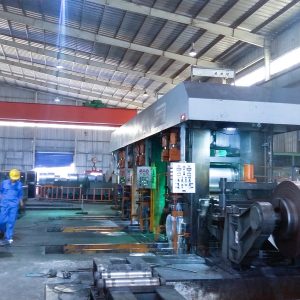
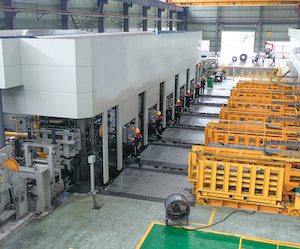
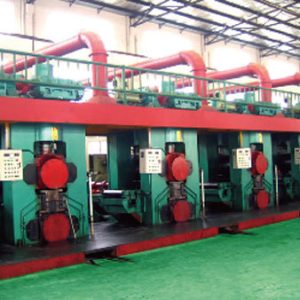
The fundamental principle behind a Tandem Mill configuration is sequential reduction. Unlike traditional reversing mills where material passes back and forth through a single stand, a Tandem Mill features multiple rolling stands arranged in series, allowing the material to pass through each stand in a single continuous direction. This engineering approach eliminates the time-consuming reversing process, dramatically increasing production rates while simultaneously improving dimensional accuracy and surface quality.
Modern Tandem Mill installations incorporate sophisticated control systems that monitor and adjust numerous parameters in real-time. Hydraulic Automatic Gauge Control (AGC) systems maintain precise thickness tolerances by continuously measuring exit thickness and making millisecond adjustments to roll gap settings. This level of precision was unattainable in previous generations of rolling equipment and represents a significant technological advancement in the field.
Technical Specifications and Configurations
Contemporary Tandem Mill systems can be configured with varying numbers of stands depending on production requirements, material characteristics, and desired reduction ratios. The most common configurations include three-stand, four-stand, and five-stand arrangements, each offering distinct advantages for specific applications.
| Parameter | Three-Stand Configuration | Four-Stand Configuration | Five-Stand Configuration |
|---|---|---|---|
| Input Material Thickness | 2.0–3.0 mm | 2.0–4.0 mm | 2.75–4.0 mm |
| Output Material Thickness | 0.6–1.2 mm | 0.5–1.2 mm | 0.5–1.2 mm |
| Maximum Rolling Speed | 240 m/min | 300 m/min | 300 m/min |
| Typical Reduction Ratio | 65-70% | 70-75% | 75-80% |
| Power Requirements (per stand) | 800-1200 kW | 750-1100 kW | 700-1000 kW |
Production Line Integration and Workflow
A comprehensive Tandem Mill installation extends beyond the rolling stands themselves. The complete production line integrates numerous auxiliary systems that work in harmony to deliver seamless operation:
- Uncoilers: Heavy-duty payoff reels that feed the strip into the line with precise tension control
- Welding Platform: Advanced laser or TIG welding systems that join coil ends to enable continuous operation
- Entry/Exit Loopers: Accumulator towers that store material to allow continuous rolling during coil changes
- Rolling Stands: The core Tandem Mill configuration with precisely aligned roll assemblies
- Thickness Monitoring: X-ray or gamma-ray gauges positioned between stands for real-time thickness verification
- Hydraulic Shears: Precision cutting systems for crop ends and emergency strip separation
- Coilers: Tension-controlled winding systems that produce uniform, high-quality coils
The synchronization of these components is critical to the overall efficiency of the Tandem Mill installation. Advanced PLC systems coordinate acceleration and deceleration profiles to minimize tension fluctuations that could compromise strip quality or cause breakage during threading operations.
Material Science Considerations in Tandem Mill Design
The performance characteristics of a Tandem Mill are heavily influenced by metallurgical factors. During the rolling process, metals undergo complex transformations including grain structure refinement, work hardening, and thermal effects from friction and deformation. Modern Tandem Mill designs incorporate sophisticated cooling systems that manage these thermal dynamics to achieve optimal mechanical properties in the finished product.
For high-strength steel grades, the interstand cooling capabilities of a Tandem Mill can be leveraged to control phase transformations. This process, known as controlled rolling and accelerated cooling (CRAC), enables manufacturers to achieve specific microstructures without subsequent heat treatment operations, representing significant energy savings and production efficiency improvements.
Quality Assurance Systems
The integration of advanced quality monitoring systems distinguishes modern Tandem Mill installations from conventional rolling equipment. These systems include:
- Surface Inspection Systems: High-resolution cameras and specialized lighting detect surface defects at production speeds
- Flatness Measurement: Shape meters employing arrays of sensors monitor strip flatness in real-time
- Profile Control: Advanced actuators adjust roll bending and shifting to maintain precise strip profile
- Material Tracking: RFID or barcode systems maintain complete traceability throughout processing
These quality assurance technologies are not merely add-ons but integral components of a comprehensive Tandem Mill solution. Their implementation directly impacts yield rates, reduces scrap generation, and ensures consistent compliance with stringent customer specifications across automotive, appliance, and construction industries.
Energy Efficiency and Sustainability Aspects
Contemporary Tandem Mill designs prioritize energy efficiency through multiple technological approaches. Regenerative drives capture braking energy during deceleration phases and feed it back to the electrical grid. Optimized roll pass schedules reduce overall reduction requirements, lowering total energy consumption per ton of processed material. Furthermore, advanced lubrication systems minimize friction losses while extending roll life and reducing maintenance requirements.
The sustainability profile of a Tandem Mill installation extends beyond energy considerations to include material utilization efficiency. Modern systems achieve yield rates exceeding 98% through precise control of end trimming and optimized coil joining procedures. These efficiency gains translate directly to reduced environmental impact through lower resource consumption and decreased waste generation per unit of production.
Operational Economics and Return on Investment
While the capital investment for a Tandem Mill installation exceeds that of conventional rolling equipment, the operational economics justify the expenditure through multiple channels:
• Production throughput increases of 200-300% compared to single-stand reversible mills
• Labor cost reduction through higher automation levels and decreased manual handling requirements
• Improved yield rates resulting from consistent processing parameters and reduced start/end scrap
• Enhanced product quality enabling premium pricing and access to demanding market segments
• Operational flexibility to process a wider range of materials and specifications on a single line
These factors combine to deliver compelling return on investment profiles, particularly for operations running multiple shifts with high utilization rates. Leading manufacturers report payback periods of 2-4 years for modern Tandem Mill installations, depending on production volumes and product mix.
HANI continues to push the boundaries of what’s possible in rolling mill technology, incorporating lessons learned from successful installations worldwide. Their engineering teams focus on practical innovations that deliver measurable improvements in uptime, quality consistency, and operational efficiency.
Frequently Asked Questions
Q: What is the typical installation timeline for a new Tandem Mill system?
A: Installation timelines vary based on configuration complexity and site preparation status. A standard three-stand Tandem Mill typically requires 8-10 months from foundation work to production start-up, including equipment installation, commissioning, and operator training phases. Larger five-stand installations may require 12-15 months total project duration.
Q: How does a Tandem Mill handle different material grades in sequence?
A: Modern Tandem Mill control systems store complete processing recipes for each material grade, including rolling speeds, interstand tensions, roll gap settings, and cooling parameters. Grade changes are executed through automated sequence controls that adjust all parameters simultaneously during scheduled transitions. Advanced installations can process up to 12 different material specifications in a single shift with minimal transition scrap.
Q: What maintenance requirements are associated with a Tandem Mill installation?
A: Preventative maintenance programs for Tandem Mill systems typically include daily visual inspections, weekly lubrication cycles, monthly calibration of measurement systems, and quarterly comprehensive mechanical inspections. Critical components such as main drive gearboxes require oil analysis every 500 operating hours. Modern Tandem Mill installations incorporate condition monitoring systems that predict component failures before they occur, minimizing unplanned downtime.
Q: Can existing facilities be retrofitted with Tandem Mill technology?
A: Many successful Tandem Mill retrofits have been completed in existing facilities. The process requires comprehensive structural analysis to ensure foundation adequacy, power system evaluation to verify electrical capacity, and spatial planning to accommodate the longer equipment footprint. HANI engineering teams specialize in brownfield Tandem Mill installations that maximize reuse of existing infrastructure while delivering modern production capabilities.
Q: What operator skill levels are required for Tandem Mill operation?
A: Modern Tandem Mill control systems feature intuitive human-machine interfaces that reduce the learning curve compared to previous generations of equipment. However, operators still require comprehensive training in metallurgical principles, mechanical systems understanding, and troubleshooting methodologies. Most successful installations implement tiered training programs with progressive skill development pathways. The most effective Tandem Mill operations maintain dedicated process engineering support teams that work alongside production personnel to optimize performance continuously.
Future Developments in Tandem Rolling Technology
The evolution of Tandem Mill technology continues at a rapid pace, driven by advances in digitalization, materials science, and manufacturing requirements. Emerging developments include:
Artificial Intelligence Integration: Machine learning algorithms are being deployed to predict optimal rolling parameters based on material test results and historical performance data, continuously refining process models to maximize quality and efficiency.
Enhanced Digital Twins: Comprehensive virtual representations of physical Tandem Mill installations enable operators to simulate process changes, predict maintenance requirements, and optimize scheduling without disrupting actual production.
Advanced Materials Processing: Next-generation Tandem Mill designs are being engineered to accommodate emerging high-strength, lightweight alloys required for electric vehicle and renewable energy applications, expanding the technological boundaries of what can be achieved through cold rolling processes.
The Tandem Mill represents one of the most significant technological advancements in metal processing history. From humble beginnings in early industrial rolling to today’s fully integrated, digitally controlled production systems, the evolution of Tandem Mill technology continues to transform manufacturing capabilities worldwide.
For manufacturers seeking to establish or enhance their position in competitive metal processing markets, investment in modern Tandem Mill technology delivers tangible benefits in productivity, quality, and operational flexibility. These systems represent not merely equipment purchases but strategic investments in manufacturing capability that deliver dividends through enhanced market positioning and sustainable competitive advantages.
Whether processing conventional steel grades or advanced specialty alloys, the Tandem Mill stands as a testament to engineering excellence and manufacturing innovation, enabling producers to meet the ever-increasing demands of modern industry with confidence and precision.
HANI is one of China’s leading professional cold rolling mill manufacturers, providing complete cold rolling systems to steel companies worldwide. HANI focuses on designing and manufacturing integrated cold rolling solutions that meet the industry’s highest standards of precision, efficiency, and durability. Our engineering expertise lies in providing turnkey cold rolling production lines to optimize the performance of modern steel manufacturing plants.