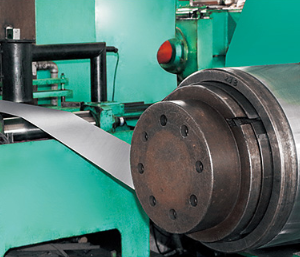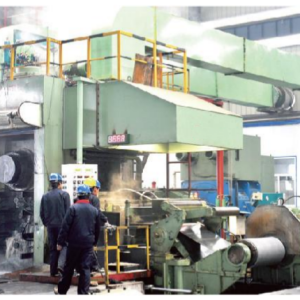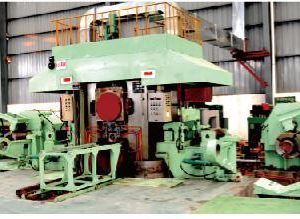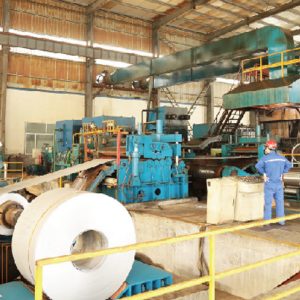

6 hi cold rolling mill
Brand name: HANI
Packing Details : Wooden box with fumigation or Wooden Fram or Steel Frame
Delivery Details: 30~60days or Based on the quantity
Shipping: Sea freight、Land freight、Air freight
HANI focuses on cold rolling mill equipment technology, safeguarding your production.
Product Details
Advanced Technology and Precision Engineering for Modern Steel Production
In today’s competitive steel manufacturing landscape, the 6 hi cold rolling mill represents the pinnacle of precision engineering and technological advancement. This sophisticated equipment delivers unparalleled performance in producing high-quality steel strips with exacting dimensional tolerances and superior surface finish. HANI engineers have dedicated decades to perfecting the design and functionality of the 6 hi cold rolling mill, creating systems that meet the most demanding production requirements across global markets.
Technical Fundamentals of 6 Hi Cold Rolling Mill Design
The 6 hi cold rolling mill configuration features three distinct roller assemblies: work rolls, intermediate rolls, and backup rolls. This arrangement provides significant advantages over traditional 4-high mill designs. The intermediate rolls in a 6 hi cold rolling mill enable precise control of material flow during the reduction process, allowing for exceptional profile and flatness control. This mechanical advantage translates directly to higher quality end products and reduced material waste.
The scientific principle behind the 6 hi cold rolling mill design lies in its ability to manipulate the deformation zone through multiple control mechanisms. By incorporating both hydraulic bending systems and intermediate roll shifting capabilities, operators can precisely adjust the roll gap profile to compensate for thermal expansion, roll wear, and other variables that affect strip quality. This sophisticated control system makes the 6 hi cold rolling mill particularly valuable for producing difficult materials like stainless steel grades and high-strength alloys.
Comprehensive Production Capabilities
A properly configured 6 hi cold rolling mill can process a remarkable range of materials and dimensions. From thin gauge stainless steel strips to wider carbon steel products, the versatility of this equipment makes it an ideal choice for manufacturers seeking to diversify their product portfolios without investing in multiple specialized lines.
The production process typically follows this sequence: uncoiler with coil car → strip threading and straightening equipment → entry tension reel → entry equipment → 6 hi cold rolling mill stand → exit equipment → exit tension reel with coil car → helper coiler. This streamlined workflow ensures continuous operation with minimal downtime between coil changes.
Technical Specifications and Performance Data
The following table illustrates the comprehensive capabilities of modern 6 hi cold rolling mill systems across various size configurations:
| Parameter | Small Configuration | Medium Configuration | Large Configuration | Extra-Large Configuration |
|---|---|---|---|---|
| Roll Dimensions (mm) | φ150/φ175/φ460×450 | φ165/φ200/φ630×650 | φ170/φ300/φ800×900 | φ400/φ450/φ1250×1450 |
| Entry Thickness (mm) | 1.0-2.5 | 1.0-3.5 | 2.0-4.0 | 2.0-4.0 |
| Exit Thickness (mm) | 0.15-1.2 | 0.18-2.0 | 0.2-2.0 | 0.2-2.0 |
| Strip Width (mm) | 250-400 | 400-550 | 700-900 | 900-1250 |
| Drive System | Work roll drive | Work roll drive | Work roll drive | Work roll drive |
| Rolling Force (kN) | 2800-3500 | 5000-5500 | 6500-10000 | 12000-15000 |
| Screwdown System | Electric/Hydraulic | Electric/Hydraulic | Hydraulic | Hydraulic |
| Max. Speed (m/s) | 3.5-6.5 | 3.5-8 | 3.5-5 | 8-16 |
| Materials Processed | Carbon steel | Carbon/SS | Carbon/SS | Carbon steel |
This technical data demonstrates the impressive range of the 6 hi cold rolling mill across different production requirements. The largest configurations can process strips up to 1250mm wide while maintaining exceptional precision and surface quality.
Distinctive Advantages of 6 Hi Cold Rolling Mill Technology
The 6 hi cold rolling mill offers several critical advantages that distinguish it from alternative rolling technologies:
- Superior Strip Profile Control: The combination of roll bending and intermediate roll shifting eliminates harmful contact zones between rolls, resulting in exceptional flatness and profile control.
- Edge Quality Improvement: The advanced roll configuration significantly reduces edge thinning and edge cracking phenomena, particularly important when processing challenging materials like stainless steels.
- Reduced Work Roll Consumption: By employing smaller diameter work rolls with flat grinding profiles, the 6 hi cold rolling mill reduces roll inventory requirements and associated costs.
- Increased Reduction Capability: The mechanical advantage of the 6-roll configuration allows for greater reduction per pass, improving productivity and energy efficiency.
- Precision Thickness Control: AGC (Automatic Gauge Control) systems integrated into the 6 hi cold rolling mill deliver exceptional thickness consistency, often within ±3μm tolerance.
- Material Versatility: From common carbon steels to specialized stainless grades and high-strength alloys, the 6 hi cold rolling mill adapts to diverse material requirements.
- Surface Quality Excellence: The optimized roll configuration minimizes surface defects and provides exceptional surface finish critical for downstream processing and end-use applications.
These advantages collectively translate to significant production benefits including higher yields, reduced scrap rates, lower maintenance costs, and premium product pricing opportunities.
Scientific Principles Behind Advanced 6 Hi Cold Rolling Mill Performance
The exceptional performance of the 6 hi cold rolling mill stems from fundamental metallurgical and mechanical engineering principles. During cold rolling, the material undergoes plastic deformation that alters its crystal structure, increasing strength while reducing ductility. The 6 hi configuration provides precise control over this deformation process through multiple control axes.
The intermediate roll shifting mechanism in a 6 hi cold rolling mill employs what metallurgists call the “roll crossing effect.” By precisely positioning the intermediate rolls relative to the work rolls, operators can create a controllable crowned gap that counteracts the natural tendency of rolls to deflect under load. This sophisticated mechanical solution eliminates the need for complex roll grinding profiles while achieving superior strip shape.
Additionally, the hydraulic work roll bending system creates controlled moments at roll necks, allowing operators to rapidly adjust the roll gap profile in response to changing conditions. This dynamic control capability is particularly valuable when processing materials with varying hardness or when transitioning between different product specifications.
Applications Across Industries
The versatility of the 6 hi cold rolling mill makes it indispensable across numerous industrial sectors:
- Automotive: High-strength steel components requiring precise dimensional control
- Appliance Manufacturing: Stainless steel panels demanding perfect surface finish
- Construction: Pre-painted steel products requiring consistent coating thickness
- Electronics: Thin gauge specialty alloys for electromagnetic shielding
- Packaging: Tinplate and specialty steel for food containers
- Industrial Equipment: Wear-resistant steel components with specific mechanical properties
Each application benefits from the exceptional dimensional control and material properties achievable only through advanced 6 hi cold rolling mill technology.
Integration with Modern Manufacturing Systems
Contemporary 6 hi cold rolling mill installations feature comprehensive automation and data acquisition systems. These integrated control platforms monitor hundreds of process variables in real-time, making automatic adjustments to maintain optimal rolling conditions. Advanced installations incorporate machine learning algorithms that continuously optimize the rolling process based on historical performance data.
The data connectivity of modern 6 hi cold rolling mill systems enables seamless integration with enterprise resource planning (ERP) systems and production scheduling software. This connectivity provides unprecedented visibility into production performance, energy consumption, maintenance requirements, and quality metrics.
Frequently Asked Questions about 6 hi cold rolling mill
Q: What is the typical ROI timeframe for a new 6 hi cold rolling mill installation? A: Most manufacturers achieve full return on investment within 2.5-4 years, depending on production volume, product mix, and local market conditions. The superior yield rates and reduced scrap associated with 6 hi cold rolling mill technology significantly accelerate this timeline compared to conventional rolling equipment.
Q: How does a 6 hi cold rolling mill handle difficult-to-roll materials like high-silicon electrical steel? A: The 6 hi cold rolling mill configuration provides exceptional control over rolling forces and material flow, making it ideal for difficult materials. Special roll materials, optimized lubrication systems, and precise tension control enable successful processing of high-silicon electrical steels without edge cracking or surface defects.
Q: What maintenance requirements are associated with a 6 hi cold rolling mill? A: Preventive maintenance is critical for maximizing uptime and performance. Key maintenance activities include regular bearing inspections, hydraulic system fluid analysis, roll surface monitoring, and drive system calibration. Most manufacturers schedule comprehensive maintenance during planned production stops, typically every 4,000-6,000 operating hours.
Q: How does intermediate roll shifting compare to other profile control methods? A: Intermediate roll shifting in a 6 hi cold rolling mill provides superior control compared to traditional backup roll bending or work roll bending alone. The ability to create a controlled roll gap crown without inducing harmful contact stresses between rolls results in better flatness control and reduced roll wear.
Q: What energy consumption should be expected from a typical 6 hi cold rolling mill? A: Energy consumption varies significantly based on material, reduction ratio, and production speed. Modern 6 hi cold rolling mill installations typically consume between 45-70 kWh per ton of processed material, with larger installations achieving lower specific energy consumption due to economies of scale.
Future Development Trends in 6 Hi Cold Rolling Mill Technology
Industry research continues to advance 6 hi cold rolling mill capabilities through several promising development paths:
- Digital Twin Technology: Creating virtual replicas of physical mills that simulate performance under various conditions to optimize setup parameters before actual production
- Advanced Materials for Rolls: New roll materials with enhanced wear resistance and thermal properties extending service intervals and improving surface quality
- Intelligent Bearing Systems: Self-monitoring roll neck bearings with integrated sensors predicting maintenance requirements before failures occur
- Energy Recovery Systems: Capturing and repurposing energy from deceleration and braking operations to reduce overall energy consumption
- Enhanced Lubrication Control: Precision lubrication systems delivering optimal quantities of specialized lubricants based on real-time process conditions
These innovations ensure that the 6 hi cold rolling mill will continue serving as the backbone of precision strip production for decades to come.
Conclusion: The Strategic Value of 6 Hi Cold Rolling Mill Investment
For steel producers seeking to enhance product quality while reducing operational costs, the 6 hi cold rolling mill represents a strategic investment with compelling long-term value. Its combination of precision engineering, advanced control systems, and versatile production capabilities delivers measurable benefits across quality metrics, production efficiency, and total cost of ownership.
The 6 hi cold rolling mill continues to evolve through engineering innovation and practical field experience. Modern installations incorporate lessons learned from thousands of successful production campaigns worldwide, creating systems that reliably deliver exceptional performance day after day.
Whether producing standard carbon steel strips or specialized stainless alloys, the 6 hi cold rolling mill provides the technological foundation for manufacturing excellence. Its proven capabilities and continuous improvement trajectory make it an essential component of any forward-looking steel producer’s equipment portfolio. HANI’s engineering expertise ensures that each 6 hi cold rolling mill installation delivers maximum value and performance throughout its operational lifecycle.
By selecting advanced 6 hi cold rolling mill technology, manufacturers position themselves to meet increasingly demanding customer requirements while maintaining competitive production costs. This strategic advantage becomes increasingly valuable as global markets continue to emphasize product quality and consistency alongside cost efficiency.
The 6 hi cold rolling mill truly represents the perfect balance of mechanical ingenuity, control sophistication, and production versatility—a testament to decades of engineering refinement focused on solving the most challenging strip production requirements.
HANI is one of China’s leading professional cold rolling mill manufacturers, providing complete cold rolling systems to steel companies worldwide. HANI focuses on designing and manufacturing integrated cold rolling solutions that meet the industry’s highest standards of precision, efficiency, and durability. Our engineering expertise lies in providing turnkey cold rolling production lines to optimize the performance of modern steel manufacturing plants.