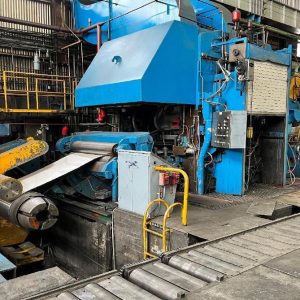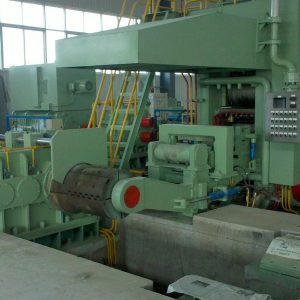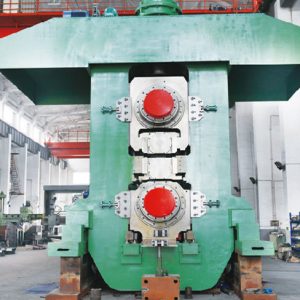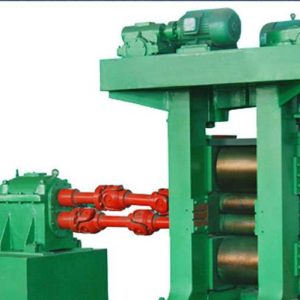

4 Hi Reversing Mill + 6 Hi Reversing Cold Rolling Mill
Brand name: HANI
Packing Details : Wooden box with fumigation or Wooden Fram or Steel Frame
Delivery Details: 30~60days or Based on the quantity
Shipping: Sea freight、Land freight、Air freight
HANI focuses on cold rolling mill equipment technology, safeguarding your production.
Product Details
In the ever-evolving landscape of metal processing, precision, efficiency, and versatility are non-negotiable. Among the most advanced solutions in cold rolling technology are the 4 Hi reversing mill and the 6 Hi reversing cold rolling mill—two cornerstone systems that have redefined what’s possible in high-accuracy steel and specialty alloy production. Engineered for demanding industrial applications, these mills deliver exceptional flatness control, superior surface finish, and consistent thickness tolerance across a wide range of materials, including mild steel, low-alloy steel, and stainless steel.
At HANI, we recognize that selecting the right rolling configuration isn’t just about machinery—it’s about aligning your production goals with proven metallurgical science and mechanical innovation. Whether you operate a small specialty mill or a large-scale integrated facility, understanding the functional differences, technical capabilities, and operational advantages of a 4 Hi reversing mill versus a 6 Hi reversing cold rolling mill is critical to optimizing throughput, reducing downstream processing costs, and achieving world-class product quality.
Why Choose a 4 Hi Reversing Mill?
The 4 Hi reversing mill remains one of the most widely adopted configurations in cold rolling due to its balance of simplicity, robustness, and cost-effectiveness. It consists of two work rolls directly contacting the strip and two larger backup rolls that support the work rolls against deflection under high rolling loads.
This design effectively minimizes roll bending during operation, enabling tighter thickness control compared to 2 Hi mills—especially when rolling harder or thinner materials. However, because the work rolls are still subject to some elastic deformation (particularly at the edges), achieving perfect flatness on wide strips or ultra-thin gauges (<0.3 mm) can be challenging without additional corrective measures like roll crown grinding or hydraulic bending systems.
Typical applications for the 4 Hi reversing mill include:
- Cold rolling of carbon steel coils (0.18–3.0 mm)
- Production of medium-width stainless steel strips
- Intermediate reduction passes before final finishing on more advanced mills
Despite its limitations in extreme flatness control, the 4 Hi reversing mill excels in reliability, ease of maintenance, and lower capital investment—making it ideal for manufacturers prioritizing operational stability over nanometer-level precision.
The Advanced Capabilities of the 6 Hi Reversing Cold Rolling Mill
Where the 4 Hi reversing mill reaches its limits, the 6 Hi reversing cold rolling mill steps in with enhanced control mechanisms derived from decades of rolling theory and industrial practice. This configuration adds a third pair of intermediate rolls between the work rolls and backup rolls, creating a six-roll stack that enables dynamic shape and flatness adjustment during rolling.
Key innovations in the 6 Hi reversing cold rolling mill include:
- Work roll bending: Hydraulic cylinders apply controlled bending forces to the work rolls to correct edge drop or center buckle.
- Intermediate roll shifting (IRS): The intermediate rolls can be axially shifted during operation to modify the effective roll gap profile, compensating for thermal expansion or wear in real time.
- Higher stiffness: The multi-layer support system drastically reduces system compliance, allowing higher rolling forces without compromising strip geometry.
These features make the 6 Hi reversing cold rolling mill indispensable for producing high-value products such as:
- Ultra-thin stainless steel foils (down to 0.1 mm)
- Precision electrical steel for motors and transformers
- Automotive-grade cold-rolled sheets requiring Class A surface finish
Moreover, the 6 Hi reversing cold rolling mill significantly reduces the need for post-rolling leveling or skin-pass operations—translating into energy savings, reduced scrap rates, and faster time-to-market.
Comparative Technical Specifications
To help engineers and plant managers make informed decisions, below is a detailed comparison of typical 4 Hi reversing mill and 6 Hi reversing cold rolling mill configurations based on industry standards and data from leading manufacturers like Wuxi Dali Shen Rolling Machinery Co., Ltd.—a trusted reference point for HANI’s own engineering benchmarks.
| Parameter | 4 Hi Reversing Mill (e.g., 850 Model) | 6 Hi Reversing Cold Rolling Mill (e.g., Advanced 850 Variant) |
|---|---|---|
| Roll Stack | 2 Work Rolls + 2 Backup Rolls | 2 Work Rolls + 2 Intermediate Rolls + 2 Backup Rolls |
| Max Rolling Force | ~7,500 kN | Up to 9,000 kN (depending on frame design) |
| Work Roll Diameter | Φ230 mm | Φ220–240 mm (smaller diameters possible due to support) |
| Intermediate Roll Diameter | — | Φ300 mm |
| Backup Roll Diameter | Φ750 mm | Φ750–800 mm |
| Strip Width Range | 600–750 mm | 600–800 mm |
| Entry Thickness | 2.0–3.0 mm | 2.0–3.0 mm |
| Exit Thickness | 0.18–0.5 mm | 0.10–0.5 mm (with stable flatness) |
| Max Rolling Speed | 600 m/min | 600–750 m/min (with advanced tension control) |
| AGC System | Hydraulic AGC + Bending Cylinders | Hydraulic AGC + IRS + Dynamic Work Roll Bending |
| Drive Type | Work roll drive (DC motor + Siemens drive) | Work roll drive with torque vector control |
| Flatness Control | Limited (requires roll grinding) | Real-time adaptive control via IRS & bending |
| Typical Applications | General-purpose cold rolling | High-precision, high-value alloys |
Note: Actual specifications may vary based on customer requirements and material grades.
Scientific Basis for Multi-High Mill Superiority
The superiority of the 6 Hi reversing cold rolling mill isn’t marketing hype—it’s grounded in solid mechanics and tribology. According to classical beam theory, the deflection (δ) of a roll under load is proportional to the cube of its unsupported span and inversely proportional to its moment of inertia. In a 4 Hi reversing mill, the work roll is supported only at its ends by bearings, making it prone to bending under high pressure—especially near the strip edges, causing the well-known “edge thinning” effect.
In contrast, the 6 Hi reversing cold rolling mill introduces intermediate rolls that effectively shorten the loaded span of the work roll. This not only reduces deflection but also allows the use of smaller-diameter work rolls, which:
- Lower contact arc length → reduced rolling force
- Improve surface transfer → better finish replication
- Enable higher reductions per pass → fewer passes needed
Furthermore, axial shifting of intermediate rolls creates a variable “roll gap contour,” mimicking the effect of a continuously ground roll crown without stopping production—a concept validated by finite element analysis (FEA) studies published in Journal of Materials Processing Technology.
Integration into Modern Smart Factories
Both the 4 Hi reversing mill and 6 Hi reversing cold rolling mill from HANI are designed for Industry 4.0 readiness. Equipped with Siemens DC drives, real-time AGC (Automatic Gauge Control), and optional AI-powered flatness prediction modules, these systems can integrate seamlessly with MES and ERP platforms.
HANI’s engineering team has incorporated lessons from global installations—including insights from Chinese manufacturers like Wuxi Dali Shen—to ensure our mills deliver not just performance, but long-term serviceability, spare parts accessibility, and operator safety.
Frequently Asked Questions (FAQ)
Q1: What’s the main difference between a 4 Hi reversing mill and a 6 Hi reversing cold rolling mill?
A: The 4 Hi reversing mill uses two work rolls and two backup rolls, while the 6 Hi reversing cold rolling mill adds two intermediate rolls. This extra layer enables superior flatness control, especially for thin or wide strips.
Q2: Can a 4 Hi reversing mill produce stainless steel as thin as 0.15 mm?
A: Technically yes, but with significant risk of edge wave, center buckle, or inconsistent thickness. For reliable sub-0.2 mm production, a 6 Hi reversing cold rolling mill is strongly recommended.
Q3: Is the 6 Hi reversing cold rolling mill more expensive to maintain?
A: Initially, yes—due to more complex hydraulics and roll handling. However, reduced scrap, fewer leveling passes, and longer roll life often offset these costs within 12–18 months of operation.
Q4: Does HANI offer customization for both mill types?
A: Absolutely. HANI provides tailored solutions for coil width, speed, automation level, and material compatibility—ensuring your 4 Hi reversing mill or 6 Hi reversing cold rolling mill matches your exact production needs.
Q5: How does roll shifting work in a 6 Hi reversing cold rolling mill?
A: Hydraulic actuators move the intermediate rolls axially during rolling. By changing their position, the effective roll gap profile is altered to counteract thermal camber or wear patterns—without stopping the mill.
Q6: Are both mills reversible?
A: Yes. Both the 4 Hi reversing mill and 6 Hi reversing cold rolling mill operate in reverse mode, allowing multiple passes through the same stand to achieve final thickness—maximizing space and capital efficiency.
Q7: What lubrication systems are used?
A: Both configurations support oil-mist or emulsion-based process lubrication, with closed-loop filtration to maintain cleanliness and extend fluid life.
Q8: Can these mills handle high-strength low-alloy (HSLA) steels?
A: Yes, especially the 6 Hi reversing cold rolling mill, which can apply higher specific rolling pressures while maintaining flatness—critical for HSLA grades.
Conclusion: Choosing the Right Mill for Your Future
Whether you invest in a 4 Hi reversing mill for cost-efficient general rolling or a 6 Hi reversing cold rolling mill for premium product lines, your choice must align with market demands, material science realities, and long-term ROI. At HANI, we don’t just sell equipment—we partner with you to deploy rolling solutions rooted in physics, refined by experience, and built to last.
With rising global demand for thinner, stronger, and flatter metal products, the strategic advantage lies not in choosing between a 4 Hi reversing mill and a 6 Hi reversing cold rolling mill, but in understanding when and why to deploy each. And with HANI’s commitment to engineering excellence—inspired by global best practices and local manufacturing intelligence—you’re equipped to lead, not follow.
For more details on integrating a 4 Hi reversing mill or 6 Hi reversing cold rolling mill into your production line, contact HANI today. Let science, not speculation, drive your next upgrade.
HANI is one of China’s leading professional cold rolling mill manufacturers, providing complete cold rolling systems to steel companies worldwide. HANI focuses on designing and manufacturing integrated cold rolling solutions that meet the industry’s highest standards of precision, efficiency, and durability. Our engineering expertise lies in providing turnkey cold rolling production lines to optimize the performance of modern steel manufacturing plants.