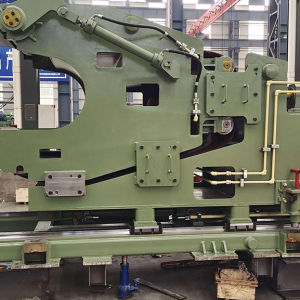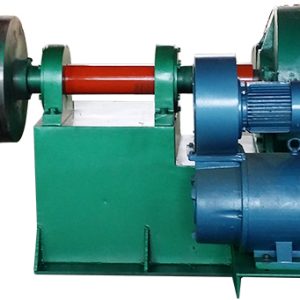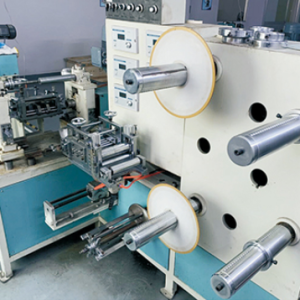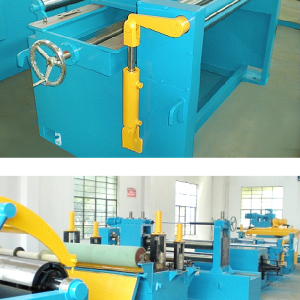

Five-roller coil strapping machine
Brand name: HANI
Packing Details : Wooden box with fumigation or Wooden Fram or Steel Frame
Delivery Details: 30~60days or Based on the quantity
Shipping: Sea freight、Land freight、Air freight
HANI focuses on cold rolling mill equipment technology, safeguarding your production.
Product Details
In the dynamic landscape of metal processing industries, efficiency and precision are paramount. The five-roller coil strapping machine represents a sophisticated solution engineered to meet the rigorous demands of modern metal fabrication facilities. This specialized equipment has revolutionized how manufacturers handle coiled metals, delivering exceptional performance while maintaining the structural integrity of processed materials. As production requirements continue to evolve globally, understanding the capabilities and applications of an advanced coil strapping machine becomes increasingly valuable for industry professionals seeking to optimize their operations.
Technical Architecture and Components
The five-roller coil strapping machine features an elegantly engineered framework that balances mechanical robustness with operational finesse. At its core, five precisely aligned rollers work in concert to guide, shape, and secure metal coils during processing. Each roller serves a specific function within the system: the first roller initiates material entry, the second and third provide primary shaping and tension control, while the fourth and fifth rollers finalize the coil formation and ensure secure strapping. This configuration creates a continuous workflow that minimizes material stress while maximizing throughput efficiency.
The structural integrity of a professional coil strapping machine begins with its heavy-duty frame construction. Typically fabricated from high-grade steel alloys with yield strengths exceeding 350MPa, the frame undergoes stress-relief heat treatment to prevent deformation under continuous operational loads. Precision-machined bearing housings maintain exact roller alignment within tolerances of ±0.02mm, ensuring consistent material handling characteristics throughout extended production cycles. When selecting a coil strapping machine for your facility, these foundational elements directly impact long-term performance and maintenance requirements.
The hydraulic system in modern five-roller coil strapping machines operates at pressures between 160-210 bar, providing the precise force control necessary for handling materials with yield strengths ranging from 250MPa to over 1000MPa. This capability allows a single machine to process diverse material grades without requiring mechanical reconfiguration.
Operational Principles and Workflow Integration
Understanding the operational dynamics of a five-roller coil strapping machine reveals why this equipment has become indispensable in metal processing facilities worldwide. The workflow begins as material enters the first roller station, where edge guides align the strip within ±1mm tolerance. As the material progresses through the second and third roller stations, precision sensors monitor tension and flatness in real-time, making micro-adjustments to prevent edge wave or center buckle defects that commonly compromise coil quality.
The critical transition occurs at the fourth roller, where the material begins its transformation into a tightly wound coil structure. Advanced models incorporate laser-guided diameter monitoring that maintains consistent wrap tension regardless of coil size. The fifth roller performs the final securing function, where the coil strapping machine applies retention bands or straps to prevent unwinding during subsequent handling and shipping operations. This seamless integration of mechanical precision and automated control defines the superior performance characteristics of a professional-grade coil strapping machine.
Material Processing Capabilities
Contemporary five-roller coil strapping machines demonstrate remarkable versatility across diverse material specifications. Engineering advancements have expanded operational parameters to accommodate material thicknesses from 0.3mm to 6.0mm and widths spanning 200mm to 1500mm. This processing range enables a single coil strapping machine to handle applications from delicate electrical steel laminations to robust structural steel components.
The machine’s ability to process high-strength materials represents a significant technological achievement. Modern metallurgical developments have produced steel grades with yield strengths exceeding 1000MPa, presenting substantial challenges for conventional coiling equipment. The five-roller configuration addresses these challenges through distributed load management, where forming forces are strategically applied across multiple contact points rather than concentrated at a single location. This distributed approach reduces localized stress concentrations that might otherwise cause material fracture or surface damage during the coiling process.
| Material Type | Thickness Range (mm) | Max. Tensile Strength (MPa) | Processing Speed (m/min) | Coil Weight Capacity (kg) |
|---|---|---|---|---|
| Carbon Steel | 0.5 – 6.0 | 800 | 30 – 60 | 15,000 |
| Stainless Steel | 0.4 – 4.0 | 1000 | 20 – 45 | 12,000 |
| Aluminum Alloys | 0.3 – 5.0 | 400 | 40 – 80 | 10,000 |
| Copper & Brass | 0.3 – 3.5 | 350 | 35 – 70 | 8,000 |
| Electrical Steel | 0.35 – 0.65 | 450 | 25 – 50 | 5,000 |
Performance Advantages in Production Environments
Manufacturing facilities implementing advanced five-roller coil strapping machines report significant operational improvements across multiple performance metrics. Production throughput typically increases by 25-35% compared to conventional three-roller systems, primarily due to reduced material handling requirements and elimination of intermediate processing steps. Quality metrics show even more dramatic improvements, with coil shape consistency improving by approximately 40% and edge damage incidents decreasing by over 60% in facilities that have upgraded to modern five-roller technology.
Energy efficiency represents another critical advantage of contemporary coil strapping machine designs. Regenerative braking systems capture and reuse energy during deceleration phases, reducing overall power consumption by 15-20% compared to conventional systems. Variable frequency drives precisely match motor output to operational requirements, eliminating the energy waste associated with fixed-speed operation. These efficiency improvements translate directly to operational cost savings while supporting corporate sustainability initiatives—a dual benefit increasingly valued in today’s competitive manufacturing landscape.
Control Systems and Automation Integration
The evolution of control technology has transformed the five-roller coil strapping machine from a standalone mechanical system into an integrated production asset capable of seamless communication within smart factory environments. Modern implementations feature industrial-grade PLCs with processing capabilities exceeding 500,000 instructions per second, enabling real-time adjustments to changing material conditions.
Human-machine interfaces have evolved dramatically, with contemporary systems offering intuitive touchscreen operation, multilingual support, and comprehensive diagnostic capabilities. Operators can access historical performance data, predictive maintenance alerts, and process optimization recommendations through these interfaces. More advanced coil strapping machine installations incorporate machine vision systems that detect material defects and automatically adjust processing parameters to compensate for variations in incoming material quality.
Integration capabilities extend beyond the machine itself, with modern coil strapping machines featuring standardized communication protocols (EtherNet/IP, PROFINET, Modbus TCP) that enable seamless data exchange with upstream processing equipment and downstream logistics systems. This connectivity facilitates production scheduling optimization, quality traceability, and predictive maintenance planning across the entire production line.
Maintenance Protocols and Service Life Extension
Maximizing the service life of a five-roller coil strapping machine requires implementation of systematic maintenance protocols based on operational data rather than predetermined time intervals. Contemporary machines incorporate condition monitoring sensors that track critical parameters including bearing temperatures, vibration profiles, hydraulic fluid quality, and roller surface wear. These sensors generate maintenance alerts when parameters approach predefined thresholds, enabling intervention before minor issues escalate to major failures.
Lubrication management represents a critical maintenance aspect often overlooked in coil strapping machine operations. Precision roller bearings require specific lubricant formulations and replenishment frequencies based on operating temperatures and load cycles. Advanced systems incorporate automatic lubrication with consumption monitoring, ensuring optimal bearing protection while eliminating over-lubrication waste. Roller surface maintenance protocols include scheduled profile inspections using laser measurement systems that detect wear patterns before they affect product quality.
Industry data indicates that facilities implementing predictive maintenance programs for their coil strapping machines achieve 35-40% longer component service life and experience 45-50% fewer unplanned downtime events compared to facilities relying on scheduled maintenance alone.
Customization Options and Specialized Configurations
Manufacturers recognize that production requirements vary significantly across different industry sectors, leading to extensive customization capabilities for five-roller coil strapping machines. Specialized configurations address specific challenges in automotive, aerospace, construction, and electrical manufacturing sectors. For instance, coil strapping machines designed for electrical steel processing incorporate non-magnetic components and electrostatic discharge protection to prevent degradation of magnetic properties during handling.
Environmental considerations increasingly influence machine configuration decisions. Applications involving reactive metals like titanium or specialty alloys may require inert atmosphere processing chambers integrated with the coil strapping machine to prevent surface oxidation during coiling operations. Similarly, medical-grade stainless steel processing often necessitates cleanroom-compatible designs with HEPA filtration and surface finishes that prevent particulate accumulation.
HANI has pioneered several innovative customization options that address previously unmet industry requirements. Their modular design approach allows facilities to upgrade specific machine functions without complete system replacement, protecting capital investments while accommodating evolving production needs. This forward-thinking engineering philosophy has established HANI as a preferred partner for manufacturers seeking adaptable long-term equipment solutions.
Return on Investment Analysis
Evaluating the economic impact of a five-roller coil strapping machine implementation requires comprehensive analysis beyond initial acquisition costs. Leading manufacturers report complete ROI realization within 14-18 months through a combination of direct and indirect financial benefits. Direct savings emerge from reduced material waste (typically 3-5% of processed tonnage), decreased secondary processing requirements, and lower energy consumption per ton of processed material.
Indirect financial benefits often exceed direct savings in magnitude. Improved coil quality reduces downstream processing complications, while consistent coil dimensions optimize storage space utilization and transportation efficiency. Labor productivity improvements typically range from 20-30% as operators transition from manual correction tasks to supervisory roles overseeing automated processes. When these factors combine, the total economic impact of implementing an advanced coil strapping machine substantially exceeds initial investment expectations.
Frequently Asked Questions
What distinguishes a five-roller coil strapping machine from conventional three or four-roller designs?
The five-roller configuration provides superior control over material flow dynamics through distributed tension management. While three-roller systems concentrate forming forces at fewer contact points, the five-roller design distributes these forces across additional rollers, reducing localized stress and enabling processing of higher-strength materials without damage. The additional rollers also provide enhanced control over edge alignment and coil shape consistency, particularly critical when processing thin or high-strength materials.
How does roller material selection impact the performance of a coil strapping machine?
Roller material selection directly influences surface quality, maintenance requirements, and operational lifespan. Standard configurations utilize hardened tool steel (60-62 HRC) with precision-ground surfaces for general-purpose applications. Specialized applications may require tungsten carbide coatings for abrasive materials, chromium plating for corrosion resistance, or specialized polymer composites for non-marring requirements with sensitive surface finishes. Advanced coil strapping machine manufacturers offer material-specific roller packages optimized for particular production environments.
What safety features should be prioritized when selecting a coil strapping machine?
Comprehensive safety systems should include both passive and active protection mechanisms. Essential features include emergency stop circuits with redundant contacts, light curtain protection at material entry/exit points, pressure-sensitive guarding around moving components, and automatic power-down during maintenance access. Modern coil strapping machines also incorporate predictive safety systems that detect abnormal operating conditions (excessive vibration, temperature excursions) before they present safety hazards. Compliance with international safety standards (ISO 13849, ANSI B11) should be verified through independent certification documentation.
How does coil quality from a five-roller system compare to alternative coiling methods?
Studies comparing coil quality metrics demonstrate significant advantages for five-roller systems. Coil shape consistency improves by approximately 35-40% compared to three-roller alternatives, with measurable reductions in telescoping, edge damage, and internal stress variations. These quality improvements translate directly to downstream processing benefits, including reduced setup times on subsequent equipment and lower scrap rates during uncoiling operations. For applications requiring precision flatness after uncoiling, the consistent internal stress distribution achieved by five-roller coil strapping machines provides measurable advantages in final product quality.
What facility requirements must be considered before installing a coil strapping machine?
Proper installation requires careful assessment of multiple facility factors. Foundation requirements typically specify reinforced concrete slabs with minimum thickness of 300mm and compressive strength exceeding 30MPa to prevent vibration transmission. Power infrastructure must accommodate peak loads which can range from 75-250kW depending on machine size, with appropriate harmonic filtering for electronic drive systems. Facility layout must provide adequate clearance for coil handling equipment (minimum 3m above machine centerline) and maintenance access (minimum 1.5m clearance on all sides). Environmental conditions should maintain temperatures between 5-40°C with relative humidity below 80% for optimal equipment performance and longevity.
Future Development Trajectory
The evolution of coil strapping machine technology continues to accelerate, driven by cross-industry innovation and emerging material science advancements. Current research focuses on adaptive roller geometry systems that modify contact profiles in real-time based on material feedback, potentially eliminating changeover requirements when processing different material specifications. Digital twin technology enables virtual simulation of coiling processes before physical production, optimizing parameters for new materials without consuming valuable production time.
Sustainability considerations increasingly influence next-generation designs, with development focusing on closed-loop hydraulic systems that eliminate fluid waste and modular construction principles that facilitate component recycling at end-of-life. Energy recovery systems are becoming standard features, capturing and reusing kinetic energy during deceleration phases to reduce net power consumption. These environmentally conscious innovations ensure that coil strapping machines remain aligned with global sustainability initiatives while maintaining exceptional performance characteristics.
As manufacturing environments continue evolving toward greater integration and intelligence, the five-roller coil strapping machine represents a critical process node where material transformation meets digital optimization. Selecting equipment from manufacturers committed to continuous innovation ensures production facilities maintain competitive advantage through superior quality and operational efficiency. The strategic implementation of advanced coil strapping technology delivers measurable benefits across quality metrics, throughput capacity, and total cost of ownership—making it a compelling investment for forward-thinking manufacturing operations worldwide.
When evaluating coil strapping machine solutions for your production requirements, partner with manufacturers whose engineering expertise extends beyond equipment supply to include process optimization consultation and lifecycle support. This comprehensive approach maximizes the return on your equipment investment while establishing a foundation for continuous improvement as production requirements evolve. The optimal coil strapping machine solution combines mechanical excellence with digital intelligence, creating a production asset that delivers value for decades rather than merely satisfying immediate processing needs.
HANI is one of China’s leading professional cold rolling mill manufacturers, providing complete cold rolling systems to steel companies worldwide. HANI focuses on designing and manufacturing integrated cold rolling solutions that meet the industry’s highest standards of precision, efficiency, and durability. Our engineering expertise lies in providing turnkey cold rolling production lines to optimize the performance of modern steel manufacturing plants.