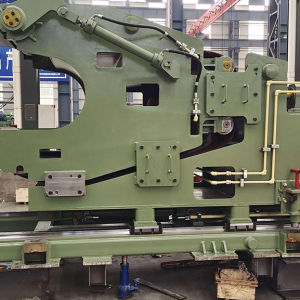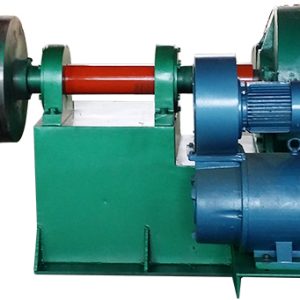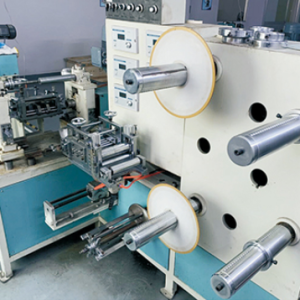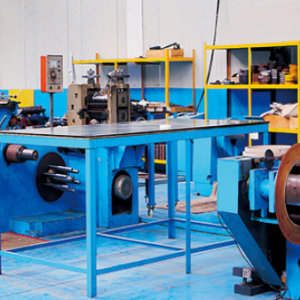

Slitting rewinding machine unit
Brand name: HANI
Packing Details : Wooden box with fumigation or Wooden Fram or Steel Frame
Delivery Details: 30~60days or Based on the quantity
Shipping: Sea freight、Land freight、Air freight
HANI focuses on cold rolling mill equipment technology, safeguarding your production.
Product Details
The slitting rewinding machine represents one of the most essential pieces of equipment in modern metal processing facilities. This comprehensive guide explores the technical specifications, operational principles, and industry applications of our premium slitting rewinding machine units designed for maximum efficiency and precision.
Introduction to Advanced Slitting Rewinding Technology
In today’s competitive metal processing industry, the demand for high-precision, efficient, and versatile equipment has never been greater. The slitting rewinding machine stands at the forefront of this technological evolution, providing manufacturers with unparalleled capabilities for processing cold-rolled steel, aluminum, copper, and specialty alloys. Developed through decades of engineering expertise, our slitting rewinding machine units deliver exceptional performance across diverse production environments.
Unlike conventional models, our advanced slitting rewinding machine incorporates state-of-the-art control systems, precision mechanics, and intelligent automation features that significantly enhance productivity while reducing operational costs. Whether you’re processing thin gauge materials or heavy industrial coils, our equipment is engineered to meet the most demanding specifications with consistent quality.
Technical Specifications and Capabilities
The engineering excellence of our slitting rewinding machine is evident in its comprehensive technical specifications. Each unit undergoes rigorous testing to ensure it meets international quality standards while providing exceptional value throughout its operational lifecycle.
| Parameter | Standard Specification | Advanced Option |
|---|---|---|
| Material Width Range | 200-1800mm | 200-2200mm |
| Material Thickness Range | 0.1-3.0mm | 0.05-4.0mm |
| Maximum Coil Weight | 25 tons | 35 tons |
| Maximum Line Speed | 300 m/min | 450 m/min |
| Slitting Accuracy | ±0.1mm | ±0.05mm |
| Edge Quality | Class B (ISO) | Class A (ISO) |
| Control System | PLC + HMI | Full Digital Twin Interface |
Comprehensive Production Line Integration
Our slitting rewinding machine is designed as part of an integrated production ecosystem rather than a standalone unit. The complete processing line follows a meticulously engineered workflow that maximizes efficiency while ensuring consistent product quality:
- Floating Type Uncoiler: Provides stable material feeding with automatic tension control and edge guiding systems to prevent material distortion during unwinding.
- Head Cutting Shear: Automatically removes damaged or irregular coil ends to ensure clean material entry into the processing line.
- Auto-Correcting System: Continuously monitors and adjusts material alignment to maintain precise centering throughout the process.
- Precision Disc Shear Station: Features quick-change tooling systems with automatic gap and overlap adjustment for different material specifications. Integrated waste edge coilers efficiently collect and compress trim waste.
- Burr Removal System: Eliminates edge imperfections through mechanical brushing or grinding processes to achieve superior edge quality.
- Multi-Roller Leveling System: Corrects material flatness through precisely controlled roller deflection systems, eliminating coil set, crossbow, and other flatness defects.
- Oil Coating System: Applies uniform protective oil film with precisely controlled dosage (0.5-3.0g/m²) to prevent corrosion during storage and transportation.
- Automatic Slitting Shear: Performs precise length cutting for customer-specific requirements.
- Dual Mandrel Turret Winder: Enables continuous operation through automatic coil transfer between winding mandrels, eliminating production downtime during coil changes.
- Digital Weighing System: Provides accurate weight measurement with ±0.1% precision and automatic data logging for quality control and inventory management.
- Automated Stepping Beam: Handles finished coils through the production line with precise positioning capabilities and collision avoidance systems.
Material Science Considerations in Slitting Operations
The successful operation of a slitting rewinding machine requires deep understanding of material science principles. Different metals and alloys exhibit unique mechanical behaviors during the slitting process that must be accounted for in equipment design and operation parameters.
For instance, high-strength low-alloy (HSLA) steels present challenges due to their work-hardening characteristics, requiring specialized tool geometry and precise clearance settings between upper and lower knives. The optimal clearance typically ranges between 5-8% of material thickness for carbon steels but may increase to 10-12% for harder materials to prevent excessive tool wear and edge deformation.
Aluminum alloys, particularly the 5xxx and 6xxx series commonly used in automotive and construction applications, require different approach due to their lower yield strength and higher ductility. The slitting rewinding machine must incorporate adaptive tension control systems to prevent material stretching or “necking” during processing. Additionally, aluminum’s tendency to generate fine particulate debris necessitates enhanced filtration systems within the machine’s hydraulic and lubrication circuits.
Copper and its alloys present their own unique challenges, particularly regarding heat generation during slitting operations. Friction at the cutting interface can raise material temperatures by 80-120°C, potentially affecting material properties if not properly managed. Our slitting rewinding machine units incorporate intelligent thermal monitoring systems that adjust process speeds and apply cooling agents when temperature thresholds are approached.
HANI engineers have developed proprietary algorithms that automatically adjust slitting parameters based on real-time material feedback, ensuring optimal edge quality while maximizing tool life across diverse material specifications.
Advanced Control Systems and Digital Integration
Modern slitting rewinding machine units have evolved far beyond mechanical processing equipment to become sophisticated data collection and analysis platforms. Our integrated control architecture combines multiple technological layers:
- Real-time Process Monitoring: Hundreds of sensors continuously track critical parameters including tension profiles, knife wear rates, vibration patterns, and dimensional accuracy.
- Predictive Maintenance Algorithms: Machine learning systems analyze operational data to predict component failures before they occur, reducing unplanned downtime by up to 40%.
- Digital Twin Technology: A virtual replica of the physical slitting rewinding machine allows operators to simulate process changes and optimize parameters before implementing them on the production floor.
- Quality Assurance Integration: Automated defect detection systems capture and categorize edge imperfections, surface scratches, and dimensional deviations, linking this data directly to specific production batches.
- Energy Management Systems: Smart power distribution optimizes energy consumption across the entire line, reducing operational costs while minimizing environmental impact.
The control interface features intuitive touchscreen operation with multi-language support and role-based access control. Operators can easily switch between automatic and manual modes, while maintenance personnel gain access to advanced diagnostic tools and component lifetime tracking systems.
Precision Engineering for Superior Edge Quality
The edge quality produced by a slitting rewinding machine directly impacts downstream processing and final product performance. Our engineering team has developed a multi-faceted approach to achieving exceptional edge characteristics:
First, the knife mounting system utilizes precision-ground arbors with runout tolerances held to less than 0.01mm. This exceptional accuracy ensures consistent knife positioning throughout the slitting process, eliminating variations that could lead to edge defects. The knife collar system features hydraulic clamping mechanisms that maintain constant pressure even during extended production runs, preventing the micro-movement that often causes edge waviness.
Second, our slitting rewinding machine incorporates adaptive tension control that adjusts in real-time based on material feedback. Traditional systems often apply fixed tension profiles that can lead to edge deformation on sensitive materials. Our dynamic approach maintains optimal tension gradients across the material width, preventing edge “whiskering” and ensuring clean, burr-free edges even on the most challenging alloys.
Third, the waste edge handling system has been completely re-engineered to prevent vibration transmission back to the main slitting head. By isolating the scrap accumulation process through specialized damping mechanisms and variable-speed edge winders, we eliminate a major source of edge quality degradation present in conventional designs.
These innovations collectively deliver edge quality that exceeds industry standards, with measurable improvements in:
- Reduction of edge burrs by 75% compared to conventional systems
- Elimination of edge camber to less than 0.3mm per meter of strip width
- Consistent edge squareness maintained at ±0.15° across all material types
- Extended knife life by 40% through optimized cutting geometry and load distribution
Frequently Asked Questions
Q: How often should slitting knives be replaced in a slitting rewinding machine?
A: Knife replacement intervals vary significantly based on material types processed, operating speeds, and maintenance practices. For standard carbon steel processing at moderate speeds (100-150 m/min), high-quality tool steel knives typically last between 50-70 tons of processed material. For harder materials like stainless steel or high-strength alloys, this may decrease to 25-40 tons. Our advanced slitting rewinding machine units feature knife wear monitoring systems that provide predictive replacement alerts based on actual cutting performance rather than fixed schedules, optimizing both quality and operational costs.
Q: What is the maximum thickness capacity for precision slitting operations?
A: The maximum thickness capacity depends on the specific configuration of your slitting rewinding machine. Our standard units handle materials up to 3.0mm thick with precision tolerances, while our heavy-duty models can process materials up to 6.0mm thick for less demanding applications. It’s important to note that as material thickness increases, maximum line speeds must be reduced to maintain edge quality. For optimal results when processing materials over 2.0mm thick, we recommend our reinforced slitting head assembly with enhanced power transmission components.
Q: How does material hardness affect slitting quality and equipment wear?
A: Material hardness directly impacts both slitting quality and equipment component life. Materials with hardness exceeding 300 HV require specialized knife geometry with reduced clearance angles and harder tool materials. Our slitting rewinding machine units can be equipped with carbide or specialized coated knife sets for processing high-hardness materials. Additionally, the machine’s drive systems must provide sufficient torque at lower speeds to prevent slippage during cutting. We’ve observed that for every 50-point increase in material hardness (measured in HV), knife life typically decreases by approximately 30%, making proper tool selection critical for cost-effective operations.
Q: What maintenance schedule is recommended for optimal performance?
A: A comprehensive maintenance program is essential for maximizing the service life and performance of your slitting rewinding machine. We recommend the following schedule:
- Daily: Visual inspection of critical components, lubrication of guide systems, verification of safety interlocks
- Weekly: Calibration of tension control systems, inspection of drive belts and chains, testing of emergency stop functions
- Monthly: Comprehensive alignment verification, hydraulic system filter replacement, electrical connection integrity checks
- Quarterly: Complete gearbox oil analysis and replacement if needed, bearing temperature monitoring system calibration, structural integrity assessment
Implementing this maintenance protocol can extend equipment service life by 40% and reduce unplanned downtime by over 60% compared to reactive maintenance approaches.
Q: Can the same slitting rewinding machine process different material types?
A: Yes, modern slitting rewinding machine units are designed for material versatility, but successful changeovers require proper procedures and sometimes tooling changes. Our machines feature quick-change tooling systems that allow operators to switch between different material types within 30-45 minutes. However, optimal performance requires adjusting multiple parameters including:
- Knife overlap and clearance settings based on material thickness and hardness
- Tension profiles for each processing section (unwinding, slitting, rewinding)
- Line speed limits appropriate for each material’s mechanical properties
- Coolant or lubrication requirements specific to material characteristics
Our advanced control systems store complete processing recipes for different materials, allowing operators to recall optimal settings with a single command. This capability makes our slitting rewinding machines ideal for job shops and facilities producing diverse product portfolios.
Environmental and Safety Considerations
Modern slitting rewinding machine design incorporates comprehensive environmental and safety features that protect both operators and the surrounding ecosystem. Noise reduction engineering maintains operational sound levels below 82 dB(A) at operator positions, significantly below industry averages. Advanced oil mist collection systems capture over 99.5% of airborne lubricants, preventing workplace contamination and environmental release.
Safety systems exceed international standards through multiple redundant protection layers:
- Light curtain protection systems with Category 4 safety rating
- Dual-channel emergency stop circuits with monitored safety relays
- Automatic power-down protocols during maintenance access
- Vibration monitoring systems that detect developing mechanical problems before they become safety hazards
- Ergonomic operator interfaces that minimize repetitive motion injuries
Energy efficiency has become increasingly important in modern manufacturing environments. Our latest slitting rewinding machine units incorporate regenerative drive systems that capture and reuse braking energy during deceleration cycles, reducing total energy consumption by up to 22% compared to conventional drive technologies. Additionally, intelligent standby modes automatically reduce power consumption during production pauses without compromising restart performance.
Conclusion: Investing in Production Excellence
Selecting the right slitting rewinding machine represents a strategic investment that directly impacts product quality, operational efficiency, and ultimately, business profitability. Our comprehensive engineering approach delivers equipment that not only meets current production requirements but also provides the flexibility to adapt to future market demands.
With service centers strategically located across global markets, HANI provides unparalleled support throughout the equipment lifecycle, from initial consultation through decades of reliable operation. Our application engineers work closely with customers to optimize machine configuration for specific production requirements, ensuring maximum return on investment.
As material science continues to evolve and manufacturing demands increase, the role of the slitting rewinding machine will only grow in importance. By partnering with experienced equipment manufacturers who understand both the technical and business aspects of metal processing, companies can position themselves for sustainable growth in an increasingly competitive global marketplace.
For detailed specifications or custom engineering consultations for your specific application requirements, our technical team stands ready to provide comprehensive support for your next slitting rewinding machine investment.
HANI is one of China’s leading professional cold rolling mill manufacturers, providing complete cold rolling systems to steel companies worldwide. HANI focuses on designing and manufacturing integrated cold rolling solutions that meet the industry’s highest standards of precision, efficiency, and durability. Our engineering expertise lies in providing turnkey cold rolling production lines to optimize the performance of modern steel manufacturing plants.