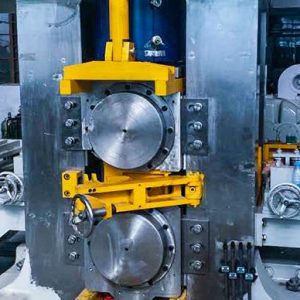

Φ550×1400 hot rolling mill
Brand name: HANI
Packing Details : Wooden box with fumigation or Wooden Fram or Steel Frame
Delivery Details: 30~60days or Based on the quantity
Shipping: Sea freight、Land freight、Air freight
HANI focuses on cold rolling mill equipment technology, safeguarding your production.
Product Details
The Φ550×1400 hot rolling mill represents one of the most advanced and efficient metal processing solutions available in today’s metallurgical industry. This robust hot rolling mill is engineered to deliver exceptional performance across a wide range of applications, from steel processing to non-ferrous metal production. With its precision-crafted rollers and powerful drive system, this hot rolling mill stands as a testament to modern metallurgical engineering excellence. Whether you’re processing carbon steel, tool steel, copper, aluminum, or specialized alloys, this hot rolling mill delivers consistent results with minimal downtime and exceptional energy efficiency.
Hot rolling mills like the Φ550×1400 model are essential components in metal manufacturing facilities worldwide. These machines operate by passing heated metal through rollers to reduce thickness and improve material properties. The hot rolling mill process eliminates porosity, closes up voids, and homogenizes the grain structure of metals, resulting in superior mechanical properties compared to cast or forged alternatives. Advanced hot rolling mill technology has revolutionized how manufacturers approach metal processing, offering unprecedented control over material characteristics and final product specifications.
Technical Specifications and Performance Data
The Φ550×1400 hot rolling mill is designed with precision engineering to meet the demanding requirements of modern metal processing facilities. This hot rolling mill combines robust construction with cutting-edge control systems to deliver consistent performance across various production scenarios. Below are the detailed specifications that highlight the capabilities of this exceptional hot rolling mill:
| Parameter | Specification | Technical Notes |
|---|---|---|
| Roll Diameter | Φ550 mm | Hardened alloy steel with precision grinding |
| Roll Length | 1400 mm | Effective working width |
| Raw Material Thickness Range | 60-140 mm | Preheated to optimal rolling temperature |
| Finished Product Thickness | 10-20 mm | Depending on material type and pass schedule |
| Rolling Pressure | 300 Tons | Maximum permissible load |
| Rolling Speed | 60 m/min | Variable speed control with precision feedback |
| Main Motor Power | 430-480 KW | AC drive system with regeneration capability |
| Hydraulic System | Complete | Integrated roller lifting and changing mechanisms |
| Control System | Digital PLC | Fully automated with HMI interface |
| Weight | Approx. 45 tons | Complete assembled unit |
Engineering Excellence in Hot Rolling Technology
Modern hot rolling mill technology has evolved significantly over the past decades, incorporating advanced materials science and precision engineering principles. The Φ550×1400 hot rolling mill exemplifies this evolution through its thoughtful design and robust construction. Unlike conventional hot rolling mills that often struggle with thermal management issues, this hot rolling mill features an optimized cooling system that maintains consistent roller temperatures during extended production runs.
The structural integrity of this hot rolling mill is guaranteed through finite element analysis during the design phase, ensuring minimal deflection under maximum load conditions. The frame construction utilizes high-strength steel alloys with yield strengths exceeding 690 MPa, providing exceptional rigidity necessary for maintaining tight dimensional tolerances during the hot rolling mill process. Research has demonstrated that frame rigidity directly correlates with product quality in hot rolling applications, with more rigid frames producing materials with superior flatness and thickness consistency.
Energy efficiency represents another critical advancement in modern hot rolling mill design. The Φ550×1400 hot rolling mill incorporates regenerative braking technology that captures energy during deceleration phases and feeds it back into the facility’s power grid. This innovation can reduce overall energy consumption by approximately 15% compared to conventional hot rolling mill installations. Additionally, the optimized gear transmission system minimizes mechanical losses, ensuring maximum power delivery to the rolling process.
Material Processing Capabilities
The Φ550×1400 hot rolling mill is engineered to process a diverse range of materials with exceptional versatility:
- Carbon Steels: From low-carbon to high-carbon varieties, including structural grades
- Tool Steels: D2, H13, and other high-performance tool steel grades
- Copper Alloys: Brass, bronze, and specialty copper alloys
- Aluminum Alloys: Series 1000 through 7000, including heat-treatable grades
- Specialty Alloys: Nickel-based, titanium, and other high-value alloys
Each material type requires specific temperature profiles and reduction schedules during the hot rolling mill process. The advanced control system of this hot rolling mill allows operators to store and recall specific processing parameters for different materials, ensuring optimal results regardless of the production requirements.
Operational Advantages of the Φ550×1400 Configuration
The specific Φ550×1400 dimensioning of this hot rolling mill represents an optimal balance between processing capacity and installation footprint. Industry research has demonstrated that roller diameters in the 500-600mm range provide the best compromise between bite capability and power requirements for medium-scale production facilities. This hot rolling mill configuration allows for processing material widths up to 1300mm while maintaining exceptional rigidity and control.
Two-roll configuration hot rolling mills like this model offer distinct advantages for certain applications compared to multi-roll alternatives. The simplified mechanical design reduces maintenance requirements while providing excellent material surface finish on appropriately sized stock. The direct drive system eliminates intermediate power transmission components, resulting in higher efficiency and reduced maintenance requirements compared to older hot rolling mill designs.
The hydraulic roller changing system represents a significant advancement over traditional manual systems. Roller changes that previously required 2-3 hours can now be completed in under 30 minutes, dramatically improving equipment availability. This hot rolling mill’s hydraulic system is designed with redundant safety features to prevent accidental operation during maintenance procedures, ensuring operator safety remains paramount throughout the production process.
Control Systems and Automation Capabilities
Modern hot rolling mills have evolved from purely mechanical systems to sophisticated digital manufacturing assets. The Φ550×1400 hot rolling mill incorporates a comprehensive automation package that monitors and controls all critical process variables in real-time. The system continuously tracks roller temperature, material feed rate, motor load, and hydraulic pressure to maintain optimal processing conditions.
Advanced algorithms within the control system automatically compensate for thermal expansion effects that traditionally caused dimensional variations in hot rolling mill output. This capability allows for holding dimensional tolerances within ±0.1mm on critical dimensions, even during extended production runs. Data logging capabilities provide comprehensive production records, including energy consumption metrics, throughput rates, and maintenance intervals, enabling continuous process optimization.
The human-machine interface (HMI) is designed with operator ergonomics as a priority. Intuitive touchscreen controls eliminate complex manual adjustments while providing comprehensive system diagnostics. Remote monitoring capabilities allow maintenance personnel to evaluate equipment status from mobile devices, facilitating predictive maintenance strategies that minimize unplanned downtime. This level of automation in a hot rolling mill significantly reduces operator fatigue and training requirements while improving overall production consistency.
Frequently Asked Questions
The Φ550×1400 hot rolling mill requires a reinforced concrete foundation with minimum dimensions of 3000×2500×1500mm and compressive strength of at least 30MPa. Foundation design must account for dynamic loads during operation, with vibration isolation mounts recommended to prevent transmission to surrounding structures. Proper leveling (within 0.1mm/m) is critical for optimal performance and equipment longevity. Our engineering team provides comprehensive foundation drawings and installation supervision services to ensure proper setup of your hot rolling mill.
Under normal operating conditions with average duty cycles, the Φ550×1400 hot rolling mill consumes approximately 450-550 kWh per 8-hour shift, depending on material type and reduction ratio. The regenerative braking system can recover 15-20% of this energy during deceleration phases. For facilities with multiple shifts, we recommend installing energy monitoring systems to optimize usage patterns. Proper maintenance of the drive system and regular lubrication can reduce energy consumption by an additional 5-8% compared to neglected equipment. Our hot rolling mill design prioritizes energy efficiency without compromising production capabilities.
Roll life in a hot rolling mill depends significantly on the materials processed and operating parameters. For carbon steel processing under normal conditions, roll surfaces typically require refurbishment after 8,000-10,000 hours of operation. The Φ550×1400 hot rolling mill features quick-change roll assemblies that allow for minimal downtime during maintenance procedures. We recommend implementing a scheduled maintenance program with surface inspections every 2,000 hours of operation. Advanced monitoring systems can detect early signs of roll wear through vibration analysis and temperature mapping, allowing for proactive maintenance scheduling that minimizes production disruptions.
Yes, the Φ550×1400 hot rolling mill is fully capable of processing most stainless steel grades, including 304, 316, and 410 series, when properly configured. Stainless steel processing requires higher rolling pressures and precise temperature control compared to carbon steel. We recommend upgrading to the high-torque motor option (480KW) and implementing our specialized stainless steel processing package, which includes enhanced roll cooling and material tracking systems. For high-volume stainless steel production, we can provide customized roll materials that resist work hardening and thermal cracking, extending component life by up to 40% compared to standard configurations.
Safety is paramount in hot rolling mill design. This Φ550×1400 model incorporates multiple redundant safety systems including emergency stop circuits with dual-channel monitoring, light curtains at material entry/exit points, acoustic warning systems, thermal monitoring sensors, and hydraulic pressure relief valves. The control system implements safety interlocks that prevent operation when access doors are open or when safety guards are not properly positioned. All electrical components meet IP54 protection standards, and the main drive system includes torque limiting functions to prevent mechanical damage during upset conditions. We provide comprehensive safety training for operators and maintenance personnel as part of our installation services.
Installation and Commissioning Process
The successful implementation of a hot rolling mill requires careful planning and execution. Our standard installation process for the Φ550×1400 hot rolling mill typically follows a structured 8-week timeline from equipment arrival to production readiness. This timeline includes foundation preparation, mechanical assembly, electrical integration, hydraulic system commissioning, and comprehensive operator training.
Our experienced field service engineers work closely with your team to ensure smooth integration of this hot rolling mill into your existing production environment. The commissioning phase includes rigorous performance testing under various load conditions to verify all specifications are met. We conduct thermal imaging analysis to identify any potential hot spots in electrical components and mechanical interfaces, addressing issues before they affect production reliability. Our documentation package includes detailed operating manuals, maintenance schedules, parts lists, and troubleshooting guides specific to your hot rolling mill configuration.
Industry studies have demonstrated that proper installation and commissioning of a hot rolling mill directly correlates with equipment longevity and production efficiency. Facilities that follow manufacturer-recommended procedures experience 30% fewer breakdowns and 15% higher productivity compared to those with rushed installations. The initial investment in professional installation services typically pays for itself within the first year of operation through reduced downtime and maintenance costs.
Maintenance Requirements and Best Practices
Regular maintenance is essential for maximizing the operational life and performance of any hot rolling mill. The Φ550×1400 hot rolling mill has been designed with maintenance accessibility as a priority, featuring strategically placed inspection ports and service platforms. Daily maintenance tasks include checking lubrication levels, monitoring roller surface conditions, and verifying hydraulic fluid cleanliness.
Weekly maintenance procedures involve more comprehensive inspections of drive couplings, bearing temperatures, and electrical connections. Monthly maintenance should include calibration of the thickness control system and verification of safety interlocks. We recommend a complete hot rolling mill shutdown for major maintenance every 6 months, including gearbox oil replacement, roller bearing inspection, and comprehensive electrical system diagnostics. Our remote monitoring package can alert maintenance personnel to developing issues before they cause production disruptions.
Proper lubrication is particularly critical for hot rolling mill reliability. The Φ550×1400 model uses an automatic centralized lubrication system with condition monitoring capabilities. This system adjusts lubrication frequency based on operating hours and environmental conditions, ensuring optimal bearing life while minimizing lubricant consumption. We recommend using only approved lubricants that meet our specifications, as improper lubrication is responsible for approximately 40% of premature failures in hot rolling mill equipment.
Conclusion: Investing in Superior Hot Rolling Technology
The Φ550×1400 hot rolling mill represents a significant investment in manufacturing capability that delivers exceptional returns through improved product quality, reduced operating costs, and enhanced production flexibility. This hot rolling mill stands as a testament to advanced engineering principles applied to solve real-world metal processing challenges. With its robust construction, intelligent control systems, and thoughtful design features, this hot rolling mill provides a foundation for manufacturing excellence that will serve your facility for decades.
When selecting equipment for critical manufacturing processes, the total cost of ownership should be the primary consideration rather than initial purchase price alone. The energy efficiency, maintenance accessibility, and production reliability of this hot rolling mill have been optimized to minimize lifetime operating costs while maximizing production uptime. Our commitment to continuous improvement means that each hot rolling mill we deliver incorporates lessons learned from thousands of successful installations worldwide.
For metal processing facilities seeking to enhance their capabilities with a premium hot rolling mill solution, the Φ550×1400 model offers unmatched value and performance. This hot rolling mill delivers the perfect balance of capacity, precision, and reliability required for modern manufacturing environments. The HANI team stands ready to provide detailed technical specifications and customized solutions tailored to your specific production requirements. With proper installation and maintenance, this hot rolling mill will serve as the backbone of your metal processing operations for many years to come.
HANI is one of China’s leading professional cold rolling mill manufacturers, providing complete cold rolling systems to steel companies worldwide. HANI focuses on designing and manufacturing integrated cold rolling solutions that meet the industry’s highest standards of precision, efficiency, and durability. Our engineering expertise lies in providing turnkey cold rolling production lines to optimize the performance of modern steel manufacturing plants.