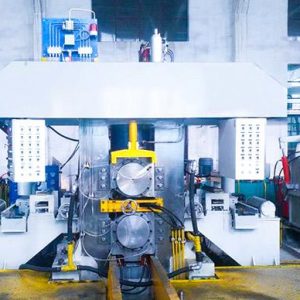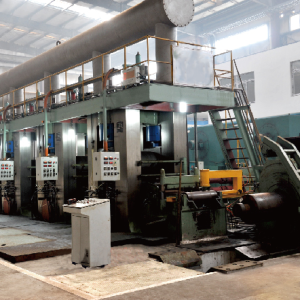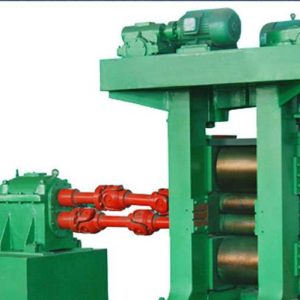

Copper strip cold rolling mill unit
Brand name: HANI
Packing Details : Wooden box with fumigation or Wooden Fram or Steel Frame
Delivery Details: 30~60days or Based on the quantity
Shipping: Sea freight、Land freight、Air freight
HANI focuses on cold rolling mill equipment technology, safeguarding your production.
Product Details
In today’s rapidly evolving manufacturing landscape, the demand for high-quality copper and copper alloy strips continues to surge across diverse industries. From electrical components and automotive parts to consumer electronics and renewable energy systems, precision copper strip products serve as indispensable materials in modern technological applications. HANI proudly presents advanced cold rolling mill solutions engineered specifically for copper strip production that meet the most stringent industry standards.
A modern cold rolling mill represents the cornerstone of efficient copper processing facilities. The cold rolling mill process involves reducing the thickness of copper materials at temperatures below their recrystallization point, resulting in enhanced mechanical properties, superior surface finish, and precise dimensional control. This cold rolling mill technology has evolved significantly over decades, incorporating sophisticated automation systems and precision engineering to deliver exceptional product quality consistently.
Technical Capabilities and Configurations
Our copper strip cold rolling mill units are available in multiple configurations to accommodate varying production requirements:
- 4-High reversible cold rolling mill systems
- 6-High reversible cold rolling mill equipment
- 18-High reversible cold rolling mill setups
- 20-High reversible cold rolling mill configurations
- Continuous tandem cold rolling mill lines
Each cold rolling mill configuration offers distinct advantages for specific production scenarios. The selection of an appropriate cold rolling mill design depends on factors including required output volume, material specifications, thickness reduction requirements, and desired surface characteristics.
Performance Specifications
| Parameter | Range/Specification | Technical Details |
|---|---|---|
| Material Compatibility | Copper, Brass, Bronze, Cupronickel | Various copper alloys with different compositions |
| Incoming Thickness | 1.0-15.0 mm | Depending on mill configuration |
| Final Thickness | 0.05-3.0 mm | Precision control to ±1-2μm |
| Width Range | 100-1300 mm | Customizable based on requirements |
| Rolling Speed | Up to 1200 m/min | Variable speed control |
| Reduction Ratio | Up to 95% | Multi-pass capability |
| Crown Control | ±3μm | Advanced shape control systems |
| Surface Finish | 0.1-0.4 μm Ra | Mirror finish capabilities |
| Tension Control | ±0.5% accuracy | Closed-loop tension management |
A properly engineered cold rolling mill delivers exceptional performance metrics that directly impact product quality and production efficiency. The cold rolling mill equipment incorporates state-of-the-art AGC (Automatic Gauge Control) systems that maintain thickness tolerances within microns across the entire strip length. This precision is critical for applications in electrical and electronic industries where consistent conductivity and dimensional accuracy are paramount.
Advanced Control Systems
Modern cold rolling mill installations feature integrated automation systems that monitor and adjust multiple parameters simultaneously. These systems incorporate:
- Real-time thickness measurement with X-ray or isotope gauges
- Advanced flatness control algorithms
- Temperature monitoring and compensation systems
- Oil film bearing technology for minimal friction
- Hydraulic screw-down systems with millisecond response times
- Predictive maintenance capabilities through vibration analysis
The heart of an efficient cold rolling mill operation lies in its control architecture. By implementing machine learning algorithms and artificial intelligence, today’s cold rolling mill systems can self-optimize rolling parameters based on material characteristics and production requirements. This technological advancement significantly reduces setup times and improves yield rates.
Production Efficiency Considerations
When evaluating a cold rolling mill investment, production managers must consider several operational factors:
- Energy consumption: Modern cold rolling mill designs incorporate regenerative braking systems that capture energy during deceleration phases, reducing overall power requirements by up to 15%.
- Roll changing systems: Quick-change roll cassettes can reduce downtime by 70% compared to conventional roll changing methods, directly impacting production capacity.
- Coolant management: Advanced filtration and temperature control systems extend coolant life and maintain consistent lubrication properties, essential for surface quality in copper strip production.
- Scalability: Modular cold rolling mill designs allow for future capacity expansion without complete system replacement, protecting capital investment.
Scientific research has demonstrated that optimal cold rolling parameters for copper alloys typically involve reduction ratios between 10-30% per pass with appropriate interpass annealing for certain alloys. These parameters, when precisely controlled in a modern cold rolling mill, produce strips with superior mechanical properties and electrical conductivity.
Case Study: High-Performance Copper Strip Production
A recent installation of a 500 MKW eight-roll AGC cold rolling mill unit demonstrates the capabilities of modern cold rolling technology. This particular cold rolling mill processes various copper alloys including brass and bronze to final thicknesses as thin as 0.08mm with exceptional dimensional accuracy.
Key performance metrics from this installation include:
- Production capacity: 12,000 tons annually
- Thickness tolerance: ±1.5μm
- Flatness: <3 I-units
- Surface roughness: 0.2μm Ra
- Material yield improvement: 4.2% compared to previous equipment
This cold rolling mill system features advanced shape control capabilities that automatically compensate for thermal expansion effects during extended production runs. The integration of IoT sensors throughout the cold rolling mill provides operators with real-time performance data and predictive maintenance alerts, minimizing unplanned downtime.
Material Science Considerations
The metallurgical aspects of copper cold rolling require specialized equipment design. During the cold rolling mill process, copper alloys undergo significant microstructural changes that affect their final properties. Work hardening increases strength but reduces ductility, requiring careful process control to achieve the desired balance of properties.
Research published in the Journal of Materials Processing Technology confirms that the rolling speed in a cold rolling mill directly impacts the recrystallization behavior of copper alloys during subsequent annealing processes. Optimal cold rolling mill parameters must account for these metallurgical factors to produce strips with consistent properties throughout the coil length.
Frequently Asked Questions
Q: What is the typical lifespan of rolls in a copper cold rolling mill? A: Roll life varies based on material, reduction ratio, and maintenance practices. In copper applications, work rolls typically last 500-2,000 tons of processed material before requiring regrinding. Back-up rolls may last 5-10 times longer. Proper roll management programs can extend roll life by up to 30%.
Q: How does rolling speed affect surface quality in copper strip production? A: Higher rolling speeds generally increase productivity but require precise control systems to maintain surface quality. Modern cold rolling mill designs incorporate advanced vibration dampening and chatter prevention systems that maintain surface finish even at maximum speeds.
Q: What maintenance schedule is recommended for a cold rolling mill? A: Daily visual inspections, weekly lubrication checks, monthly calibration of measurement systems, and quarterly comprehensive maintenance are standard recommendations. Advanced cold rolling mill systems with condition monitoring can extend these intervals based on actual equipment condition data.
Q: Can one cold rolling mill process both copper and copper alloys? A: Yes, properly designed cold rolling mills can process various copper alloys by adjusting rolling parameters and roll configurations. However, dedicated setups for specific alloys typically yield optimal results in high-volume production environments.
Q: What is the energy consumption of a typical copper cold rolling mill? A: Energy consumption varies by configuration and capacity, typically ranging from 80-150 kWh per ton of processed material. Modern energy recovery systems can reduce this figure by 10-15% through regenerative braking and heat recovery technologies.
Why Choose HANI Cold Rolling Solutions?
HANI has established itself as an industry leader in cold rolling mill technology through continuous innovation and deep metallurgical expertise. Our cold rolling mill systems incorporate decades of practical experience combined with cutting-edge engineering to deliver exceptional performance and reliability.
The primary advantage of a HANI cold rolling mill lies in its adaptability to evolving market requirements. As product specifications become increasingly demanding, our cold rolling mill designs feature modular architecture that allows for technological upgrades without complete system replacement. This future-proof approach protects your capital investment while ensuring continued competitiveness.
When evaluating cold rolling mill options, consider the total cost of ownership rather than initial purchase price alone. A properly engineered cold rolling mill from HANI delivers superior yield rates, reduced energy consumption, minimal maintenance requirements, and extended equipment life—factors that significantly impact long-term profitability.
For copper strip producers seeking to enhance their competitive position through technological advancement, a modern cold rolling mill represents not merely equipment but a strategic production asset. The precision, efficiency, and flexibility of today’s cold rolling mill technology enable manufacturers to produce high-value copper strip products that command premium market pricing.
Contact our engineering team today to discuss how our cold rolling mill solutions can be optimized for your specific production requirements and material specifications. Our commitment to excellence in cold rolling mill design and implementation continues to drive industry advancement worldwide.
HANI is one of China’s leading professional cold rolling mill manufacturers, providing complete cold rolling systems to steel companies worldwide. HANI focuses on designing and manufacturing integrated cold rolling solutions that meet the industry’s highest standards of precision, efficiency, and durability. Our engineering expertise lies in providing turnkey cold rolling production lines to optimize the performance of modern steel manufacturing plants.