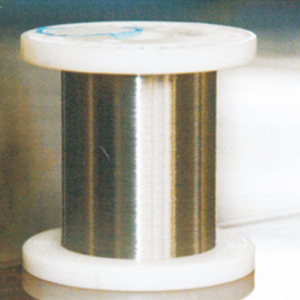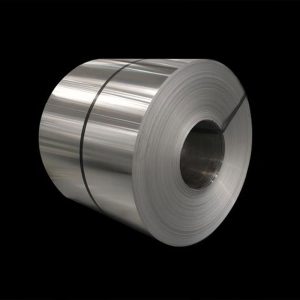


Cold Rolling Copper
Brand name: HANI
Packing Details : Wooden box with fumigation or Wooden Fram or Steel Frame
Delivery Details: 30~60days or Based on the quantity
Shipping: Sea freight、Land freight、Air freight
HANI focuses on cold rolling mill equipment technology, safeguarding your production.
Product Details
Cold rolling copper is a transformative metalworking process that enhances the mechanical properties, surface finish, and dimensional accuracy of copper and its alloys. Unlike hot rolling, which involves heating the metal above its recrystallization temperature, cold rolling occurs at ambient temperatures, enabling the production of ultra-thin foils, high-strength strips, and precision-engineered components. This article provides an exhaustive exploration of cold-rolled copper, covering production methods, industrial applications, material properties, market trends, and emerging innovations.
1. Production Processes of Cold-Rolled Copper
Cold rolling copper involves several specialized techniques, each optimized for specific thickness ranges, alloy compositions, and end-use requirements. Below is a detailed breakdown of the primary methods used in modern manufacturing:
1.1 Two-Roll and Three-Roll Cold Rolling Mills
These mills are the workhorses of copper processing, suitable for medium-thickness strips (0.1–10 mm) and rods.
- Two-Roll Mills:
- Function: Basic shaping and thickness reduction via two counter-rotating rolls.
- Alloys: Standard-grade copper alloys like copper-magnesium (CuMg), copper-tin (CuSn), and copper-silver (CuAg).
- Applications: Electrical connectors, automotive parts, and architectural trim.
- Advantages: Cost-effective, simple operation, and low maintenance.
- Limitations: Limited control over edge quality and thickness uniformity.
- Three-Roll Mills:
- Function: Adds a third roll to improve precision and reduce edge defects.
- Alloys: High-purity copper (99.99%) and beryllium copper (CuBe).
- Applications: Aerospace components, medical devices, and high-end electrical contacts.
- Advantages: Superior surface finish and tighter tolerances.
- Limitations: Higher initial investment compared to two-roll mills.
1.2 Cluster Mills (6-High, 10-High, 20-High)
Cluster mills are advanced systems designed for ultra-thin copper foils (≤0.05 mm) and high-strength alloys.
- 6-High Mills:
- Function: Uses six rolls (two work rolls, four backup rolls) to distribute pressure evenly.
- Alloys: Oxygen-free copper (OFC), copper-zinc (CuZn), and nickel-copper (CuNi).
- Applications: Printed circuit board (PCB) substrates, lithium-ion battery anodes, and flexible electronics.
- Advantages: Balances cost and performance for medium-volume production.
- 20-High Mills:
- Function: Employs 20 rolls (including intermediate and backup rolls) for nanoscale precision.
- Alloys: High-purity copper (99.999%) and copper-titanium (CuTi).
- Applications: Semiconductor shielding, superconducting magnets, and microelectromechanical systems (MEMS).
- Advantages: Achieves thickness tolerances as tight as ±0.0001 mm.
- Limitations: Extremely high capital and operational costs.
1.3 Continuous Cold Rolling Lines
Integrated production lines combine casting, rolling, annealing, and slitting in a single automated process, maximizing efficiency for high-volume manufacturing.
- Key Components:
- Casting: Direct-chill casting produces slabs or strips with minimal segregation.
- Rolling: Multi-stand mills reduce thickness in stages (e.g., from 20 mm to 0.1 mm).
- Annealing: Continuous furnaces soften the metal via controlled heating and cooling.
- Slitting: Final product is cut into customer-specified widths.
- Alloys: Oxygen-free electronic (OFE) copper, tellurium copper (CuTe), and chromium-zirconium copper (CuCrZr).
- Applications: Heat exchangers, cable shielding, and automotive radiators.
- Advantages: High throughput (up to 100 tons/hour), consistent quality, and reduced labor costs.
1.4 Specialized Rolling Techniques
- Skin-Pass Rolling: Light reduction (1–5%) improves surface finish and flatness for decorative applications.
- Temper Rolling: Controlled deformation adjusts mechanical properties (e.g., increasing yield strength for spring-like behavior).
- Pack Rolling: Multiple layers of copper are rolled simultaneously to produce clad materials for bimetallic components.
Table 1: Comparison of Cold Rolling Techniques
| Method | Thickness Range | Key Alloys | Applications | Advantages | Limitations |
|---|---|---|---|---|---|
| Two-Roll Mills | 0.1–10 mm | CuMg, CuSn, CuAg | Electrical connectors, automotive parts | Low cost, simple operation | Limited precision |
| Three-Roll Mills | 0.05–5 mm | High-purity Cu, CuBe | Aerospace, medical devices | Superior edge quality | Higher initial investment |
| 6-High Mills | 0.001–0.1 mm | OFC, CuZn, CuNi | PCBs, battery anodes | Balanced cost/performance | Moderate throughput |
| 20-High Mills | 0.0001–0.01 mm | High-purity Cu, CuTi | Semiconductors, MEMS | Ultra-precision | Extremely high cost |
| Continuous Lines | 0.05–5 mm | OFE Cu, CuCrZr | Heat exchangers, cable shielding | High throughput, consistent quality | Requires large floor space |
2. Applications of Cold-Rolled Copper
Cold-rolled copper’s exceptional conductivity, ductility, and corrosion resistance make it indispensable across industries:
2.1 Electronics and Electrical Engineering
- Printed Circuit Boards (PCBs):
- Ultra-thin copper foils (1–35 μm) serve as conductive layers in high-speed data transmission systems.
- Example: 5G base stations use 4–6 μm foils to minimize signal loss.
- Electrical Connectors:
- Cold-rolled H04-temper copper (tensile strength: 76 ksi) ensures reliable contact in automotive and aerospace connectors.
- Example: Tesla’s EV connectors use CuAg alloys for high-temperature stability.
- Cable Shielding:
- Thin copper strips (0.05–0.5 mm) shield cables from electromagnetic interference (EMI) in 5G infrastructure and medical imaging equipment.
2.2 Renewable Energy
- Solar Panels:
- Cold-rolled copper sheets (0.1–0.3 mm) dissipate heat in photovoltaic cells, improving efficiency by up to 5%.
- Example: First Solar’s CdTe panels use copper-backed modules for thermal management.
- Wind Turbines:
- High-strength copper alloys (e.g., CuNi) in generator coils withstand extreme mechanical stress and corrosion in offshore environments.
- Energy Storage:
- Lithium-ion battery anodes use cold-rolled copper foil (6–20 μm) for enhanced energy density.
- Example: CATL’s 4680 battery cells employ 6 μm copper foil to reduce weight and cost.
2.3 Automotive and Aerospace
- Heat Exchangers:
- Cold-rolled copper tubes (2–10 mm) optimize thermal transfer in radiators, HVAC systems, and EV battery coolers.
- Example: Denso’s automotive radiators use CuCrZr tubes for durability.
- Lightweight Components:
- CuZn alloys rolled to 0.2–1 mm reduce weight in EV battery casings and electric motor housings.
- Aerospace:
- Beryllium copper (CuBe) strips (0.1–2 mm) are used in satellite components for their non-magnetic properties and high strength.
2.4 Architecture and Construction
- Cladding and Roofing:
- Pre-patinated cold-rolled copper sheets (16–32 oz/sq.ft) offer aesthetic durability for façades and historical restorations.
- Example: The Statue of Liberty’s copper cladding has lasted over 130 years due to its natural patina.
- Decorative Elements:
- Tin-zinc-coated copper (e.g., Revere FreedomGray™) resists corrosion in coastal environments, making it ideal for architectural accents.
2.5 Medical and Industrial Applications
- Medical Devices:
- Cold-rolled copper’s antimicrobial properties make it suitable for hospital surfaces, catheters, and MRI components.
- Industrial Machinery:
- Copper-nickel (CuNi) strips (0.5–3 mm) are used in heat exchangers for chemical processing and marine applications.
Table 2: Cold-Rolled Copper Tempers and Properties
| Temper Designation | Nominal Reduction (%) | Tensile Strength (ksi) | Yield Strength (0.5% Ext., ksi) | Elongation (2.0 in, %) | Applications |
|---|---|---|---|---|---|
| H01 (¼ Hard) | 11 | 54 | 40 | 43 | Architectural cladding |
| H02 (½ Hard) | 21 | 62 | 50 | 23 | Electrical connectors |
| H04 (Hard) | 37 | 76 | 60 | 8 | Heat exchangers |
| H06 (Extra Hard) | 50 | 86 | 62 | 5 | Battery anodes |
| H08 (Spring Temper) | 65 | 95 | 70 | 3 | Automotive springs |
3. Advantages of Cold Rolling Over Hot Rolling
- Surface Finish: Cold rolling produces a smoother, oxide-free surface, reducing post-processing costs (e.g., polishing or pickling).
- Dimensional Accuracy: Tolerances as tight as ±0.001 mm are achievable, critical for microelectronics and precision engineering.
- Mechanical Strength: Work hardening increases tensile strength by up to 300% compared to annealed copper, eliminating the need for additional heat treatment.
- Energy Efficiency: Cold rolling consumes 40% less energy than hot rolling for equivalent output, lowering carbon footprints.
- Material Utilization: Narrower thickness tolerances minimize scrap rates, improving yield and profitability.
4. Market Trends and Innovations
The global cold-rolled copper market is projected to grow at a CAGR of 5.2% through 2030, driven by demand for EVs, 5G infrastructure, and renewable energy. Key innovations include:
4.1 AI-Optimized Rolling Mills
- Primetals Technologies’ 20-high mills use machine learning to adjust roll gaps in real time, minimizing waste and improving thickness uniformity.
- Example: A Japanese steelmaker reduced material waste by 15% using AI-driven mill controls.
4.2 Eco-Friendly Lubricants
- Water-based lubricants and biodegradable oils reduce environmental impact without compromising surface quality.
- Example: Fuchs Lubritech’s Renolin COPPER series extends roll life while cutting lubricant use by 30%.
4.3 Hybrid Alloys
- Cu-Ag alloys with silver nanoparticles enhance conductivity for high-frequency applications like 5G antennas.
- Example: Samsung’s 5G smartphones use Cu-Ag foils to reduce signal loss.
4.4 Additive Manufacturing Integration
- Cold-rolled copper is increasingly used as a substrate for 3D-printed electronic components, enabling complex geometries impossible with traditional methods.
5. Challenges and Future Outlook
Despite its advantages, cold rolling copper faces challenges:
- High Capital Costs: 20-high mills and continuous lines require investments exceeding $50 million.
- Material Limitations: Extremely thin foils (<1 μm) are prone to wrinkling and require specialized handling.
- Supply Chain Volatility: Copper prices surged by 80% in 2021–2022, squeezing margins for manufacturers.
However, advancements in recycling technologies (e.g., urban mining) and alloy development (e.g., copper-graphene composites) are expected to mitigate these issues. By 2030, cold-rolled copper will likely dominate high-precision applications in EVs, AI data centers, and quantum computing.
Conclusion
Cold rolling copper is a cornerstone of modern industry, enabling technologies that define the 21st century. From ultra-thin foils for batteries to robust strips for heat exchangers, its versatility and performance are unmatched. As manufacturers adopt smarter, greener technologies, cold-rolled copper will remain at the forefront of material innovation, driving progress in electronics, energy, and beyond.
HANI is one of China’s leading professional cold rolling mill manufacturers, providing complete cold rolling systems to steel companies worldwide. HANI focuses on designing and manufacturing integrated cold rolling solutions that meet the industry’s highest standards of precision, efficiency, and durability. Our engineering expertise lies in providing turnkey cold rolling production lines to optimize the performance of modern steel manufacturing plants.