
Stainless steel reversible rolling mill
Brand name: HANI
Packing Details : Wooden box with fumigation or Wooden Fram or Steel Frame
Delivery Details: 30~60days or Based on the quantity
Shipping: Sea freight、Land freight、Air freight
HANI focuses on cold rolling mill equipment technology, safeguarding your production.
Product Details
In the ever-evolving landscape of stainless steel processing, the reversing rolling mill stands as a cornerstone technology for producers seeking flexibility, precision, and cost-efficiency. Designed to meet the demands of small-to-medium batch production and multi-specification product lines, the stainless steel reversible rolling mill offers an optimal balance between performance, investment, and operational simplicity. This comprehensive guide explores the engineering principles, technical capabilities, application scenarios, and strategic advantages of modern reversing rolling mills, with insights drawn from industry leaders like HANI and real-world implementations such as those by Wuxi Nanbao Machinery.
What Is a Reversing Rolling Mill?
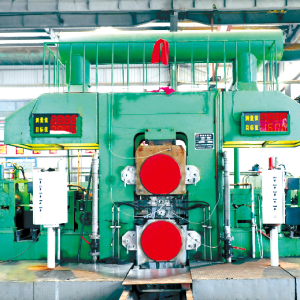
A reversing rolling mill is a single-stand cold rolling system in which the metal strip passes back and forth through the same set of work rolls multiple times, reducing thickness incrementally with each pass. Unlike tandem (continuous) mills that process the strip in one direction through multiple stands, a reversing mill allows bidirectional operation—forward and backward—enabling precise control over reduction schedules, surface finish, and mechanical properties.
This configuration is particularly well-suited for stainless steel, which often requires careful management of work hardening, surface integrity, and dimensional tolerances. The stainless steel reversible rolling mill excels in environments where product variety, frequent grade changes, or limited annual tonnage make high-capacity continuous lines economically unfeasible.
Core Advantages of Stainless Steel Reversible Rolling Mills
- Production Flexibility
Ideal for small batches and frequent product changes. Operators can adjust rolling parameters (speed, tension, roll gap, lubrication) between passes to accommodate different grades (e.g., 304, 316L, 430) and thickness targets (from 0.3 mm to 6.0 mm). - Lower Capital Investment
Compared to 20-high Sendzimir mills or tandem lines, a reversing rolling mill requires significantly less upfront capital—often 30–50% lower—making it accessible to emerging producers or specialty processors. - High Surface Quality
Equipped with advanced roll contour control systems (e.g., hydraulic bending, intermediate roll shifting), modern reversing mills achieve surface finishes down to Ra ≤ 0.05 µm, meeting stringent requirements for decorative, medical, or food-grade stainless applications. - Precision Thickness Control
Integrated Automatic Gauge Control (AGC) systems use hydraulic screw-downs and X-ray gauges to maintain thickness tolerances within ±3 µm—critical for high-value applications like battery foils or transformer cores. - Simplified Maintenance & Operation
With fewer moving parts than multi-stand systems, reversing rolling mills reduce downtime and spare parts inventory. Their modular design also facilitates upgrades (e.g., adding edge trimmers or offline slitting). - Energy Efficiency
Bidirectional rolling minimizes idle time and optimizes motor usage. Regenerative drives recover braking energy during deceleration, lowering overall power consumption by up to 15%.
Technical Configurations: 4-High vs. 8-High Reversing Mills
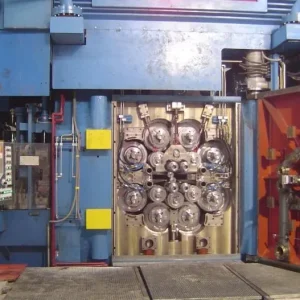
Wuxi Nanbao and other leading manufacturers offer two primary configurations for stainless steel reversible rolling mills: 4-high and 8-high (or “offset 8-high”) designs. Each serves distinct production needs.
| Feature | 4-High Reversing Mill | 8-High (Offset) Reversing Mill |
|---|---|---|
| Roll Stack | 2 work rolls + 2 backup rolls | 2 work rolls + 2 intermediate rolls + 4 backup rolls |
| Max Reduction per Pass | ~30% | ~45% |
| Min. Exit Thickness | ~0.3 mm | ~0.1 mm |
| Strip Width Range | 300–1600 mm | 200–1250 mm |
| Best For | General-purpose cold rolling (0.5–6.0 mm) | Ultra-thin, high-precision strips (<0.5 mm) |
| Shape Control | Basic bending cylinders | Advanced roll bending + intermediate roll shifting |
| Investment Cost | Lower | Moderate to high |
The 8-high reversible mill mimics the stiffness and shape control of 20-high mills but at a fraction of the cost and complexity. Its offset backup roll arrangement provides superior rigidity, minimizing deflection during high-reduction passes—essential for narrow, thin stainless strips used in electronics or aerospace.
HANI, a trusted name in metallurgical equipment, has successfully deployed both 4-high and 8-high reversing rolling mills across Asia and Europe, emphasizing reliability and operator-friendly automation.
Key Components & Systems
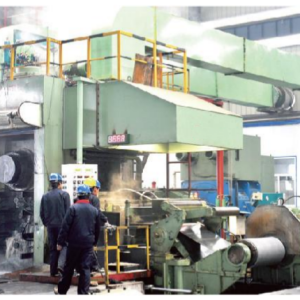
A modern stainless steel reversible rolling mill integrates several critical subsystems:
- Main Drive System: AC vector-controlled motors (500–5000 kW) with regenerative braking.
- Hydraulic AGC: Real-time roll gap adjustment via servo valves and position sensors.
- Tension Reels: Dual coilers with dancer arms or load cells for precise tension control (±1% accuracy).
- Coolant & Lubrication: High-pressure emulsion systems (up to 20 bar) with filtration down to 5 µm.
- Automation Suite: PLC-based control (Siemens or Rockwell) with HMI for recipe management, data logging, and remote diagnostics.
- Safety Systems: Light curtains, emergency stops, and interlocked access panels compliant with ISO 13849.
Optional add-ons include:
- Offline skin-pass capability
- Edge trimming units
- Surface inspection cameras (for defect detection)
- Coil weighing and labeling stations
Production Workflow Example
Consider a typical production run for 304 stainless steel, starting from a 3.0 mm hot-rolled annealed and pickled (HRAP) coil to a final 0.5 mm cold-rolled product:
- Uncoiling & Welding: Feed HRAP coil into entry payoff; weld to tail of previous coil if needed.
- First Pass (Forward): Reduce to 2.1 mm with 30% reduction; apply emulsion coolant.
- Second Pass (Reverse): Reduce to 1.5 mm; activate work roll bending for flatness control.
- Intermediate Annealing (optional): If total reduction exceeds 70%, send to batch annealing furnace.
- Final Passes: Achieve 0.5 mm in 3–4 additional reversals, using AGC to hold ±2 µm tolerance.
- Recoiling: Wind finished strip under controlled tension to prevent telescoping.
- Inspection & Packaging: Check surface, measure thickness profile, and wrap for shipment.
Total cycle time: ~45–60 minutes per coil (depending on width and reductions).
Why Choose a Reversing Mill Over Alternatives?
| Scenario | Best Choice | Reason |
|---|---|---|
| Annual capacity < 50,000 tons | Reversing rolling mill | Lower CAPEX, flexible scheduling |
| Product mix: 10+ grades/thicknesses | Reversing rolling mill | Quick changeovers, no threading losses |
| Target thickness: 0.05–0.3 mm | 20-high mill | Superior shape control |
| High-volume commodity grades | Tandem mill | Max throughput (>1000 m/min) |
For most specialty stainless producers, the reversing rolling mill delivers the best ROI without sacrificing quality.
Performance Metrics & Industry Benchmarks
Based on installations by Wuxi Nanbao and HANI, typical performance indicators include:
- Thickness Accuracy: ±(2–5) µm
- Flatness: ≤10 I-Units (with shape control)
- Surface Roughness: Ra = 0.02–0.2 µm (adjustable via roll texture)
- Yield Rate: >96% (including edge trim loss)
- Availability: >90% with preventive maintenance
These figures align with ASTM A666 and EN 10088 standards for cold-rolled stainless steel.
FAQ: Frequently Asked Questions
Q1: How many passes are typically needed in a reversing mill?
A: It depends on the starting thickness and material. For 304 stainless, going from 3.0 mm to 0.5 mm usually requires 4–6 passes. Harder grades like 17-4PH may need intermediate annealing after 2–3 passes.
Q2: Can a reversing mill produce both bright-annealed and matte finishes?
A: Yes. The surface finish is primarily determined by the work roll roughness (grit-blasted, polished, or textured). A reversing rolling mill can switch finishes by changing rolls or adjusting roll force/lubrication.
Q3: What’s the maximum speed of a modern reversing mill?
A: Entry/exit speeds range from 300 to 800 m/min. However, actual rolling speed varies per pass—slower for heavy reductions, faster for finishing passes.
Q4: Is automation necessary?
A: Highly recommended. Automated reversing rolling mills reduce human error, improve repeatability, and enable data-driven process optimization. HANI’s systems include AI-assisted setup prediction based on material databases.
Q5: Can carbon steel and stainless be rolled on the same mill?
A: Technically yes, but not advisable without thorough cleaning. Cross-contamination risks rust staining on stainless. Dedicated lines are preferred.
Q6: What’s the lifespan of a reversing mill?
A: With proper maintenance, 20–30 years. Key wear items (bearings, seals, roll chocks) are designed for easy replacement.
Strategic Value for Producers
Investing in a stainless steel reversible rolling mill isn’t just about equipment—it’s a strategic enabler. It allows:
- Rapid response to niche market demands (e.g., EV battery housings, medical tubing)
- In-house control over quality and lead times
- Reduced dependency on third-party toll processors
- Scalability: Start with one mill, add another as volume grows
Companies like HANI support clients with full lifecycle services—from feasibility studies and layout design to commissioning and operator training—ensuring smooth integration into existing workflows.
Conclusion
The reversing rolling mill remains an indispensable asset in the stainless steel value chain. Its blend of adaptability, precision, and economic efficiency makes it the go-to solution for producers targeting high-mix, low-to-medium volume markets. Whether you opt for a robust 4-high model or a high-precision 8-high variant, modern reversing mills—backed by engineering excellence from firms like Wuxi Nanbao and HANI—deliver consistent, competitive results.
As global demand for customized stainless products grows, the reversing rolling mill will continue to empower manufacturers to innovate, differentiate, and thrive.
HANI is one of China’s leading professional cold rolling mill manufacturers, providing complete cold rolling systems to steel companies worldwide. HANI focuses on designing and manufacturing integrated cold rolling solutions that meet the industry’s highest standards of precision, efficiency, and durability. Our engineering expertise lies in providing turnkey cold rolling production lines to optimize the performance of modern steel manufacturing plants.