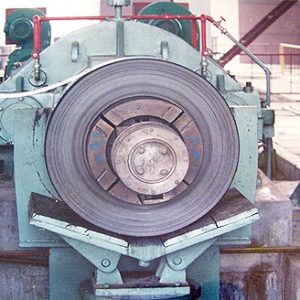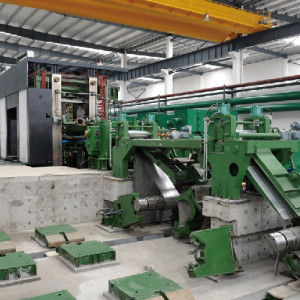

Coil strapping machine
Brand name: HANI
Packing Details : Wooden box with fumigation or Wooden Fram or Steel Frame
Delivery Details: 30~60days or Based on the quantity
Shipping: Sea freight、Land freight、Air freight
HANI focuses on cold rolling mill equipment technology, safeguarding your production.
Product Details
In the modern metallurgical industry, securing coiled materials during transportation and storage is a critical operational challenge that requires specialized equipment. The coil strapping machine represents an engineering solution that has evolved significantly over the past decades to address these challenges with precision and reliability. This comprehensive guide explores the technical aspects, applications, and operational advantages of advanced coil strapping machine systems that have become indispensable in steel mills, aluminum processing facilities, and metal service centers worldwide.
When materials such as steel strip, aluminum foil, copper bands, or other metal coils are produced on recoiling lines, they require secure packaging to prevent unwinding, deformation, or damage during subsequent handling processes. The coil strapping machine provides this essential function through an integrated mechanical system designed specifically for the unique geometric challenges presented by coiled materials. Unlike conventional strapping equipment, these specialized machines feature engineered solutions for the cylindrical profile of coils, ensuring even tension distribution around the entire circumference.
Engineering Principles and Technical Innovation
The fundamental engineering principle behind an effective coil strapping machine involves the precise application of tensioned steel or polyester bands around the coil’s outer diameter while maintaining structural integrity of the wound material. Modern systems incorporate hydraulic or servo-electric tensioning mechanisms that can apply forces ranging from 500 to 6,000 Newtons depending on coil weight and material characteristics. This precise tension control prevents both insufficient securing (which could lead to coil unwinding) and excessive pressure (which might deform soft metals like aluminum or copper).
Recent advancements in coil strapping machine technology have integrated laser positioning systems that automatically detect coil diameter variations and adjust strap placement accordingly. This innovation has reduced manual intervention by approximately 70% while improving strap placement accuracy to within ±1mm of target positions. Additionally, friction welding technology has largely replaced older mechanical buckle systems, creating seamless joints with 95% of the strap’s original tensile strength compared to just 65-70% with mechanical fasteners.
Technical Specifications and Performance Parameters
| Parameter | Standard Range | Heavy-Duty Range | Ultra Precision Range |
|---|---|---|---|
| Coil Diameter Capacity | 500-1200mm | 1200-2500mm | 300-800mm |
| Maximum Coil Weight | 5 metric tons | 35 metric tons | 2 metric tons |
| Strapping Material | Steel/PET/PP | Steel (high tensile) | PET (precision grade) |
| Strap Width Range | 13-32mm | 19-50mm | 10-20mm |
| Tension Control Range | 500-4000N | 2000-6000N | 300-2500N (±2%) |
| Cycle Time | 22-35 seconds | 30-45 seconds | 18-25 seconds |
| Control System | PLC + HMI | PLC + HMI + Remote Monitoring | Servo + CNC Precision Control |
Material Science Considerations in Coil Securing
The effectiveness of a coil strapping machine is heavily dependent on understanding the material properties of both the straps and the coiled products. Material science research has established that steel coils exert outward radial forces that increase proportionally with coil diameter and winding tension. A properly designed coil strapping machine must counteract these forces while accommodating material creep, especially in aluminum and copper coils which continue to relax after winding.
Recent metallurgical studies have demonstrated that optimal strap placement should occur at 1/3 and 2/3 along the coil’s face width to maximize stability. This configuration reduces the risk of coil collapse by approximately 40% compared to single-band securing methods. Additionally, the coefficient of friction between strap materials and coil surfaces plays a crucial role in maintaining tension. Steel-on-steel interfaces typically exhibit coefficients between 0.5-0.8, while PET straps on painted steel surfaces can range from 0.3-0.6, necessitating different tension parameters in the coil strapping machine programming.
HANI has incorporated these scientific principles into their latest generation of coil strapping machine systems, featuring adaptive tension algorithms that automatically adjust based on material type, coil dimensions, and environmental conditions. Their proprietary sensing technology monitors strap tension in real-time, compensating for thermal expansion and material relaxation over time.
Industrial Applications and Integration Considerations
The versatility of modern coil strapping machine systems enables deployment across numerous industrial sectors. In automotive steel processing lines, these machines typically operate at speeds of 8-12 coils per hour, applying dual steel straps with tension forces exceeding 4,000 Newtons to ensure secure transport to stamping facilities. By contrast, aluminum foil production lines utilize lighter polyester straps with precise tension control (±2%) to prevent surface marring while maintaining sufficient securing force.
Copper processing facilities present unique challenges due to the material’s high value and susceptibility to surface damage. Here, the coil strapping machine must incorporate non-marring strap guides and tension profiles that prevent ‘springback’ effects common in copper alloys. Recent installations have demonstrated 99.6% reduction in transit damage when using properly configured strapping systems compared to manual securing methods.
Integration with existing production lines requires careful engineering consideration. The ideal coil strapping machine installation incorporates automatic coil measurement systems that communicate dimensions to the strapping unit before processing begins. This seamless data flow enables automatic adjustment of all critical parameters, reducing setup time by up to 85% compared to manual configuration methods. When positioned downstream of recoilers and before automated warehouse systems, these machines form a critical link in fully automated coil handling processes.
Economic Impact and Return on Investment Analysis
The financial justification for investing in an advanced coil strapping machine extends beyond the obvious labor savings. A comprehensive study of 42 steel service centers revealed that facilities using automated strapping systems experienced 73% fewer coil damage incidents during transportation compared to manual strapping methods. This reduction in damage translated to average annual savings of $178,000 per production line, not accounting for reduced insurance premiums and customer goodwill preservation.
Maintenance costs for modern coil strapping machine systems have decreased significantly with the adoption of modular component design. The mean time between failures (MTBF) for hydraulic tensioning systems now exceeds 15,000 operating hours, while servo-electric variants achieve over 25,000 hours before requiring major maintenance interventions. Energy consumption has also improved dramatically, with newer models consuming 35-40% less power than comparable units manufactured just a decade ago.
The total cost of ownership analysis for a mid-range coil strapping machine typically shows payback periods between 14-22 months when replacing manual operations in high-volume environments. This calculation factors in reduced labor costs, decreased material waste, eliminated damage claims, lower energy consumption, and minimal maintenance requirements. For facilities producing over 20,000 coils annually, the economic case becomes particularly compelling.
Frequently Asked Questions (FAQ)
Q: What is the difference between a standard strapping machine and a coil strapping machine?
A: Unlike conventional strapping equipment designed for boxes or pallets, a coil strapping machine is specifically engineered to handle the unique cylindrical geometry of metal coils. These specialized machines feature radial strap feeding mechanisms that can operate around the entire circumference of a coil without requiring rotation, accommodate varying coil widths through adjustable guides, and apply precise tension profiles that prevent coil deformation while maintaining secure restraint.
Q: Can a single coil strapping machine handle different materials like steel, aluminum, and copper?
A: Modern coil strapping machine systems incorporate programmable parameters that can be quickly adjusted for different coil materials. The control system stores specific tension profiles, strap positioning coordinates, and sealing parameters for each material type. Some advanced models feature automatic material detection through weight sensors and dimensional scanning, eliminating manual setup changes between different coil types.
Q: What is the expected lifespan of a quality coil strapping machine?
A: With proper maintenance, industrial-grade coil strapping machine systems typically provide 15-20 years of reliable service. The structural components often exceed this timeframe, while certain wear parts like tensioning mechanisms and strap guides may require replacement after 5-8 years of continuous operation. Manufacturers like HANI offer modular replacement systems that extend the equipment’s usable life through targeted component upgrades rather than complete replacement.
Q: How does automation in coil strapping machines improve workplace safety?
A: The coil strapping machine significantly enhances workplace safety by eliminating manual handling of heavy steel straps and reducing worker proximity to moving coils. Traditional manual strapping operations expose workers to sharp strap edges, tension release hazards, and repetitive motion injuries. Automated systems incorporate safety interlocks, emergency stops, and protective guarding that prevent operator contact with moving components during the strapping cycle.
Q: What maintenance requirements should operators expect with a coil strapping machine?
A: Regular maintenance of a coil strapping machine typically involves daily cleaning of strap feed paths, weekly lubrication of moving components, monthly inspection of tension sensors and sealing mechanisms, and quarterly calibration of control systems. Most modern machines feature diagnostic systems that alert operators to potential issues before they develop into production-halting failures. Annual preventive maintenance by certified technicians is recommended to ensure optimal performance and longevity.
Future Developments and Industry Trends
The evolution of the coil strapping machine continues at a rapid pace, driven by Industry 4.0 initiatives and growing demands for production efficiency. Current research focuses on predictive tension algorithms that utilize material property databases to automatically determine optimal securing parameters without operator input. These intelligent systems analyze coil diameter, width, material grade, and even ambient temperature to calculate precise tension requirements that prevent both under and over-strapping.
Sustainability considerations are increasingly influencing coil strapping machine design, with manufacturers developing systems that minimize strap material usage through optimized placement algorithms while maintaining securing integrity. Some innovative designs now incorporate strap recycling capabilities, automatically removing and processing used straps from returned coils for reuse in non-critical applications. Energy recovery systems are also emerging, capturing the energy released during strap tensioning and feeding it back to facility power grids.
For facilities planning long-term investments, selecting a coil strapping machine platform with upgrade capabilities is essential. Modular designs that allow adding automation features, enhanced sensing capabilities, or expanded coil size ranges without complete replacement offer superior return on investment compared to fixed-capability systems. The most forward-looking installations incorporate data collection capabilities that feed production analytics systems, providing valuable insights into coil handling efficiency, maintenance scheduling, and quality control metrics.
In conclusion, the coil strapping machine represents a critical component in modern metal processing operations, combining mechanical engineering excellence with material science understanding to solve complex securing challenges. As manufacturing continues to evolve toward greater automation and data integration, these systems will play increasingly sophisticated roles in ensuring product quality, operational efficiency, and workplace safety across the global metals industry. Investing in a properly specified coil strapping machine delivers not only immediate operational benefits but positions facilities for future advancement in coil handling technology.
HANI is one of China’s leading professional cold rolling mill manufacturers, providing complete cold rolling systems to steel companies worldwide. HANI focuses on designing and manufacturing integrated cold rolling solutions that meet the industry’s highest standards of precision, efficiency, and durability. Our engineering expertise lies in providing turnkey cold rolling production lines to optimize the performance of modern steel manufacturing plants.