How to Learn About Unfamiliar Aspects of 6 Hi Cold Rolling Mill?
Understanding the complexities of a 6 hi cold rolling mill can be challenging, especially for engineers and technicians who are new to this advanced rolling technology. Whether you’re involved in steel production, aluminum processing, or specialty metal manufacturing, mastering the intricacies of six-high cold rolling mills is essential for optimizing production efficiency and product quality. This comprehensive guide addresses the most commonly misunderstood aspects of 6 hi cold rolling mill technology, providing practical insights and technical parameters that you can apply directly to your operations.
Understanding the Basic Configuration of 6 Hi Cold Rolling Mill
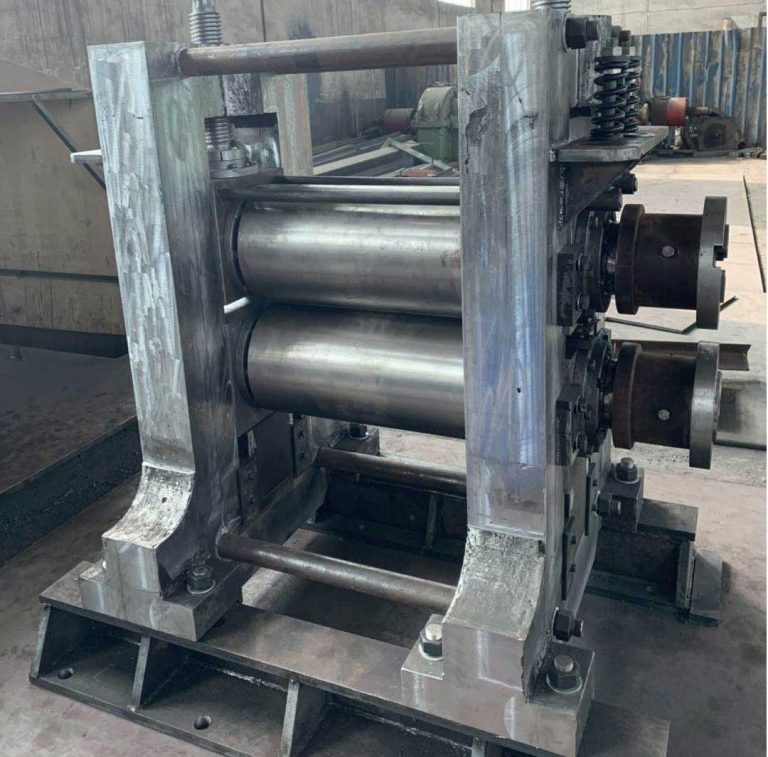
The 6 hi cold rolling mill represents a significant advancement over traditional four-high rolling mills. The fundamental difference lies in the addition of two intermediate rolls positioned between the work rolls and backup rolls. This configuration creates a hierarchical support system that dramatically improves strip flatness control and allows for the processing of harder materials with greater precision.
In a typical six-high cold rolling mill arrangement, the roll stack consists of two small-diameter work rolls that directly contact the strip material, two intermediate rolls that provide support and enable profile control, and two large-diameter backup rolls that absorb the majority of the rolling force. This configuration is particularly advantageous when rolling high-strength steel grades, stainless steel, silicon steel, and other specialty metals that demand exceptional surface quality and tight thickness tolerances.
Key Components of a 6 Hi Cold Rolling Mill:
- Work Rolls (2) – Direct contact with strip material
- Intermediate Rolls (2) – Profile and flatness control
- Backup Rolls (2) – Primary load-bearing elements
- Roll Bending System – Hydraulic force application
- Roll Shifting Mechanism – Lateral movement control
- Automatic Gauge Control (AGC) System
- Flatness Measurement and Control System
How Does the Intermediate Roll Movement Work in Six-High Mills?
One of the most frequently asked questions about 6 hi cold rolling mills concerns the intermediate roll shifting mechanism. The intermediate rolls in a six-high configuration can move axially (laterally) along their length, a feature that distinguishes this mill type from conventional four-high mills. This movement is accomplished through a hydraulic piston rod system that enables precise positioning along the width direction of the strip.
The intermediate roll shifting (IRS) system typically operates within a stroke range of ±100mm to ±150mm, depending on the mill design and strip width capacity. When the intermediate rolls are shifted, they change the effective contact length with both the work rolls and backup rolls, thereby modifying the roll gap profile and influencing the strip crown and edge drop characteristics.
| Parameter | Typical Range | Application Purpose |
|---|---|---|
| IR Shifting Stroke | ±100mm to ±150mm | Edge drop control |
| Shifting Speed | 5-15 mm/s | Dynamic profile adjustment |
| Positioning Accuracy | ±0.1mm | Precision flatness control |
| Hydraulic Pressure | 16-25 MPa | Force generation |
Control Differences Between 4-High and 6-High Cold Rolling Mills
Understanding the control differences between four-high and six-high cold rolling mills is crucial for operators transitioning between these systems. The primary distinction lies in the additional control parameters available in the 6 hi configuration, specifically the intermediate roll shifting and bending capabilities.
In a four-high mill, flatness control is primarily achieved through work roll bending and crown adjustment. The operator has limited options for correcting complex flatness defects such as quarter buckle or edge wave conditions. The six-high cold rolling mill, however, provides additional degrees of freedom through intermediate roll shifting (IRS) and intermediate roll bending (IRB), enabling more sophisticated profile and flatness control strategies.
| Control Feature | 4-High Mill | 6-High Mill | Advantage |
|---|---|---|---|
| Work Roll Bending | ✓ Available | ✓ Available | Basic flatness control |
| Intermediate Roll Bending | ✗ Not Available | ✓ Available | Enhanced flatness range |
| Intermediate Roll Shifting | ✗ Not Available | ✓ Available | Edge drop control |
| Profile Control Range | Limited | Extended | Wider product range |
| Edge Quality Control | Moderate | Excellent | Reduced edge trim loss |
Troubleshooting Unstable Work Roll Bending Pressure
Unstable work roll bending pressure is a common issue encountered in 6 hi cold rolling mill operations. This problem manifests as inconsistent flatness across the strip width and can lead to significant quality defects. Understanding the root causes and implementing appropriate corrective measures is essential for maintaining stable production.
When experiencing bending pressure instability, the first step is to examine the input gain settings in the hydraulic control system. Improperly calibrated gain values can cause the system to overreact or underreact to flatness deviations, resulting in pressure oscillations. Additionally, checking all electrical connections is critical, as loose connectors, damaged cables, or faulty sensors can introduce noise into the control loop.
⚠️ Common Causes of Bending Pressure Instability:
- Incorrect hydraulic servo valve calibration
- Air entrainment in the hydraulic system
- Worn or damaged pressure transducers
- Loose electrical connections in the control circuit
- Improper PID controller tuning parameters
- Contaminated hydraulic fluid affecting valve response
- Mechanical wear in the bending cylinder seals
Technical Specifications of Modern 6 Hi Cold Rolling Mills
Modern six-high cold rolling mill installations vary significantly in size and capacity depending on the intended application. From small-scale specialty metal processors to large integrated steel complexes, the technical specifications must be carefully matched to production requirements. The following table presents typical parameter ranges for various mill sizes commonly found in the industry.
| Specification | Small Mill | Medium Mill | Large Mill |
|---|---|---|---|
| Strip Width Range | 200-650mm | 600-1350mm | 1000-2100mm |
| Entry Thickness | 0.8-3.0mm | 1.5-5.0mm | 2.0-6.0mm |
| Exit Thickness | 0.1-1.0mm | 0.15-2.0mm | 0.2-3.0mm |
| Rolling Speed | Up to 600 m/min | Up to 1200 m/min | Up to 1800 m/min |
| Rolling Force | 5,000-10,000 kN | 12,000-20,000 kN | 20,000-35,000 kN |
| Main Motor Power | 1,500-3,000 kW | 4,000-8,000 kW | 8,000-15,000 kW |
| Work Roll Diameter | 180-280mm | 280-400mm | 380-520mm |
| Intermediate Roll Diameter | 300-420mm | 400-550mm | 520-700mm |
| Backup Roll Diameter | 800-1100mm | 1100-1400mm | 1350-1600mm |
HC Mill Technology in 6 Hi Cold Rolling Applications
The HC (High Crown) mill concept, originally developed in Japan during the 1970s, represents one of the most successful implementations of 6 hi cold rolling mill technology. HC mills feature tapered intermediate rolls that can be shifted axially to change the effective roll gap profile. This design philosophy has been widely adopted and refined over the decades, with modern HC mills achieving exceptional flatness control capabilities.
The intermediate rolls in an HC-type six-high cold rolling mill typically feature a CVC (Continuously Variable Crown) or similar profile that creates a polynomial curve when shifted. By combining work roll bending with intermediate roll shifting, operators can independently control both the parabolic and higher-order components of the strip profile, enabling correction of complex flatness defects that would be impossible to address with a four-high mill configuration.
Roll Configuration and Material Selection
Proper roll material selection is critical for achieving optimal performance in a 6 hi cold rolling mill. Each roll type serves a specific function and must be manufactured from materials suited to its operating conditions. Work rolls experience the highest contact stresses and surface temperatures, requiring materials with excellent hardness, wear resistance, and thermal fatigue resistance.
| Roll Type | Common Materials | Hardness (HRC) | Surface Finish (Ra) |
|---|---|---|---|
| Work Roll | High-Cr Steel, HSS | 60-68 | 0.2-0.8 μm |
| Intermediate Roll | 5% Cr Forged Steel | 55-62 | 0.4-1.2 μm |
| Backup Roll | 3-5% Cr Forged Steel | 45-55 | 0.8-2.0 μm |
Flatness Control Strategies for Six-High Mills
Achieving superior flatness in a 6 hi cold rolling mill requires a comprehensive understanding of the available control actuators and their effects on strip shape. Modern flatness control systems utilize feedback from online flatness measurement devices, typically employing segmented tension-measuring rolls or non-contact optical systems, to continuously adjust the mill settings during rolling.
The flatness control hierarchy in a six-high mill typically prioritizes actuators based on their response speed and effect range. Work roll bending provides the fastest response and primarily affects the central portion of the strip. Intermediate roll bending has a broader effect and can address quarter buckle conditions. Intermediate roll shifting is used for edge drop control and adjusting the overall profile, though it has a slower response time.
Work Roll Bending
- Response time: 50-100 ms
- Force range: ±800 kN typical
- Primary effect: Center buckle/edge wave
- Control order: 2nd order (parabolic)
IR Bending
- Response time: 100-200 ms
- Force range: ±1200 kN typical
- Primary effect: Quarter buckle
- Control order: 4th order
IR Shifting
- Response time: 500-2000 ms
- Stroke: ±100-150 mm
- Primary effect: Edge drop
- Control: Profile adaptation
Lubrication and Cooling Systems
Effective lubrication and cooling are essential for stable operation of any 6 hi cold rolling mill. The rolling process generates significant heat due to deformation energy and friction between the work rolls and strip. Without adequate cooling, thermal crown development can become uncontrollable, leading to flatness problems and reduced roll life. Modern six-high mills employ sophisticated emulsion spray systems that provide both lubrication and cooling functions.
The cooling spray system in a six-high cold rolling mill is typically divided into multiple zones across the strip width, allowing for differential cooling to compensate for thermal crown variations. Zone-controlled cooling can provide an additional degree of freedom for flatness control, complementing the mechanical actuators. Emulsion concentrations typically range from 2% to 5% for cold rolling applications, with higher concentrations used for more demanding materials such as stainless steel or high-strength low-alloy grades.
Process Optimization and Quality Improvement
Optimizing the performance of a six-high cold rolling mill requires attention to numerous interdependent variables. Successful operations balance productivity targets with quality requirements, recognizing that pushing rolling speeds or reductions beyond optimal limits can result in defects that negate any throughput gains. A systematic approach to process optimization considers the following key factors:
Critical Process Parameters:
Optimize pass reduction distribution to balance work hardening and surface quality requirements.
Maintain proper entry and exit tensions to ensure strip tracking and flatness stability.
Ensure adequate film thickness to minimize friction and prevent surface defects.
Control roll and strip temperatures to maintain consistent profile conditions.
Maintenance Best Practices
Preventive maintenance is crucial for ensuring reliable operation of 6 hi cold rolling mill equipment. The complex mechanical and hydraulic systems require regular inspection and servicing to prevent unexpected failures that can result in costly production losses and equipment damage. A comprehensive maintenance program should address both routine wear items and long-term component life management.
| Component | Inspection Interval | Key Checks |
|---|---|---|
| Roll Bearings | Weekly | Temperature, vibration, lubrication |
| Hydraulic System | Daily | Pressure, temperature, fluid level |
| Bending Cylinders | Monthly | Seal condition, stroke accuracy |
| Shifting Mechanism | Monthly | Position accuracy, wear patterns |
| Mill Housing | Annually | Alignment, liner wear, bolt tension |
Applications and Material Capabilities
The versatility of the 6 hi cold rolling mill makes it suitable for processing a wide range of materials across various industries. From automotive body panels requiring exceptional surface quality to electrical steel grades demanding precise thickness control, six-high mills provide the capabilities needed for demanding applications. The ability to roll harder materials and achieve tighter tolerances compared to four-high configurations has made six-high mills the preferred choice for many specialty product applications.
Typical Applications by Industry:
- Body panels
- Structural components
- AHSS grades
- Silicon steel
- Transformer cores
- Motor laminations
- Tinplate
- Tin-free steel
- Food-grade materials
- Stainless steel
- Precision strip
- Spring steel
Future Developments in Six-High Rolling Technology
The evolution of 6 hi cold rolling mill technology continues with advances in automation, digitalization, and process control. Industry 4.0 concepts are being applied to rolling operations, with machine learning algorithms being developed to optimize rolling schedules, predict maintenance requirements, and automatically adjust mill settings for changing conditions. These developments promise to further improve the productivity and quality capabilities of six-high cold rolling mills.
Advanced sensor technologies, including laser-based thickness measurement systems and high-resolution flatness meters, provide unprecedented visibility into the rolling process. Combined with sophisticated process models and real-time optimization algorithms, modern six-high mills can achieve thickness tolerances of ±0.5% or better and flatness values below 5 I-units across a wide range of products and operating conditions.
✓ Key Takeaways for Learning About 6 Hi Cold Rolling Mills:
- Intermediate roll shifting is the key feature distinguishing 6-hi from 4-hi mills
- Multiple flatness control actuators enable correction of complex defects
- Proper maintenance of hydraulic systems is critical for stable operation
- Roll material selection must match the application requirements
- Process optimization requires balancing multiple interdependent variables
- Modern control systems leverage advanced algorithms for improved performance
Mastering the operation of a 6 hi cold rolling mill requires dedication to continuous learning and a systematic approach to understanding the complex interactions between mechanical, hydraulic, and control systems. By studying the fundamental principles outlined in this guide and applying them to practical situations, engineers and operators can develop the expertise needed to optimize mill performance and consistently produce high-quality rolled products. The investment in learning about six-high cold rolling technology pays dividends through improved productivity, reduced waste, and enhanced product quality.