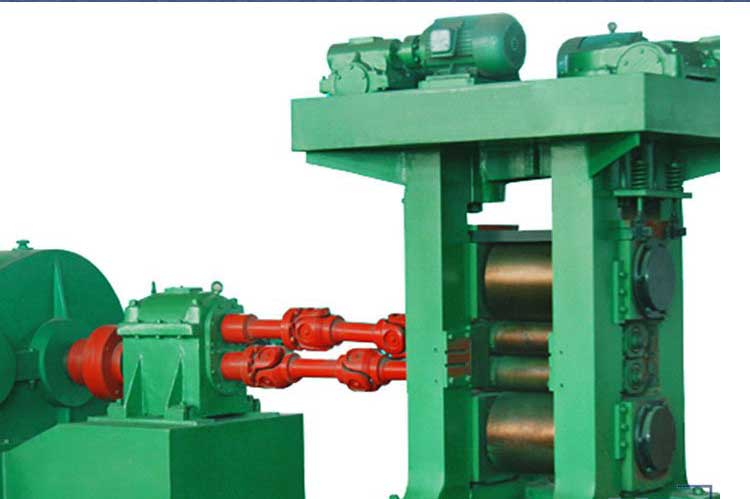
How to prevent roll breakage in six-high cold rolling mills, and can dimensions be modified?
In the world of metal processing, the 6 hi cold rolling mill stands out as a critical piece of machinery. It offers better flatness control compared to standard 4-high mills, thanks to its intermediate rolls that can shift to adjust the roll gap profile. However, operators and plant managers often face two major questions: How do we stop the expensive rolls from breaking, and is it possible to modify the machine dimensions to fit new production needs?
This guide dives deep into the operational realities of the six-high mill. We will look at practical solutions for maintenance, analyze the physics of rolling force, and discuss the strict limitations regarding mechanical modifications.
Understanding the Risk of Roll Breakage
Roll breakage is the nightmare of every production line. It causes downtime, damages the strip, and incurs high replacement costs. In a 6 hi cold rolling mill, the interaction between the work rolls, intermediate rolls, and backup rolls is complex. Here is how to manage it scientifically.
1. Managing Rolling Force Distribution
Excessive pressure is the primary cause of failure. While cold rolling relies on high force to reduce thickness, there is a limit. Operators must avoid “force spikes” where the load is applied too suddenly or unevenly across the roll barrel.
Why reduce force on thinner gauges?
Standard practice often suggests a “Constant Rolling Force” mode to maintain good strip shape. However, as the metal strip becomes thinner, the influence of tension (from the coiler and uncoiler) increases significantly.
- Operational Tip: When the material gets thin, the mill relies more on tension for reduction and flatness. At this stage, you should appropriately reduce the main rolling force. This prevents the rolls from bowing excessively and reduces the cyclic stress that leads to fatigue cracks.
2. Preventing “Sticking” and Surface Defects
“Sticking” or “welding” happens when the lubrication film breaks down, and the strip literally welds to the roll surface due to heat and pressure. This creates a localized hard spot. If the roll continues to turn with this defect, the stress concentration will cause the roll to snap.
To prevent this:
- Monitor the coolant/emulsion concentration and temperature strictly.
- Ensure the strip surface is clean before entering the bite.
- If a strip break occurs, the rolls must be inspected immediately. Never restart without checking for surface damage.
3. Proper Grinding and Crack Detection
Rolls are consumables, but their life can be extended. After a rolling campaign, rolls are sent to the grinding shop. It is not enough to just restore the surface finish.
The Invisible Danger: Micro-cracks often form beneath the surface due to thermal shock. If these are not ground away completely, they will propagate during the next use, leading to a catastrophic split. Non-destructive testing (NDT) such as ultrasonic or eddy current testing should be performed after grinding to ensure the steel matrix is sound.
4. Material Homogeneity
The physical and chemical properties of the roll itself must be uniform. Manufacturers usually use forged steel (like Cr3, Cr5, or semi-high speed steel) for work rolls. If the heat treatment during manufacturing was uneven, the roll will have internal stress points. Purchasing high-quality rolls from reputable suppliers is the first line of defense against breakage.
Can Dimensions of a 6 Hi Mill Be Modified?
In industrial environments, production requirements change. You might want to process wider coils or thicker slabs. This leads to the question: Can we change the dimensions of our existing mill?
The short answer is No, not arbitrarily.
Warning: The dimensions of a six-high cold rolling mill—specifically the housing window, roll chocks, and centerline geometry—are determined during the design phase based on specific load calculations.
Modifying these parameters involves significant risks:
- Housing Stiffness: Widening the mill to accept wider strip reduces the rigidity of the mill stand. This leads to greater elastic deformation, making it impossible to hold tight thickness tolerances.
- Drive Train Limits: Changing roll diameters significantly affects the torque requirements. A larger roll requires more torque to bite the metal. If you increase roll size without upgrading the motor and gearbox, the equipment will stall or overheat.
- Speed Synchronization: The rolling speed is calibrated to the roll diameter and motor RPM. Drastic changes disrupt the synchronization with the coiler tension, leading to strip breakage.
While minor adjustments (like using slightly smaller rolls as they wear down) are standard, structural dimension changes are generally prohibited without a complete re-engineering of the line.
Processing Stainless Steel: A Special Case
Many operators ask if their standard 6 hi cold rolling mill can handle stainless steel.
The Challenge: Stainless steel is characterized by high yield strength, rapid work hardening, and high alloy content.
The Verdict: Ordinary six-high mills are often not suitable for direct rolling of stainless steel, especially for high-precision or thin gauges. Stainless steel usually requires:
- Higher Rigidity: The mill stand must be stiffer to resist the high deformation resistance of the alloy.
- Multiple Passes: Unlike carbon steel, stainless cannot be reduced significantly in a single pass. It requires repeated rolling (reversing passes) to achieve the target gauge.
- Smaller Work Rolls: Often, 20-high mills (Sendzimir) are preferred for stainless because the very small work rolls penetrate the hard material better. However, a heavy-duty 6-hi can process thicker stainless gauges if designed for it.
Technical Reference: Typical 6-Hi Mill Parameters
To give you a clearer picture of the operational window, here are the typical parameters for a medium-width reversible 6 hi cold rolling mill. These values help benchmarks your own equipment capabilities.
| Parameter | Value / Specification |
|---|---|
| Material Type | Low Carbon, Low Alloy, (Limited) Stainless |
| Input Thickness | 2.0 mm – 4.5 mm |
| Output Thickness | 0.15 mm – 1.2 mm |
| Rolling Speed | Max 800 – 1200 m/min |
| Work Roll Diameter | Φ380 mm – Φ420 mm |
| Intermediate Roll Shifting | ±150 mm (Crucial for flatness) |
| Max Rolling Force | 12,000 kN – 18,000 kN |
Daily Maintenance Checklist for Longevity
Sustaining the life of your mill requires a disciplined approach. Beyond the major repairs, small daily actions prevent the accumulation of errors that lead to roll failure.
Hydraulic AGC System
Check the servo valves and hydraulic pressure stability. Inconsistent pressure leads to uneven force on the rolls, increasing the risk of cracking.
Emulsion Filtration
Metal fines in the coolant act like sandpaper. Ensure the magnetic separators and fabric filters are functioning to keep the coolant clean.
Roll Chock Lubrication
Bearing failure often masquerades as roll failure. If a bearing seizes, the roll stops turning while the strip moves, causing immediate flat spots and breakage.
Operating a 6 hi cold rolling mill is a balance of precision engineering and careful maintenance. While the physical dimensions of the machine are fixed parameters that should not be tampered with, the operational variables—like rolling force, tension, and roll quality—are within your control. By respecting the metallurgical limits of both the rolls and the strip material, especially with harder alloys, you can maximize uptime and product quality.