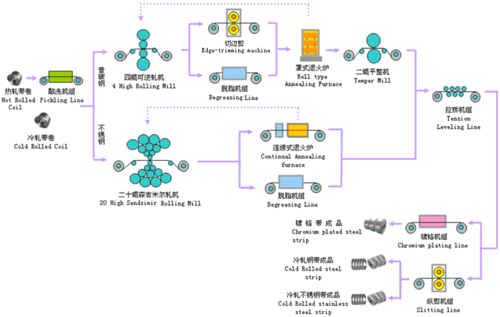
Comparison of backup rolls and work rolls in cold rolling mills and their price ranges
Unveiling the Core Components: A Deep Dive into Work Rolls and Backup Rolls in a Cold Rolling Mill
In the world of metal processing, the cold rolling mill stands as a titan of precision and power. It’s the machine responsible for transforming thick metal sheets into thin, smooth, and strong strips with exacting tolerances. At the very heart of this operation are the rolls. While they might look like simple steel cylinders, the roles they play are highly specialized and distinct. Two critical types, the work rolls and backup rolls, form a symbiotic partnership. Understanding their unique functions, characteristics, and costs is essential for anyone involved in steel production, from mill operators to procurement managers.
This guide will provide a comprehensive comparison, breaking down exactly what each roll does, how they differ, and what factors drive their price. We’ll explore the science behind their design and offer practical insights for mill operations.
The Frontline Soldiers: What Are Work Rolls?
As their name suggests, work rolls perform the direct “work” of rolling. They are the only rolls in a typical 4-high or 6-high mill that make direct physical contact with the metal strip. Think of them as the rolling pins in a high-tech industrial kitchen, precisely squeezing the metal to achieve the desired thickness and surface finish.
Their primary responsibilities include:
- Thickness Reduction: Applying immense force to plastically deform the metal, reducing its cross-sectional area.
- Surface Quality Control: Imparting a specific finish (from matte to bright) onto the strip. The perfection of the work roll’s surface is directly mirrored on the final product.
- Shape and Flatness: Working in conjunction with control systems to ensure the final strip is perfectly flat and free of defects like waves or buckles.
Due to this direct, high-pressure contact, work rolls must possess exceptional surface hardness, wear resistance, and thermal fatigue strength. They are typically made from high-grade materials like high-chromium forged steel or high-speed steel (HSS).
The Unsung Heroes: The Role of Backup Rolls
If work rolls are the soldiers on the frontline, backup rolls are the heavy artillery providing crucial support from behind. They do not touch the metal strip. Instead, their job is to “back up” the slender work rolls.
The immense forces required for cold rolling would cause a small-diameter work roll to bend or deflect in the middle, like a thin stick bending under pressure. This would result in a metal strip that is thicker in the center and thinner at the edges—a completely unacceptable outcome. This is where backup rolls come in.
Their key functions are:
- Preventing Deflection: With their massive diameter and high rigidity, they apply counter-pressure to the work rolls, keeping them perfectly straight across the entire width of the strip.
- Transmitting Force: They transfer the total rolling load from the mill’s hydraulic cylinders through the work rolls and onto the strip.
Backup rolls are significantly larger and heavier than work rolls. Their primary requirements are immense strength, rigidity, and bending resistance. They are typically manufactured from high-quality forged or cast alloy steel.
At a Glance: Work Rolls vs. Backup Rolls
To make the differences crystal clear, here is a direct comparison table. On mobile devices, you can scroll the table horizontally to see all the columns.
| Feature | Work Rolls | Backup Rolls |
|---|---|---|
| Primary Function | Reduce thickness and control surface finish of the metal strip. | Support work rolls to prevent bending and ensure uniform pressure. |
| Contact with Strip | Yes, in direct contact. | No, only contacts the work rolls. |
| Relative Diameter | Smaller. A smaller diameter reduces rolling force and power consumption. | Much larger (typically 2-4 times the work roll diameter). |
| Key Material Property | Extreme surface hardness and wear resistance. | High rigidity, core toughness, and bending strength. |
| Typical Materials | High-Speed Steel (HSS), High-Chromium Steel (Hi-Cr), Forged Steel. | Alloy Forged Steel, Alloy Cast Steel. |
| Surface Hardness (Typical) | ~95-100 HSC (Hardness Shore C) or ~63-68 HRC (Rockwell C). | ~80-90 HSC or ~55-62 HRC. Hard, but less so than work rolls. |
| Common Failure Modes | Surface spalling, wear, cracks, roll marks. | Neck breakage, fatigue cracks, spalling from contact with work rolls. |
Understanding the Price: What Drives the Cost of Rolls?
The price of cold rolling mill rolls can vary dramatically, from a few thousand dollars to hundreds of thousands of dollars per roll. This range is influenced by a combination of factors related to material, size, and manufacturing precision.
- Material Composition: This is the single biggest cost driver. High-Speed Steel (HSS) rolls, with their complex alloy composition (containing tungsten, molybdenum, vanadium) and demanding heat treatment, are significantly more expensive than standard forged steel rolls.
- Size and Weight: It’s simple physics—a larger, heavier backup roll requires more raw material and larger machinery for forging, heat treatment, and grinding, leading to a higher cost.
- Manufacturing Process & Precision: The journey from a raw ingot to a finished roll is complex. Processes like forging, differential heat treatment (to create a hard shell and a tough core), and ultra-precision grinding to sub-micron tolerances all add to the final cost.
- Special Requirements: Features like special surface texturing (e.g., for automotive panels), internal cooling channels, or advanced coatings will increase the price.
General Price Range for Rolls (Illustrative)
While exact prices depend on the supplier and specifications, here is a general idea:
| Roll Type | Material | Estimated Price Range (per roll) |
|---|---|---|
| Small Work Roll | Forged Steel | $5,000 – $20,000 |
| Medium Work Roll | High-Chromium Steel | $20,000 – $70,000 |
| High-Performance Work Roll | HSS / Powder Metallurgy | $70,000 – $200,000+ |
| Medium Backup Roll | Alloy Forged Steel | $50,000 – $150,000 |
| Large Backup Roll | Alloy Forged Steel | $150,000 – $500,000+ |
Disclaimer: These prices are for illustrative purposes only and can vary significantly based on market conditions, manufacturer, and specific technical requirements.
The Bigger Picture: Price of the Entire Cold Rolling Mill
While the rolls are a significant consumable cost, the price of the entire cold rolling mill is on another level, ranging from a few million to over a hundred million dollars. This depends on factors far beyond the rolls themselves:
- Mill Configuration: A simple 4-high single-stand reversing mill is far less expensive than a complex 20-high Sendzimir mill for stainless steel or a 5-stand tandem mill for high-volume production.
- Automation and Control: Advanced systems for Automatic Gauge Control (AGC) and Automatic Flatness Control (AFC), along with sophisticated sensors and software, add significant cost but are crucial for producing high-quality material.
- Production Capacity: Higher rolling speeds and wider strip capabilities require more powerful motors, stronger structures, and more robust auxiliary equipment, all driving up the price.
A Final Thought on Operations
It is critical to operate any cold rolling mill within its designed limits. Overloading the mill by trying to achieve too much reduction in a single pass or using material that is too hard can cause catastrophic failure of mechanical parts, including the rolls and their bearings. Adhering to established rolling schedules and standards is not just a matter of quality control; it is fundamental to equipment safety and longevity.
Ultimately, the work rolls and backup rolls are a perfect example of specialized engineering. One provides the finesse and precision at the point of contact, while the other provides the brute strength and unwavering support needed to make the process possible. Recognizing their distinct roles and investing in the right quality for each is a cornerstone of efficient and profitable cold rolling operations.