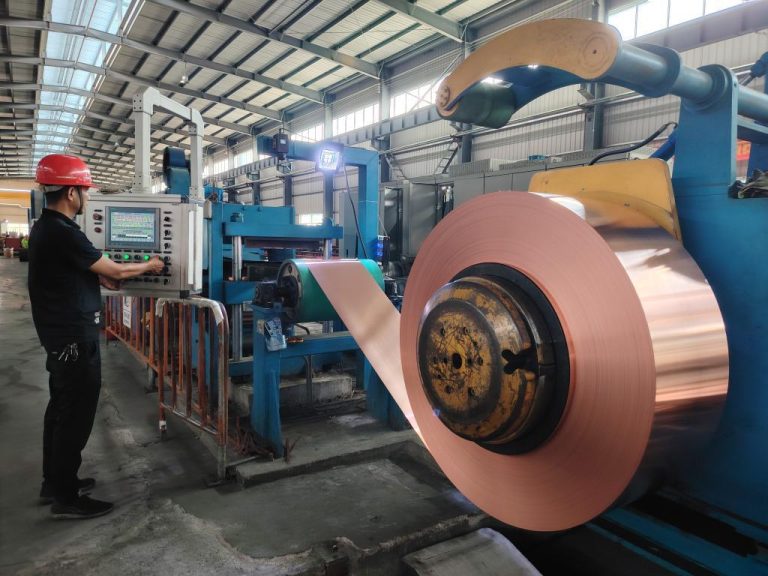
How a 20-High Reversible Cold Rolling Mill Solves Precision Challenges in Titanium & Nickel Alloy Production
The Challenge: Why High-Strength Alloys Are So Hard to Roll
Titanium and nickel-based alloys are essential in demanding sectors like aerospace, chemical processing, and power generation. But their high strength, low ductility, and sensitivity to temperature make them notoriously difficult to cold roll—especially into ultra-thin, narrow-width strips with tight tolerances.
Common pain points include:
- Inconsistent thickness due to elastic deformation of the mill
- Poor flatness or edge wave causing downstream processing failures
- Surface defects from inadequate lubrication or contamination
- Low productivity from frequent downtime or manual adjustments
If you’re facing these issues, the solution may lie not just in better materials—but in smarter mill architecture.
The Answer: 20-High Reversible Cold Rolling Mill Technology
A 20-high (or “Sendzimir-type”) reversible cold rolling mill is specifically engineered for high-strength, low-ductility metals. Unlike conventional 4-high mills, it uses a complex stack of work rolls, intermediate rolls, and backup rolls to distribute rolling forces efficiently—minimizing deflection and enabling extreme precision.
Key Structural Advantages:
- High Rigidity with SFC (Four-Column) Frame Design
The four-column housing (as used in ANDRITZ’s recent Chinese project) provides exceptional stiffness under high separating forces. This reduces frame “spring,” ensuring consistent strip thickness—even during long production runs. - Superior Shape Control via Advanced Automation
Systems like ANDRITZ’s shape-tronic (STS) continuously monitor strip flatness in real time and automatically adjust:- Work roll bending
- Intermediate roll shifting
- Roll crossing or tilt
This closed-loop control keeps geometric tolerances within microns—critical for sub-0.1mm strips.
- Integrated Process Systems for Surface Integrity
Precision cooling, oil-film lubrication, and multi-stage filtration maintain optimal roll-strip interface conditions. Clean, temperature-stable rolling oil prevents scratches, pick-up, and thermal distortion—boosting both surface finish and roll life. - Optimized for Narrow, Ultra-Thin Strips
With a max width of 650 mm, this mill type excels at producing high-value, narrow strips (common in jet engines, fuel cells, and medical devices) where even minor deviations cause scrap or rework.
Real-World Impact: ANDRITZ’s Latest Installation in China
In 2025, ANDRITZ secured an order to supply a full 20-high reversible cold mill to a major Chinese titanium producer. Scheduled for commissioning in April 2027, the line will produce high-precision Ti and Ni alloy strips for aerospace and energy applications.
This project highlights a global trend: advanced rolling technology is becoming essential for China’s new materials strategy. As domestic demand grows for domestically produced high-performance alloys, mills must deliver not just capacity—but micron-level consistency and reliability.
Why This Matters for Your Operation
If you’re evaluating cold rolling solutions for specialty alloys, consider these questions:
- Can your current mill hold ±1µm thickness tolerance over 1,000+ meters?
- Do you rely on operator skill to “eyeball” flatness corrections?
- Are surface defects causing yield loss in final inspection?
A modern 20-high reversible mill—backed by intelligent automation and robust mechanical design—can transform these challenges into competitive advantages.
Partner with Experts Who Understand Precision Rolling
At HANI, we specialize in high-precision metal forming technologies for advanced materials. Whether you’re exploring new mill investments, upgrading control systems, or troubleshooting strip quality issues, our team combines deep metallurgical knowledge with practical engineering experience.
We don’t just sell equipment—we help you solve production bottlenecks and unlock higher yields in titanium, nickel alloys, stainless steel, and other demanding materials.
Ready to improve your cold rolling precision?
Contact HANI today for a technical consultation on 20-high mill capabilities, automation integration, or process optimization for high-strength alloys.