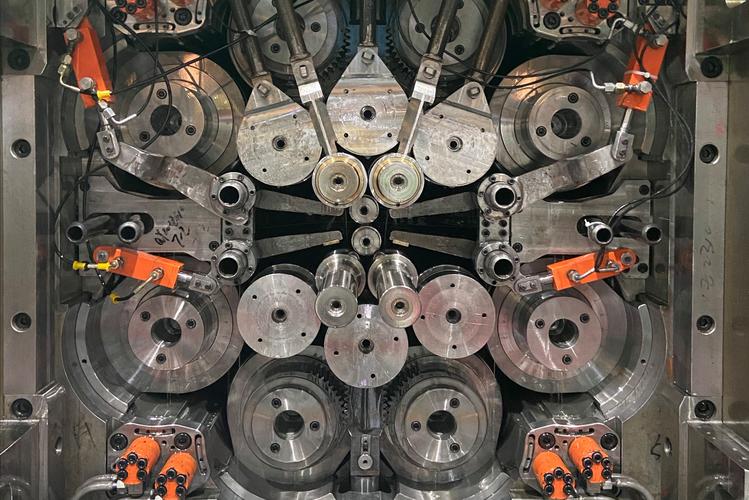
Equipment Functions and Application Industries of 4 Hi Cold Rolling Mill
In-depth Analysis of Technical Parameters, Production Principles, and Market Applications
In the realm of modern metallurgy and metal processing, the 4 hi cold rolling mill stands as a pivotal piece of machinery, renowned for its ability to transform hot-rolled coils into high-precision, thin-gauge sheets with superior surface quality. Unlike the simpler 2-high configurations, the 4-high design introduces a structural revolution that addresses the inherent issue of roll deflection, thereby enabling the processing of harder materials and wider strips with tighter tolerances.
This article provides a comprehensive technical breakdown of the equipment functions, operational mechanics, and the diverse application industries of the 4 hi cold rolling mill. We will delve into real-world production parameters, explore the scientific basis of its operation, and offer reference data valuable for production managers and engineers.
1. Structural Mechanics and Working Principle
The fundamental distinction of a 4 hi cold rolling mill lies in its roll arrangement. In metal rolling, the separating force generated during the thickness reduction process tends to bend the work rolls. If only two rolls were used (as in a 2-high mill), this bending would result in a sheet that is thicker in the middle and thinner at the edges (crown defect).
The Four-Roll Configuration
To counteract this physical limitation, the 4-high mill employs:
-
✔
Two Work Rolls: Small diameter rolls that directly contact the metal strip. The smaller diameter reduces the contact area, thereby lowering the rolling force required for deformation. -
✔
Two Backup Rolls: Massive diameter rolls placed above the top work roll and below the bottom work roll. These provide rigid support to the work rolls, preventing them from bending under high load.
This configuration creates a stiff mill stand capable of heavy reductions on high-strength steels while maintaining flatness.
2. Advanced Equipment Functions
The modern 4 hi cold rolling mill is not merely a pressing machine; it is a sophisticated system integrating mechanics, hydraulics, and automation. Its core functions include:
Reversible Rolling Capability
Most 4-high mills operate as reversible units. The strip passes back and forth through the mill stand. This allows for step-by-step reduction without the need for a massive continuous train of stands, saving capital investment and floor space.
AGC (Automatic Gauge Control)
Equipped with hydraulic gap control cylinders and X-ray thickness gauges. The system adjusts the roll gap in milliseconds to compensate for incoming strip thickness variations and mill stretch, ensuring output tolerance within microns.
Tension Control System
High-precision tension reels (coilers) maintain constant tension during acceleration and deceleration. This prevents telescoping of coils and ensures plastic deformation occurs uniformly across the strip length.
3. Technical Specifications and Production Reference
For production managers evaluating the capabilities of a 4 hi cold rolling mill, specific parameters are crucial. Below is a reference table for a typical high-performance 1450mm Reversible 4-Hi Cold Rolling Mill intended for low carbon and low alloy steel processing.
| Parameter | Specification / Value | Production Note |
|---|---|---|
| Raw Material | Hot Rolled Pickled Coils (Q195, Q235, SPCC, SPCD) | Must be acid pickled and oiled before entry. |
| Input Thickness | 2.0mm – 4.5mm | Depends on yield strength. |
| Output Thickness | 0.2mm – 1.5mm | Precision capability ±0.005mm. |
| Strip Width | 800mm – 1300mm | Optimal utilization at 1250mm. |
| Max Rolling Speed | 800m/min – 1200m/min | Speed reduces for harder alloys or thinner gauges. |
| Max Rolling Force | 12,000 kN – 18,000 kN | Hydraulic screw-down system capability. |
| Work Roll Diameter | Φ380mm – Φ420mm | Material: Forged Steel 9Cr2Mo. |
| Backup Roll Diameter | Φ1100mm – Φ1250mm | Provides necessary stiffness. |
| Coil Weight | Max 25 Tons | Depends on mandrel capacity. |
4. Application Industries
The versatility of the 4 hi cold rolling mill allows it to serve a vast array of sectors. By adjusting the annealing processes and rolling reduction rates, the same mill can produce soft deep-drawing steels or full-hard structural sheets.
Automotive Industry
This is one of the most demanding sectors. 4-Hi mills produce high-strength steel for structural components and exposed body panels. The requirement here is for “dead flat” sheets with specific surface textures (matte or bright) suitable for painting.
Construction & Home Appliances
Producing the substrate for galvanized or color-coated coils. These are used in roofing, wall cladding, refrigerator doors, and washing machine casings. The 4-Hi mill ensures consistent thickness to fit automated stamping lines.
Electrical & Electronics
For non-grain oriented silicon steel (motor laminations) and lead frames. The mill must achieve very thin gauges (down to 0.15mm or 0.2mm) with high magnetic permeability properties preserved through controlled rolling.
Packaging & Precision Foils
While foil often requires cluster mills (like 20-Hi), the initial breakdown passes from thicker gauges are often performed on robust 4-Hi mills for materials like aluminum and tinplate.
5. Why Choose a 4 Hi Mill? (Comparative Analysis)
Choosing the right rolling mill configuration is a balance between investment cost and product quality. Here is why the 4 hi cold rolling mill is often the “Goldilocks” choice for many manufacturers:
- VS. 2-High Mills: A 2-High mill is limited by roll deflection. To roll wide sheets, the rolls must be enormous, which increases the rolling force required. A 4-High mill uses smaller work rolls supported by backup rolls, allowing for 30-50% greater reduction per pass and wider strip capacity.
- VS. 6-High/20-High Mills: Multi-roll mills (like 6-Hi or Sendzimir mills) offer better shape control for ultra-hard or ultra-thin materials. However, they are significantly more expensive to buy and maintain. The 4-Hi mill offers the best cost-to-performance ratio for standard steel grades (carbon steel, low alloy) down to 0.2mm thickness.
6. Production Process Flow
*Note: The 4 Hi mill is the core of the reduction phase. The material may pass through the mill 3 to 7 times depending on the required final thickness.
7. Scientific Maintenance for Optimal Performance
To ensure the longevity and accuracy of a 4 hi cold rolling mill, strict maintenance protocols based on tribology and mechanics are required.
1. Roll Grinding and Profiling
Work rolls deteriorate faster than backup rolls due to direct contact with the strip. They must be ground frequently to restore surface roughness (Ra) and the correct crown (convexity). A typical cycle might be changing work rolls every shift, while backup rolls may last a week.
2. Lubrication and Cooling (Emulsion)
Rolling generates immense heat. An emulsion system (usually oil in water) is critical. It serves two purposes: reducing the coefficient of friction to lower energy consumption, and removing heat to prevent thermal crown expansion of the rolls. Monitoring the concentration, temperature, and saponification value of the rolling oil is a key scientific parameter for quality control.
Conclusion
The 4 hi cold rolling mill remains the workhorse of the metal processing industry. Its design scientifically balances structural rigidity with operational flexibility, making it an indispensable asset for producing high-quality cold-rolled sheets. From automotive panels to precision electronic parts, the output of these mills supports the infrastructure of modern life.
For manufacturers, investing in a high-performance 4-high mill with modern AGC and shape control systems is a strategic move to ensure competitiveness in a market that increasingly demands tighter tolerances and better surface finishes. Understanding the equipment functions and proper maintenance protocols outlined in this article is the first step toward achieving operational excellence.