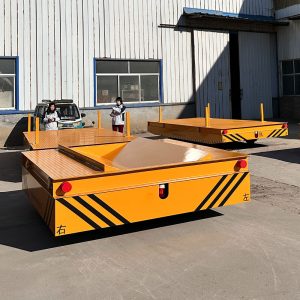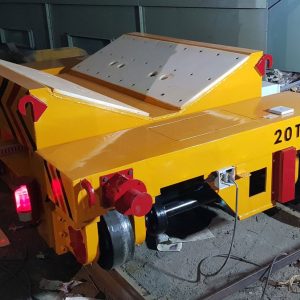


Coil transfer cart
Brand name: HANI
Packing Details : Wooden box with fumigation or Wooden Fram or Steel Frame
Delivery Details: 30~60days or Based on the quantity
Shipping: Sea freight、Land freight、Air freight
HANI focuses on cold rolling mill equipment technology, safeguarding your production.
Product Details
In modern steel production facilities, efficient material handling is critical for maintaining operational flow and productivity. The coil transfer cart represents one of the most essential pieces of equipment in steel mills and processing centers worldwide. This specialized transport system is engineered to move heavy steel coils weighing up to 35 tons with precision, safety, and reliability across various production areas.
Advanced Engineering and Design Features
The modern coil transfer cart incorporates cutting-edge engineering principles and robust construction methodologies. Its primary components include a heavy-duty frame assembly, precision walking mechanisms, hydraulic lifting systems, comprehensive hydraulic assemblies, and sophisticated electrical control systems. Each component is designed to work harmoniously to ensure optimal performance even under the most demanding industrial conditions.
The structural integrity of the coil transfer cart begins with its frame assembly, which utilizes high-grade steel alloys with tensile strengths exceeding 600 MPa. This material selection provides exceptional load-bearing capacity while minimizing structural deformation over the equipment’s operational lifecycle. The frame undergoes stress-relief heat treatment processes to eliminate internal stresses that could compromise structural integrity during heavy-load operations.
Operational Principles and Control Systems
The operational efficiency of the coil transfer cart stems from its dual-motion capabilities: horizontal movement via the walking mechanism and vertical lifting through hydraulic actuators. The walking mechanism employs AC motors with variable frequency drives (VFDs) that enable precise speed control ranging from 0.5 m/min for delicate positioning to 25 m/min for efficient long-distance transport.
The lifting mechanism utilizes hydraulic cylinders with dual-circuit control for fail-safe operation. HANI engineers have implemented proportional valve technology that allows for smooth acceleration and deceleration during lifting operations, preventing sudden movements that could damage coils or compromise operator safety. The hydraulic system operates at pressures between 160-210 bar, providing sufficient force for heavy coil handling while maintaining energy efficiency through load-sensing technology.
| Technical Parameter | Specification | Notes |
|---|---|---|
| Maximum Load Capacity | 35 tons | Static load rating |
| Travel Speed Range | 0.5-25 m/min | Variable frequency control |
| Lifting Height | 800-1000 mm | Adjustable based on requirements |
| Lifting Speed | 50-80 mm/s | With load sensing control |
| Drive System | 3-phase AC motor | IP55 protection rating |
| Control System | PLC + HMI | Remote operation capability |
| Power Supply | 380V/50Hz/3-phase | Customizable for regional standards |
| Safety Features | Multiple emergency stops, overload protection, position sensors | CE compliant safety systems |
Applications Across the Steel Industry
The versatility of the coil transfer cart makes it indispensable in numerous steel processing applications. From hot strip mills to cold rolling facilities, from slitting lines to recoiling operations, this equipment serves as the backbone of material flow management. Modern steel plants typically deploy multiple coil transfer cart units in coordinated systems to create seamless production flows between different processing stages.
In hot rolling operations, the coil transfer cart efficiently transports freshly rolled coils from the downcoiler to cooling beds or storage areas. The equipment’s robust thermal protection systems ensure reliable operation even when handling coils at temperatures exceeding 500°C. For cold rolling facilities, precision positioning capabilities enable accurate placement of coils onto processing lines with tolerances as tight as ±2mm, critical for maintaining production quality standards.
Maintenance and Operational Longevity
Maximizing the operational lifespan of a coil transfer cart requires adherence to comprehensive maintenance protocols. Preventative maintenance schedules should include weekly visual inspections of structural components, monthly hydraulic fluid analysis, quarterly calibration of control systems, and annual comprehensive performance evaluations. Proper lubrication of all moving parts using high-temperature greases rated for industrial applications significantly extends component life.
The drive system of the coil transfer cart benefits from regular monitoring of motor performance parameters. Modern units incorporate condition monitoring sensors that track vibration patterns, temperature variations, and power consumption anomalies to predict potential failures before they occur. Implementing these predictive maintenance strategies can extend equipment life by 30-40% compared to traditional time-based maintenance approaches.
Safety Considerations and Operator Training
Safety remains paramount in the design and operation of any industrial equipment. The coil transfer cart incorporates multiple redundant safety systems including emergency stop buttons positioned at strategic locations, laser-based obstacle detection systems, weight sensors to prevent overloading, and automatic shutdown protocols triggered by abnormal operating conditions.
Comprehensive operator training programs are essential for safe and efficient coil transfer cart operation. Training should cover emergency procedures, routine inspection protocols, basic troubleshooting techniques, and proper load handling methods. Facilities that implement structured training programs report 65% fewer operational incidents and 25% higher equipment utilization rates compared to those with informal training approaches.
Frequently Asked Questions
Q: What is the typical service life of a well-maintained coil transfer cart?
A: With proper maintenance and operation within design specifications, a high-quality coil transfer cart can provide 15-20 years of reliable service. The structural components typically have the longest lifespan, while drive components and hydraulic elements may require rebuilding or replacement after 8-12 years of continuous operation.
Q: Can the coil transfer cart be integrated with existing plant control systems?
A: Yes, modern coil transfer carts are designed with open architecture control systems that support integration with plant-wide SCADA systems, production management software, and enterprise resource planning platforms. Communication protocols typically include PROFIBUS, PROFINET, Modbus TCP/IP, and Ethernet/IP to ensure seamless connectivity with existing infrastructure.
Q: What power requirements are needed for the coil transfer cart?
A: Standard coil transfer carts require 380V/50Hz/3-phase power supply, though regional variations can be accommodated during the design phase. The power consumption varies based on load capacity and operational speed but typically ranges from 15kW to 45kW for movement and lifting operations. Energy recovery systems can be incorporated to reduce overall power consumption by up to 20% in high-cycle applications.
Q: How does the coil transfer cart handle emergency situations?
A: Multiple redundant safety systems ensure safe operation during emergencies. These include mechanical spring-applied brakes that engage automatically during power failures, emergency lowering systems for hydraulic circuits, collision avoidance sensors with automatic stopping capability, and manual override controls that allow operators to safely position loads during system failures.
Technical Innovation and Future Developments
The evolution of coil transfer cart technology continues to advance with industry 4.0 initiatives. Modern units incorporate IoT connectivity, allowing remote monitoring of operational parameters and predictive maintenance scheduling. Energy efficiency has become increasingly important, with regenerative braking systems capturing kinetic energy during deceleration and feeding it back to the plant power grid.
The integration of artificial intelligence for operational optimization represents the next frontier in coil transfer cart development. Machine learning algorithms can analyze years of operational data to optimize movement patterns, reduce energy consumption, predict maintenance needs, and even adapt to changing production requirements automatically. These advancements ensure that the coil transfer cart remains a vital component in the increasingly automated steel production landscape.
HANI continues to pioneer innovations in material handling equipment, with the coil transfer cart representing one of their flagship product lines. Their commitment to research and development has resulted in numerous patents related to energy-efficient drive systems, enhanced safety mechanisms, and intelligent control algorithms specifically designed for coil handling applications.
Conclusion: Investment Value and Return Analysis
Selecting the right coil transfer cart represents a significant capital investment that requires careful evaluation of total cost of ownership rather than just initial purchase price. High-quality coil transfer carts with robust construction and advanced control systems typically deliver 25-30% lower operating costs over their lifecycle compared to budget alternatives, primarily through reduced maintenance requirements, lower energy consumption, and minimized production downtime.
The productivity gains achieved through reliable coil handling operations often yield return on investment periods of 18-36 months, depending on production volumes and existing operational inefficiencies. When evaluating coil transfer cart options, consider not just the technical specifications but also the manufacturer’s service network, parts availability, and technical support capabilities, as these factors significantly impact long-term operational reliability.
In conclusion, the coil transfer cart remains an indispensable asset in modern steel production environments. Its role in ensuring efficient material flow, maintaining production schedules, and supporting overall operational excellence cannot be overstated. As steel producers continue to face increasing pressure for higher efficiency and lower operating costs, investing in advanced coil transfer cart technology represents a strategic decision that delivers tangible benefits across the entire production spectrum.
For facilities planning to upgrade their material handling infrastructure, careful evaluation of operational requirements, future production needs, and integration capabilities with existing systems will ensure maximum return on investment from their coil transfer cart acquisition.
HANI is one of China’s leading professional cold rolling mill manufacturers, providing complete cold rolling systems to steel companies worldwide. HANI focuses on designing and manufacturing integrated cold rolling solutions that meet the industry’s highest standards of precision, efficiency, and durability. Our engineering expertise lies in providing turnkey cold rolling production lines to optimize the performance of modern steel manufacturing plants.