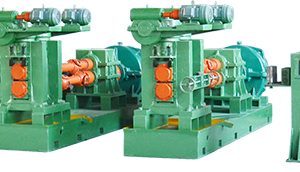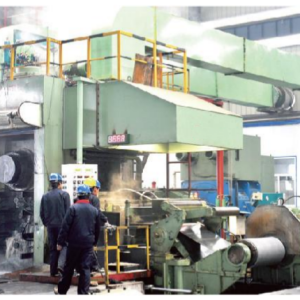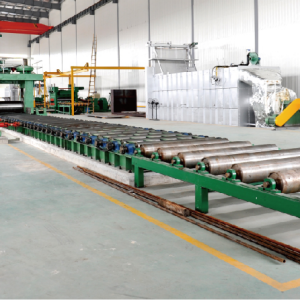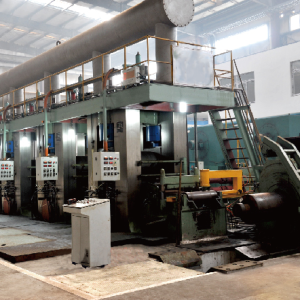

4 hi reversing cold rolling mill
Brand name: HANI
Packing Details : Wooden box with fumigation or Wooden Fram or Steel Frame
Delivery Details: 30~60days or Based on the quantity
Shipping: Sea freight、Land freight、Air freight
HANI focuses on cold rolling mill equipment technology, safeguarding your production.
Product Details
Advanced Four-High Reversing Cold Rolling Mill Technology for Precision Metal Processing
In today’s competitive metal manufacturing industry, the demand for high-quality cold-rolled steel products continues to grow exponentially. At the forefront of this technological revolution stands the four-high reversing cold rolling mill, a sophisticated piece of equipment that has transformed how manufacturers approach precision metal processing. This comprehensive guide explores the technical specifications, operational advantages, and production capabilities of modern reversing cold rolling mill systems that deliver exceptional performance for various industrial applications.
Technical Fundamentals of Four-High Reversing Cold Rolling Technology
The four-high reversing cold rolling mill represents a significant advancement over traditional two-high mills. This configuration features two small-diameter work rolls that contact the metal strip directly, supported by two larger backup rolls that provide structural stability. This arrangement allows for greater reduction capabilities while minimizing roll deflection, resulting in superior strip flatness and thickness precision.
Metallurgical science confirms that cold rolling processes significantly enhance material properties through strain hardening. The controlled deformation in a reversing cold rolling mill increases tensile strength by up to 300% while maintaining excellent surface finish characteristics. This mechanical advantage makes the four-high configuration particularly valuable for producing high-strength, thin-gauge materials required in automotive, aerospace, and electronics industries.
The operational principle of a reversing cold rolling mill involves passing metal strip back and forth through the roll gap, with thickness reduction occurring incrementally with each pass. Unlike continuous mills, this reversing action allows for precise control over reduction schedules, making it ideal for small-batch production of specialized alloys and custom specifications. Modern systems incorporate advanced automation that monitors and adjusts roll gap settings in real-time, ensuring consistent product quality throughout the production run.
Engineering Configuration and System Components
A complete four-high reversing cold rolling mill installation comprises several critical subsystems working in perfect synchronization:
- Main Mill Stand: The heart of the system features precision-ground work rolls and backup rolls mounted in a rigid housing. Modern designs incorporate chockless roll mounting systems that reduce roll changing time by up to 70%.
- Drive System: High-torque AC vector drives with regenerative braking capabilities power the mill. Work roll drive configurations offer superior control for thin materials, while backup roll drives provide maximum torque for heavy reductions.
- Gauge Control System: Advanced AGC (Automatic Gauge Control) systems utilize hydraulic cylinders with servo-valve control to maintain thickness tolerances within ±3μm. These systems compensate for thermal expansion, roll wear, and material variations automatically.
- Shape Control Mechanisms: Bendable work rolls and roll crossing systems enable precise profile and flatness control. Some advanced installations feature dynamic crown control that adjusts roll contour during operation.
- Coiling Systems: Hydraulic mandrel coilers with oscillating capability handle coils weighing up to 30 tons. These systems incorporate controlled tension management through direct tension measurement or dancer roll systems.
- Coolant and Lubrication System: High-pressure filtration systems maintain oil cleanliness to 3-micron levels, extending bearing life and improving surface quality. Temperature-controlled systems maintain optimal lubrication viscosity regardless of production speed.
HANI has pioneered integration of Industry 4.0 technologies into the reversing cold rolling mill architecture, enabling predictive maintenance and production optimization through real-time data analytics.
Technical Specifications and Performance Capabilities
The versatility of four-high reversing cold rolling mills is evident in their wide range of configurations. The following table illustrates typical specifications for various mill sizes:
| Parameter | 450mm Mill | 550mm Mill | 750mm Mill | 900mm Mill |
|---|---|---|---|---|
| Work Roll Diameter | 140-175mm | 140-180mm | 175-220mm | 180-230mm |
| Backup Roll Diameter | 450mm | 520mm | 650mm | 750mm |
| Max. Rolling Force | 3,000 kN | 5,000 kN | 7,000 kN | 8,000 kN |
| Entry Thickness Range | 1.0-3.0mm | 1.0-3.0mm | 1.5-4.0mm | 1.0-2.75mm |
| Exit Thickness Range | 0.2-1.0mm | 0.2-1.0mm | 0.2-1.5mm | 0.2-2.75mm |
| Strip Width Range | 250-350mm | 360-450mm | 550-680mm | 600-800mm |
| Max. Rolling Speed | 8 m/min | 8 m/min | 8 m/min | 8 m/min |
| Drive Configuration | Work/Backup Roll Drive | Work/Backup Roll Drive | Work/Backup Roll Drive | Work/Backup Roll Drive |
| Gauge Control | Electric/Hydraulic AGC | Electric/Hydraulic AGC | Electric/Hydraulic AGC | Electric/Hydraulic AGC |
These specifications demonstrate the remarkable flexibility of the reversing cold rolling mill design. Each configuration can be optimized for specific material families and production requirements. For instance, the 450mm mills excel at producing ultra-thin specialty alloys, while the 900mm installations handle wider strips for automotive applications.
Material Processing Capabilities
Modern four-high reversing cold rolling mills process an impressive array of materials:
- Carbon Steels: From commercial quality to high-strength low-alloy (HSLA) grades
- Stainless Steels: Austenitic, ferritic, and duplex grades with precise surface finish requirements
- Specialty Alloys: Nickel-based alloys, titanium, and electrical steels requiring strict magnetic property control
- Non-Ferrous Materials: Copper alloys, brass, and specialty aluminum grades
The reversing cold rolling mill configuration proves particularly advantageous for processing difficult materials that require intermediate annealing. The reversing action allows for precise control of reduction schedules that optimize material properties while preventing edge cracking and other defects common in difficult-to-roll alloys.
Research from metallurgical laboratories confirms that controlled reduction sequences in a four-high reversing cold rolling mill can enhance magnetic properties in electrical steel by up to 15% compared to continuous mills. This performance advantage translates directly to energy efficiency improvements in motors and transformers manufactured from these materials.
Production Workflow and Integration Considerations
A typical production line centered around a four-high reversing cold rolling mill follows this workflow:
- Entry Section: Includes payoff reel, welder, and entry bridle for continuous operation
- Preprocessing: May incorporate side trimmers and edge conditioning equipment
- Mill Stand: The core reversing cold rolling mill with integrated cooling and lubrication
- Exit Section: Features tension reel, thickness gauge, and surface inspection systems
- Post-Processing: May include offline annealing, temper rolling, and slitting capabilities
Advanced installations incorporate automation systems that track material properties throughout the production process. These systems adjust rolling parameters in real-time based on material chemistry, temperature, and previous processing history. The result is consistent product quality with minimal operator intervention.
HANI’s approach to reversing cold rolling mill integration emphasizes modular design principles that allow for future expansion. Their systems incorporate standardized interfaces that simplify the addition of inspection systems, edge conditioning equipment, or additional processing capabilities as production requirements evolve.
Comparative Advantages Over Alternative Technologies
When evaluating production options, the four-high reversing cold rolling mill offers compelling advantages over alternative technologies:
Versus Two-High Mills: Four-high designs produce superior flatness and profile control. The smaller work rolls enable greater reductions without compromising strip quality. Maintenance costs are typically 15-20% lower due to reduced roll wear and extended bearing life.
Versus Six-High Mills: While six-high mills offer even greater shape control, the four-high configuration provides better cost-effectiveness for most applications. The simpler mechanical design translates to higher reliability and lower capital investment, with performance characteristics that satisfy most commercial requirements.
Versus Tandem Mills: For production volumes under 100,000 tons annually, the reversing cold rolling mill configuration proves more economical. The flexibility to process multiple material grades without extended changeover periods makes it ideal for job shops and specialty producers.
Industry data indicates that modern four-high reversing mills achieve 98.5% yield rates on stainless steel processing, compared to 95-97% for older two-high designs. This improvement in material utilization directly impacts production economics, particularly for high-value alloys.
Maintenance and Operational Best Practices
Maximizing the operational life and performance of a reversing cold rolling mill requires adherence to established maintenance protocols:
- Roll Maintenance Program: Implement systematic roll grinding schedules based on accumulated tonnage rather than fixed time intervals. Modern roll grinders can restore work roll profiles to within 0.005mm tolerance.
- Bearing Lubrication Protocol: Follow manufacturer-specified lubrication intervals with contamination-controlled oil systems. Advanced installations incorporate bearing temperature monitoring that predicts maintenance needs before failures occur.
- Hydraulic System Care: Maintain fluid cleanliness through continuous filtration and scheduled oil analysis. Contamination is responsible for over 70% of hydraulic system failures in rolling mills.
- Calibration Schedule: Conduct weekly calibration of all measurement systems, including load cells, position sensors, and thickness gauges. Document calibration results to establish performance trends.
- Operator Training Program: Invest in comprehensive training that covers not just operation but metallurgical principles behind cold rolling processes. Well-trained operators can significantly extend equipment life through proper handling techniques.
These practices ensure that the reversing cold rolling mill maintains peak performance throughout its operational life, typically exceeding 25 years with proper maintenance.
Frequently Asked Questions
Q: What thickness tolerances can a modern four-high reversing cold rolling mill achieve?
A: Advanced AGC-equipped mills maintain thickness tolerances within ±0.5% of nominal gauge across the strip width. For a 1mm material, this translates to ±5μm consistency, sufficient for most critical applications.
Q: How many passes are typically required to achieve final thickness in a reversing cold rolling mill?
A: The number of passes depends on material properties and reduction requirements. Typically, 3-5 passes are needed for carbon steel with 80% total reduction, while difficult alloys like stainless steel may require 6-8 passes with intermediate annealing.
Q: What determines whether to select work roll drive or backup roll drive configuration?
A: Work roll drive provides better control for thin materials and small reductions, while backup roll drive delivers higher torque capacity for heavy reductions. Material type, reduction schedule, and strip width all factor into this decision.
Q: How does roll wear affect product quality in a reversing cold rolling mill?
A: Roll wear directly impacts strip profile and flatness. Modern mills incorporate wear compensation algorithms that adjust roll bending and roll crossing parameters automatically to maintain consistent product quality throughout roll campaigns.
Q: What are the power requirements for a typical four-high reversing cold rolling mill?
A: Power requirements range from 300kW for small 450mm mills to over 2,500kW for large 900mm installations. Drive system selection must consider not just rolling power but also acceleration requirements and regenerative capabilities.
Future Development Trends
The evolution of reversing cold rolling mill technology continues with several exciting developments:
- Digital Twin Integration: Virtual mill models that predict performance characteristics and optimize rolling schedules based on material properties and production requirements
- Advanced Materials for Roll Construction: New composite roll materials that resist wear and thermal distortion, extending campaign life by up to 40%
- AI-Based Quality Prediction: Machine learning algorithms that forecast strip defects before they occur, enabling preemptive parameter adjustments
- Energy Recovery Systems: Regenerative drives that capture braking energy during deceleration and feed it back to the grid, reducing energy consumption by 15-20%
These innovations ensure that the four-high reversing cold rolling mill remains at the forefront of precision metal processing technology, delivering unmatched value to manufacturers worldwide.
Conclusion
The four-high reversing cold rolling mill represents the perfect balance of technological sophistication and practical manufacturing value. Its ability to process diverse materials with exceptional precision makes it indispensable for modern metal production facilities. With proper selection, installation, and maintenance, these systems deliver decades of reliable service while producing materials that meet the most demanding specifications.
As manufacturing requirements continue to evolve, the reversing cold rolling mill configuration adapts through continuous technological improvement. Its inherent flexibility ensures relevance across changing market conditions, making it a sound investment for producers seeking long-term operational excellence.
For companies considering investment in cold rolling capabilities, the four-high reversing cold rolling mill offers unmatched versatility, proven reliability, and exceptional return on investment. Whether producing narrow specialty alloys or wide commercial grades, this technology delivers the quality and efficiency that modern manufacturing demands.
The future of precision metal processing remains firmly connected to advancements in reversing cold rolling mill technology. As material science continues to develop new alloys with challenging processing requirements, the four-high configuration will undoubtedly evolve to meet these demands while maintaining its position as the most versatile solution for cold rolling applications worldwide.
HANI is one of China’s leading professional cold rolling mill manufacturers, providing complete cold rolling systems to steel companies worldwide. HANI focuses on designing and manufacturing integrated cold rolling solutions that meet the industry’s highest standards of precision, efficiency, and durability. Our engineering expertise lies in providing turnkey cold rolling production lines to optimize the performance of modern steel manufacturing plants.