
4 hi continuous rolling mill
Brand name: HANI
Packing Details : Wooden box with fumigation or Wooden Fram or Steel Frame
Delivery Details: 30~60days or Based on the quantity
Shipping: Sea freight、Land freight、Air freight
HANI focuses on cold rolling mill equipment technology, safeguarding your production.
Product Details
In modern metal processing industries, the continuous rolling mill stands as a cornerstone technology for efficient production of metal strips and sheets. Among these, the 4 hi continuous rolling mill configuration offers unparalleled precision, efficiency, and versatility for various industrial applications. This advanced continuous rolling mill system combines the advantages of four-roll geometry with the productivity benefits of continuous processing to deliver superior results in metal forming operations.
Technical Overview and Working Principles
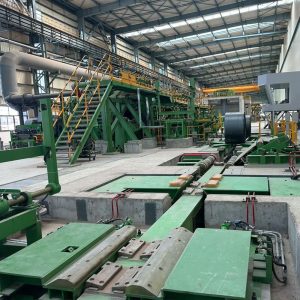
The 4 hi continuous rolling mill represents a sophisticated engineering solution where multiple rolling stands are arranged in sequence to process metal strips without interruption. Unlike conventional single-stand mills that require repeated passes, this continuous rolling mill configuration processes material in a single direction through several stands, each performing incremental reduction. This design significantly enhances productivity while maintaining exceptional dimensional accuracy and surface quality.
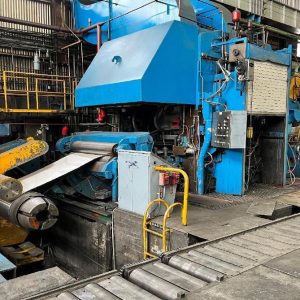
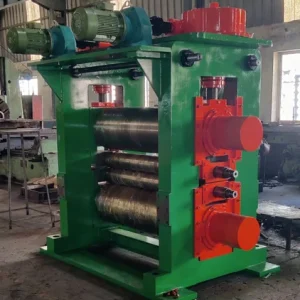
The fundamental structure of a 4 hi continuous rolling mill consists of two small-diameter work rolls that contact the material directly, supported by two larger backup rolls that provide mechanical stability. This configuration allows for precise control over the roll gap and minimizes deflection during high-pressure operations. When configured as a continuous rolling mill, multiple such stands are interconnected with precise speed synchronization to maintain proper tension between stands while achieving the desired reduction schedule.
The operational principles of this continuous rolling mill involve sophisticated control systems that coordinate multiple parameters simultaneously: roll force, roll gap position, interstand tension, rolling speed, and cooling parameters. Modern systems incorporate advanced sensors for real-time monitoring of strip thickness, width, flatness, temperature, and surface quality. These measurements feed into closed-loop control systems that automatically adjust operating parameters to maintain product specifications despite variations in incoming material or environmental conditions.
Structural Components and Design Features
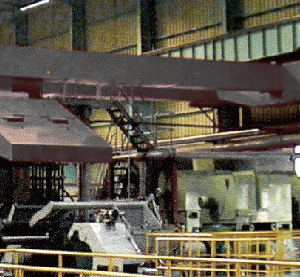
A comprehensive 4 hi continuous rolling mill installation comprises several critical subsystems working in harmony:
Main Drive System: High-torque DC or AC motors with precision speed control capabilities power each stand. In modern installations like those developed by HANI, digital vector control systems ensure synchronous operation with minimal speed variation between stands, critical for maintaining proper interstand tension in the continuous rolling mill process.
Roll Assembly: The work rolls, typically manufactured from high-alloy tool steels such as 9Cr2Mo, directly contact the material being processed. Their smaller diameter allows for higher reduction per pass while minimizing the power requirements. The backup rolls provide essential support to prevent work roll deflection during high-pressure operations. Precision roll bearings, hydraulic roll bending systems, and automatic roll gap adjustment mechanisms ensure consistent performance throughout extended production runs.
Mechanical Transmission: The power transmission system includes reducers, gearboxes (often herringbone type for balanced load distribution), and universal joint shafts designed to handle the significant torque requirements of industrial rolling operations in a continuous rolling mill configuration.
Coiling Systems: Both entry (payoff) and exit (coiler) systems feature hydraulic expansion mechanisms for rapid mandrel changes. These systems maintain precise tension control throughout the rolling process, with capacity designed to accommodate various coil weights and dimensions based on production requirements.
Control Systems: Modern continuous rolling mill installations incorporate sophisticated automation systems with multiple control loops for thickness, flatness, tension, and speed regulation. Advanced installations feature integrated quality monitoring systems that continuously assess strip characteristics and automatically compensate for deviations.
Technical Specifications and Performance Parameters
The performance capabilities of a 4 hi continuous rolling mill vary based on configuration and intended applications. The following table presents typical specifications for different size configurations commonly deployed in industrial settings:
| Parameter | φ140/φ350×400 | φ140/φ400×400 | φ150/φ450×450 | φ175/φ550×650 |
|---|---|---|---|---|
| Material Specifications (Thickness × Width) | 2.5mm × 280mm | 2.5mm × 330mm | 2.75mm × 380mm | 2.75mm × 550mm |
| Finished Product Specifications (3-stand) | 1.3mm × 280mm | 1.3mm × 330mm | 1.0mm × 380mm | 1.0mm × 550mm |
| Finished Product Specifications (5-stand) | 0.8mm × 280mm | 0.6mm × 330mm | 0.6mm × 380mm | 0.6mm × 550mm |
| Rolling Force Per Stand | 180 Tonnes | 200 Tonnes | 300 Tonnes | 500 Tonnes |
| Maximum Rolling Speed (5-stand configuration) | 120 m/min | 120 m/min | 150 m/min | 150 m/min |
| Maximum Coil Weight | 3 Tonnes | 3 Tonnes | 5 Tonnes | 7 Tonnes |
| Main Motor Power (DC, per stand) | 160 kW | 250 kW | 355 kW | 550 kW |
| Coiler Motor Power | 75 kW | 110 kW | 180 kW | 300 kW |
| Reducer Type | Hardened Tooth Surface Reducer | |||
| Control System | 590 Eurotherm DC Control System | |||
These specifications demonstrate the versatility of the continuous rolling mill concept, with configurations available to process materials ranging from thin narrow strips to wider, heavier gauge products. The modular nature of these systems allows manufacturers to select the optimal configuration based on their specific production requirements and material processing needs.
Materials Processing Capabilities
The 4 hi continuous rolling mill excels in processing a diverse range of metallic materials, each requiring specific operational parameters and roll configurations. The versatility of this continuous rolling mill design makes it suitable for numerous industrial applications:
Carbon Steels: From low-carbon to high-strength varieties, the continuous rolling mill efficiently processes these materials while maintaining dimensional accuracy and surface quality. Precise temperature control during rolling ensures optimal mechanical properties in the finished product.
Stainless Steels: Both austenitic and ferritic stainless grades can be processed through the 4 hi configuration. The backup roll support system is particularly valuable when rolling these harder materials that require significant rolling forces.
Non-Ferrous Metals: Aluminum, copper, zinc, and their alloys represent important applications for continuous rolling mill technology. These materials typically require different roll surface finishes, lubrication systems, and speed profiles compared to steel processing. The flexibility of modern control systems accommodates these varying requirements.
Specialty Alloys: High-performance nickel alloys, titanium, and other specialty materials can also be processed in appropriately configured 4 hi continuous rolling mills. These applications often require specialized roll materials and cooling systems to manage the unique metallurgical characteristics of these materials.
Advantages of 4 Hi Continuous Rolling Mill Configuration
The 4 hi continuous rolling mill configuration offers numerous advantages over alternative rolling technologies:
Enhanced Product Quality: The smaller work roll diameter in the 4 hi configuration allows for better control of strip profile and flatness. When arranged in a continuous rolling mill layout, this translates to exceptional dimensional consistency throughout the entire coil length.
Increased Productivity: Continuous processing eliminates the need for repeated threading operations required in reversible mills. This significantly increases throughput while reducing operator intervention. Modern installations can achieve production rates exceeding 150 meters per minute while maintaining precise quality control.
Energy Efficiency: The distributed reduction across multiple stands in a continuous rolling mill requires less total energy compared to single-pass processing. Each stand performs a smaller reduction, which is mechanically more efficient than attempting large reductions in a single pass.
Flexibility: The modular nature of the continuous rolling mill design allows manufacturers to configure systems with varying numbers of stands (typically 2-6 stands) based on production requirements. This flexibility extends to processing different materials and achieving various reduction schedules without significant equipment changes.
Reduced Floor Space: Compared to equivalent multi-stand reversing mills, the linear arrangement of a continuous rolling mill requires less floor space while delivering comparable or superior production capacity.
Industrial Applications and Market Impact
The 4 hi continuous rolling mill serves critical roles across numerous industries where precision metal strips are essential components:
Automotive Manufacturing: Precision steel and aluminum strips produced by these continuous rolling mill systems form components for electrical motors, sensors, fuel systems, and structural elements. The consistent dimensional accuracy is crucial for high-speed automated assembly processes.
Electrical Engineering: Silicon steel strips for transformer cores and motor laminations require exceptional thickness consistency and specific magnetic properties achieved through controlled rolling processes in specialized continuous rolling mill installations.
Construction and Architecture: Building materials including roofing, cladding, and structural components utilize metal strips processed through these systems. The ability to maintain consistent mechanical properties across entire production runs ensures reliable performance in demanding applications.
Consumer Electronics: Miniaturization trends drive demand for thinner, more precise metal strips for electronic components. Advanced continuous rolling mill technology can produce specialty alloys at thicknesses below 0.1mm with exceptional surface quality.
HANI has demonstrated particular expertise in designing continuous rolling mill systems optimized for these demanding applications, incorporating advanced control technologies that deliver exceptional product consistency even at high production speeds.
Frequently Asked Questions
Q: What is the difference between a 4 hi mill and a 6 hi mill configuration in continuous rolling applications?
A: While both configurations utilize multiple rolls, the 4 hi mill employs two work rolls and two backup rolls, whereas the 6 hi configuration adds two intermediate rolls. The 6 hi design offers additional control over strip profile and flatness but at higher complexity and cost. For most commercial applications, the 4 hi continuous rolling mill provides the optimal balance of performance, versatility, and operational economics.
Q: How does roll wear affect product quality in a continuous rolling mill?
A: Roll wear is a critical factor in maintaining product quality in continuous operations. As work rolls wear, they develop a barrel shape that affects strip profile and thickness distribution. Modern continuous rolling mill installations incorporate automatic roll wear compensation systems that adjust roll gaps based on accumulated rolling tonnage or measured product dimensions. Regular roll maintenance schedules and advanced roll materials like high-chromium cast iron or tool steels with specialized coatings significantly extend roll life.
Q: What is the expected service life of a properly maintained 4 hi continuous rolling mill?
A: With proper maintenance and periodic component upgrades, a 4 hi continuous rolling mill can remain in productive service for 20-30 years. The mechanical structure typically has the longest service life, while electrical and control systems may require modernization every 10-15 years to maintain operational efficiency and compatibility with current technology standards. Critical wear components such as rolls, bearings, and drive couplings require more frequent replacement based on operational hours and production loads.
Q: How does tension control between stands affect performance in a continuous rolling mill?
A: Interstand tension control is critical to the performance of any continuous rolling mill. Proper tension management ensures stable strip tracking, consistent thickness reduction, and optimal flatness. Too little tension can cause strip wandering or looping between stands, while excessive tension may lead to strip breakage or undesirable work hardening. Advanced continuous rolling mill systems employ sophisticated tension control algorithms that adjust stand speeds in real-time based on measured strip tension, ensuring optimal processing conditions throughout production runs.
Q: What maintenance requirements are typical for a 4 hi continuous rolling mill installation?
A: Regular maintenance of a continuous rolling mill includes daily lubrication checks, weekly inspection of roll surfaces and bearing temperatures, monthly calibration of measurement systems, and quarterly comprehensive mechanical inspections. Annual maintenance typically involves more thorough evaluation of drive systems, structural components, and comprehensive recalibration of control systems. Predictive maintenance technologies including vibration analysis, thermal imaging, and oil analysis help optimize maintenance scheduling and prevent unexpected downtime in continuous rolling mill operations.
Conclusion and Future Development Trends
The 4 hi continuous rolling mill represents a mature yet continuously evolving technology that remains essential to modern metal processing industries. As material science advances and product requirements become increasingly demanding, these systems continue to incorporate new technologies to enhance performance, efficiency, and product quality.
Future developments in continuous rolling mill technology are focusing on increased digitalization, improved energy efficiency, and enhanced material utilization. Advanced sensors and artificial intelligence algorithms are being integrated to predict roll wear, optimize rolling parameters in real-time, and minimize quality deviations before they occur. The integration of Industry 4.0 principles is transforming how continuous rolling mills operate within broader production ecosystems.
Manufacturers seeking to invest in modern metal processing capabilities should carefully evaluate their specific production requirements against the capabilities of available continuous rolling mill systems. The optimal configuration balances initial investment, operational costs, product quality requirements, and production flexibility to deliver maximum long-term value.
With decades of expertise in rolling mill technology, HANI continues to innovate in the continuous rolling mill space, delivering systems that combine proven engineering principles with cutting-edge control technologies to meet the evolving needs of global metal processing industries. Their commitment to precision engineering and customer-focused solutions makes them a preferred partner for businesses seeking reliable, high-performance rolling mill systems.
For additional information about 4 hi continuous rolling mill configurations and how they can enhance your production capabilities, please contact our technical specialists who can provide detailed consultation tailored to your specific requirements.
HANI is one of China’s leading professional cold rolling mill manufacturers, providing complete cold rolling systems to steel companies worldwide. HANI focuses on designing and manufacturing integrated cold rolling solutions that meet the industry’s highest standards of precision, efficiency, and durability. Our engineering expertise lies in providing turnkey cold rolling production lines to optimize the performance of modern steel manufacturing plants.